かんむり座の星と塵
Stars and Dust in Corona Australis
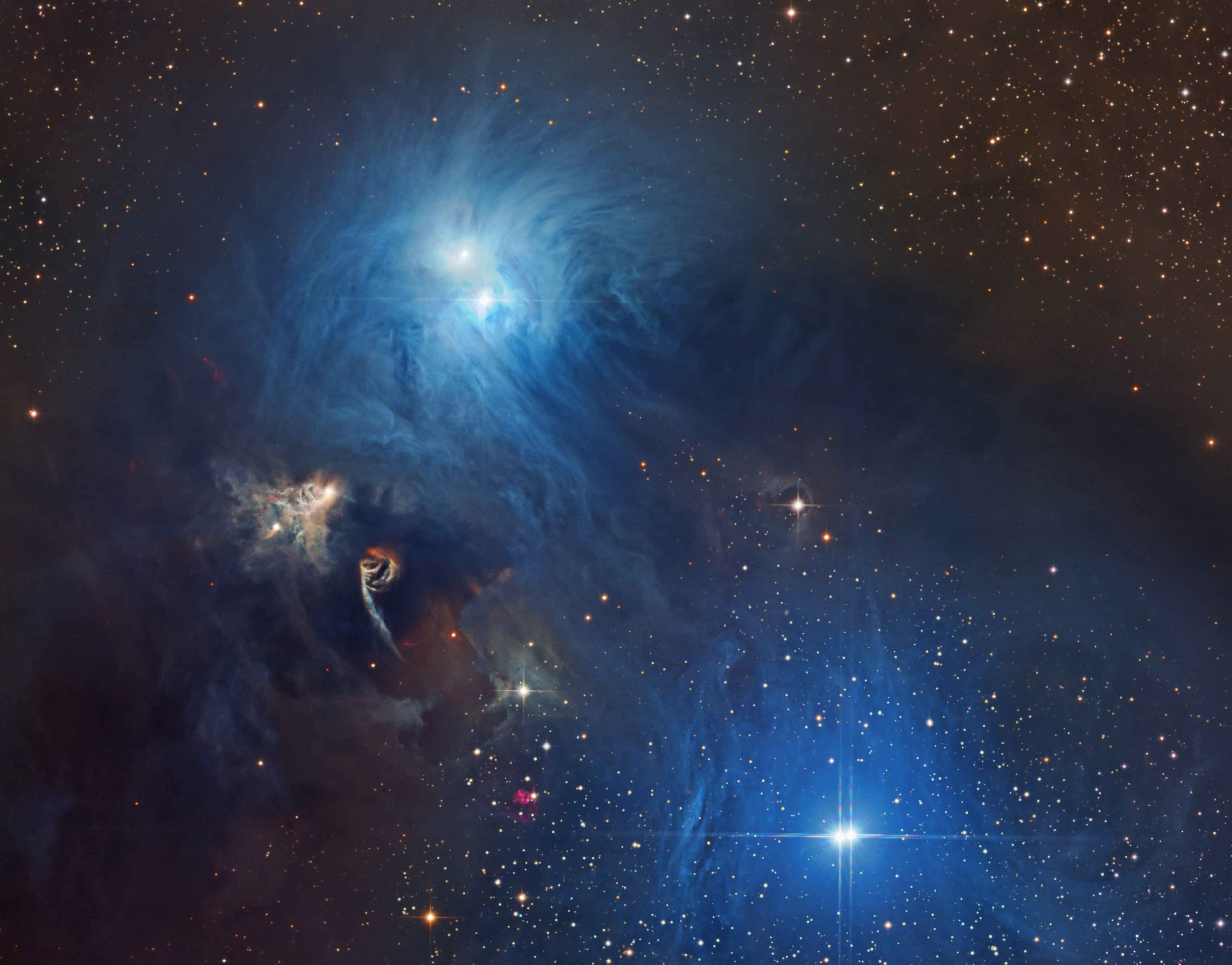
南冠座の北端から500光年以内のこの望遠鏡視野には、宇宙塵の雲と若く活発な星々が広がっています。これらの塵の雲は、天の川銀河のより遠方の背景にある星々からの光を効果的に遮っています。しかし、NGC 6726、6727、IC 4812としてカタログ化されている印象的な反射星雲群は、この領域の若い高温の星からの光が宇宙塵によって反射されるため、特徴的な青色を呈しています。また、塵は形成過程にある星々を視界から隠しています。左側には、若い変光星Rコロナエ・アウストラリスの周りを曲がる、やや黄色がかった小さな星雲NGC 6729があります。そのすぐ下には、埋め込まれた生まれたばかりの星からの流出によって衝撃を受けた輝く弧とループがあり、これらはハービッグ・ハロー天体として識別されています。この視野は、空では約1度に及びます。これは、近くの星形成領域の推定距離で約9光年に相当します。 APODトーク:1月9日(金)、ニューヨーク市にて開催
原文(English)
Cosmic dust clouds and young, energetic stars inhabit this telescopic vista, less than 500 light-years away toward the northern boundary of Corona Australis, the Southern Crown. The dust clouds effectively block light from more distant background stars in the Milky Way. But the striking complex of reflection nebulae cataloged as NGC 6726, 6727, and IC 4812 produce a characteristic blue color as light from the region's young hot stars is reflected by the cosmic dust. The dust also obscures from view stars still in the process of formation. At the left, smaller yellowish nebula NGC 6729 bends around young variable star R Coronae Australis. Just below it, glowing arcs and loops shocked by outflows from embedded newborn stars are identified as Herbig-Haro objects. On the sky this field of view spans about 1 degree. That corresponds to almost 9 light-years at the estimated distance of the nearby star forming region. APOD Talk: Friday, January 9 in New York City
\ この感動を宇宙仲間にシェア /
宇宙をXでシェア
© CHART32 Team / APOD