ラブジョイ彗星の複雑なイオンテイル
The Complex Ion Tail of Comet Lovejoy
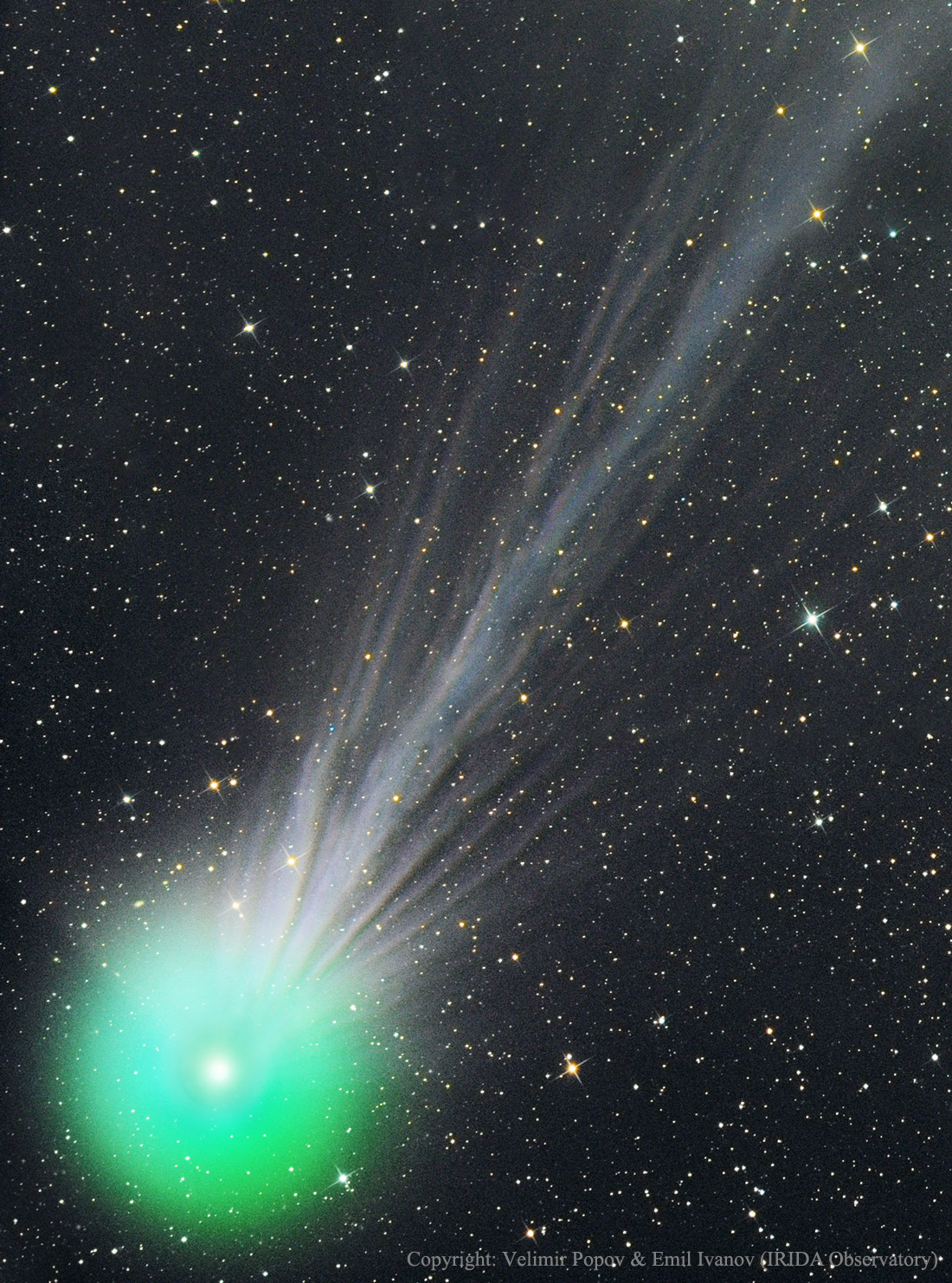
ラブジョイ彗星の尾の構造は何が原因なのでしょうか?現在肉眼で見える明るさで、最も明るい時期に近いC/2014 Q2(ラブジョイ)彗星は、非常に精緻なイオン尾を見せています。名前が示すように、イオン尾は電離ガスでできています。このガスは太陽からの紫外線によってエネルギーを与えられ、太陽風によって外側に押し出されます。太陽風は、太陽の複雑で絶えず変化する磁場によって非常に構造化され、形作られています。変動する太陽風と彗星の核から噴出するさまざまなガスジェットが組み合わさることで、尾の複雑な構造が説明できます。太陽風に追随して、ラブジョイ彗星の尾の構造は太陽から外側に向かって移動し、時間の経過とともに波打つような外観も変化します。イオンテイルの青色は主に再結合する一酸化炭素分子によるもので、彗星の頭部を取り囲むコマの緑色は主に少量の再結合する二原子炭素分子によるものです。掲載されている3枚のパネルからなるモザイク画像は、9日前にブルガリアのIRIDA天文台で撮影されました。ラブジョイ彗星は2週間前に地球に最接近し、約10日後には太陽に最接近します。その後、彗星は太陽系外縁部へと戻りながら徐々に暗くなり、約8,000年後に再び地球に接近します。天体物理学者の皆様へ:天体物理学ソースコードライブラリで950以上のコードをご覧ください。
原文(English)
What causes the structure in Comet Lovejoy's tail? Comet C/2014 Q2 (Lovejoy), which is currently at naked-eye brightness and near its brightest, has been showing an exquisitely detailed ion tail. As the name implies, the ion tail is made of ionized gas -- gas energized by ultraviolet light from the Sun and pushed outward by the solar wind. The solar wind is quite structured and sculpted by the Sun's complex and ever changing magnetic field. The effect of the variable solar wind combined with different gas jets venting from the comet's nucleus accounts for the tail's complex structure. Following the wind, structure in Comet Lovejoy's tail can be seen to move outward from the Sun even alter its wavy appearance over time. The blue color of the ion tail is dominated by recombining carbon monoxide molecules, while the green color of the coma surrounding the head of the comet is created mostly by a slight amount of recombining diatomic carbon molecules. The featured three-panel mosaic image was taken nine days ago from the IRIDA Observatory in Bulgaria. Comet Lovejoy made it closest pass to the Earth two weeks ago and will be at its closest to the Sun in about ten days. After that, the comet will fade as it heads back into the outer Solar System, to return only in about 8,000 years. Astrophysicists: Browse 950+ codes in the Astrophysics Source Code Library
\ この感動を宇宙仲間にシェア /
宇宙をXでシェア
© Velimir Popov & Emil Ivanov
(IRIDA Observatory) / APOD