北極星とラブジョイ彗星
Polaris and Comet Lovejoy
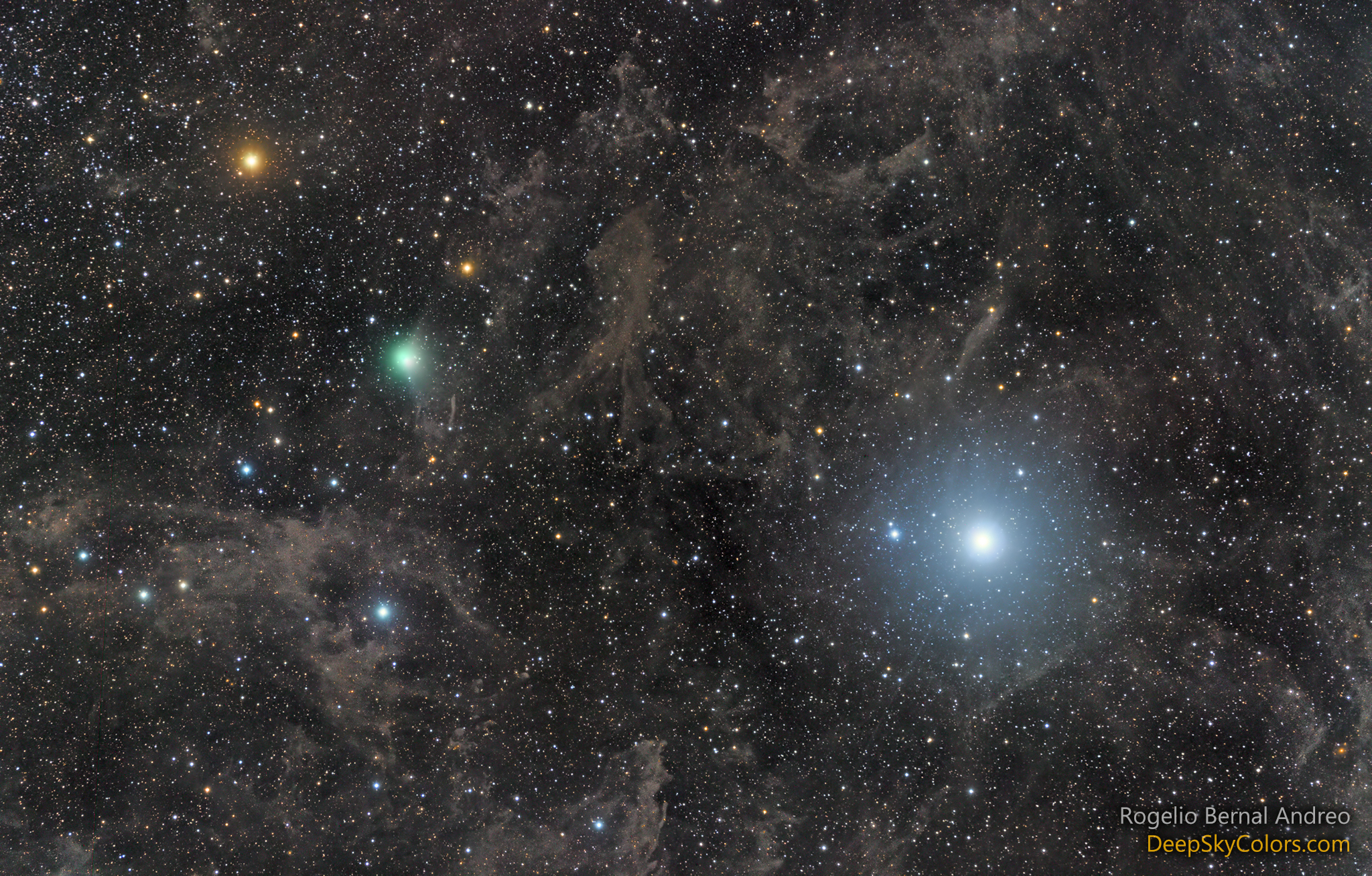
明るい天体のうち、2つのうち1つが動いています。右側は有名な北極星です。北極星は空で45番目に明るい星に過ぎませんが、静止しているように見えることで有名です。一度見つけると、生涯を通して昼夜を問わず常に同じ方向を向いています。これは、地球の北の自転軸(北天の極)が北極星の近くを指しているためです。左側は、北極星の約1000万倍近くに位置するラブジョイ彗星で、1時間ごとに空での位置が著しく変化します。掲載されている画像は先週撮影されたものです。正式にはC/2014 Q2(ラブジョイ)と命名されたこの崩壊しつつある雪玉は、太陽系の外縁部から訪れており、北極星の近くに見えるのはあと数週間だけです。しかし、双眼鏡や小型望遠鏡を持つ北半球の住民にとっては、おそらく良質な星図の助けを借りて、このはかない新天体の緑がかったコマを見るには十分な時間でしょう。
原文(English)
One of these two bright sky objects is moving. On the right is the famous star Polaris. Although only the 45th brightest star in the sky, Polaris is famous for appearing stationary. Once you find it, it will always appear in the same direction -- all night and all day -- for the rest of your life. This is because the northern spin pole of the Earth -- called the North Celestial Pole -- points near Polaris. On the left, about ten million times closer, is Comet Lovejoy, which noticeably changes its sky position by the hour. The featured image was taken last week. Officially designated C/2014 Q2 (Lovejoy), this disintegrating snowball is on a visit from the outer Solar System and will only appear near the North Star for a few more weeks. That should be long enough, however, for northerners with binoculars or a small telescope to see the greenish coma of this fleeting newcomer, perhaps with the help of a good star map.
\ この感動を宇宙仲間にシェア /
宇宙をXでシェア
© Rogelio
Bernal Andreo / APOD