M45:プレアデス星団
M45: The Pleiades Star Cluster
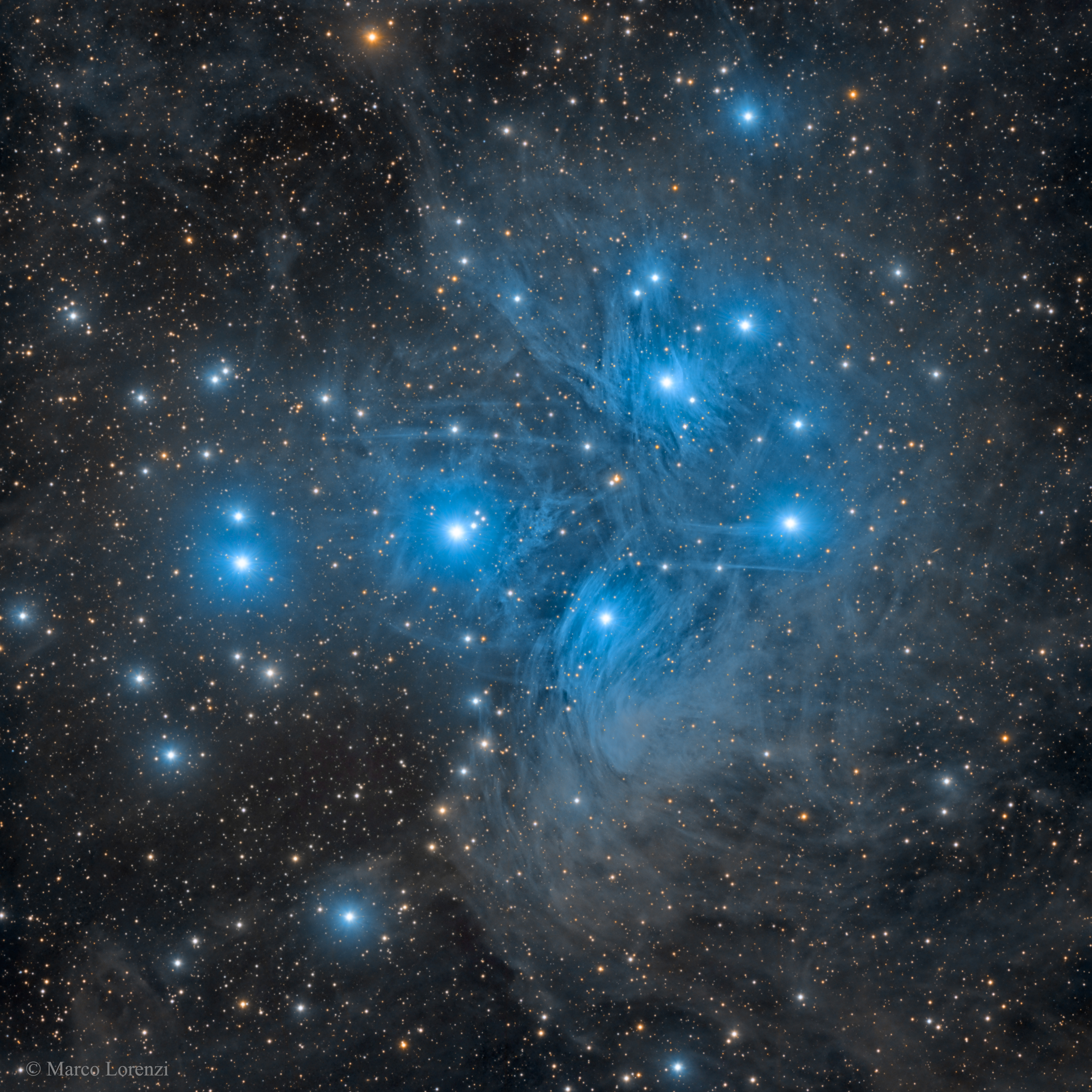
プレアデス星団を見たことがありますか?たとえ見たことがあっても、これほど塵に覆われたプレアデス星団を見たことはないでしょう。おそらく空で最も有名な星団であるプレアデス星団の明るい星々は、光害のひどい都市の奥深くからでも双眼鏡なしで見ることができます。しかし、暗い場所で長時間露光すると、プレアデス星団を取り巻く塵の雲が非常にはっきりと見えます。この写真は12時間以上かけて撮影され、満月の数倍の大きさの空域をカバーしています。七姉妹やM45としても知られるプレアデス星団は、おうし座の方向に約400光年離れたところにあります。現代的なアレンジを加えた一般的な伝説では、星団の名前が付けられて以来、明るい星の1つが暗くなり、肉眼で見える星は6つだけになったと言われています。しかし、実際に見えるプレアデス星団の星の数は、周囲の空の暗さや観察者の視力によって、7つより多い場合も少ない場合もあります。 APOD回顧展:プレアデス星団
原文(English)
Have you ever seen the Pleiades star cluster? Even if you have, you probably have never seen it as dusty as this. Perhaps the most famous star cluster on the sky, the bright stars of the Pleiades can be seen without binoculars from even the depths of a light-polluted city. With a long exposure from a dark location, though, the dust cloud surrounding the Pleiades star cluster becomes very evident. The featured exposure took over 12 hours and covers a sky area several times the size of the full moon. Also known as the Seven Sisters and M45, the Pleiades lies about 400 light years away toward the constellation of the Bull (Taurus). A common legend with a modern twist is that one of the brighter stars faded since the cluster was named, leaving only six stars visible to the unaided eye. The actual number of Pleiades stars visible, however, may be more or less than seven, depending on the darkness of the surrounding sky and the clarity of the observer's eyesight. APOD Retrospective: The Pleiades Star Cluster
\ この感動を宇宙仲間にシェア /
宇宙をXでシェア
© Marco Lorenzi
(Glittering Lights) / APOD