ライトセイルA
LightSail A
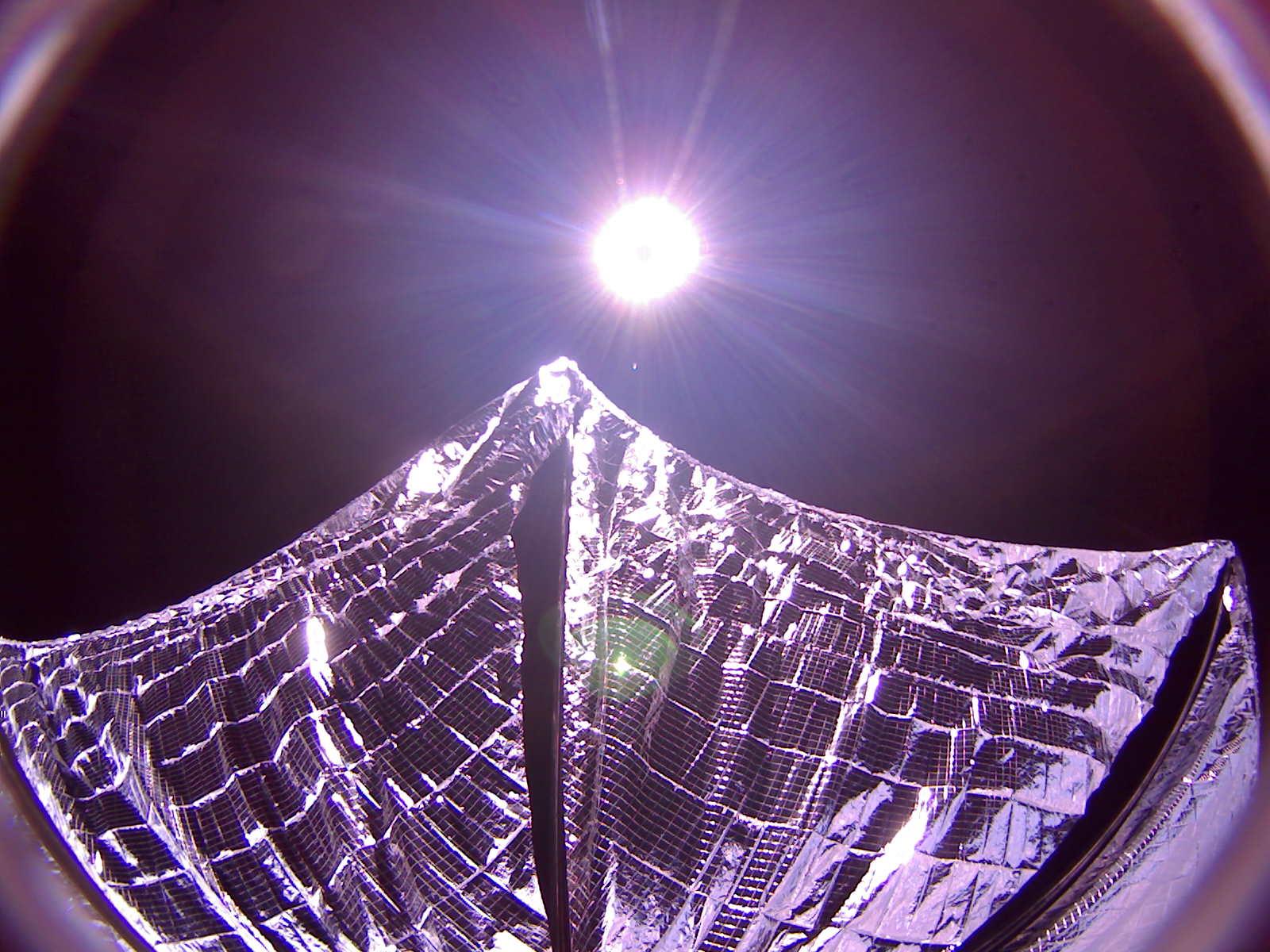
低地球軌道への飛行に便乗したライトセイルAは、6月7日に32平方メートルのマイラー製ソーラーセイルを展開するという困難な試験ミッションを達成しました。パンほどの大きさの宇宙船の魚眼カメラの1つから撮影されたこの劇的な画像は、展開されたセイルが太陽光にきらめく様子を捉えています。最終軌道に入る前にセイルを展開し、地球上の観測者から見えるようになったライトセイルAは、先週末に大気圏に再突入しました。その技術実証の成功は、2016年4月に打ち上げ予定のライトセイルB宇宙船への道を開きます。かつてはSFの世界の話と考えられていた宇宙を航行することは、400年前に太陽風によって吹き飛ばされた彗星の尾を観測した天文学者ヨハネス・ケプラーによって提唱されました。しかし、ライトセイルAでテストされたような現代のソーラーセイル設計は、推力のために太陽光自体からの小さくても継続的な圧力に依存しています。
原文(English)
Hitching a ride to low Earth orbit, LightSail A accomplished a challenging test mission, unfurling its 32 square meter mylar solar sail on June 7. This dramatic image from one of the bread loaf sized spacecraft's fisheye cameras captures the deployed sail glinting in sunlight. Sail out and visible to Earthbound observers before its final orbit, LightSail A reentered the atmosphere last weekend. Its succesful technology demonstration paves the way for the LightSail B spacecraft, scheduled for launch in April 2016. Once considered the stuff of science fiction, sailing through space was suggested 400 years ago by astronomer Johannes Kepler who observed comet tails blown by the solar wind. But modern solar sail designs, like the one tested by LightSail A, rely on the small but continuous pressure from sunlight itself for thrust.
\ この感動を宇宙仲間にシェア /
宇宙をXでシェア
© NASA / APOD