ESO 137-001の剥離
Stripping ESO 137-001
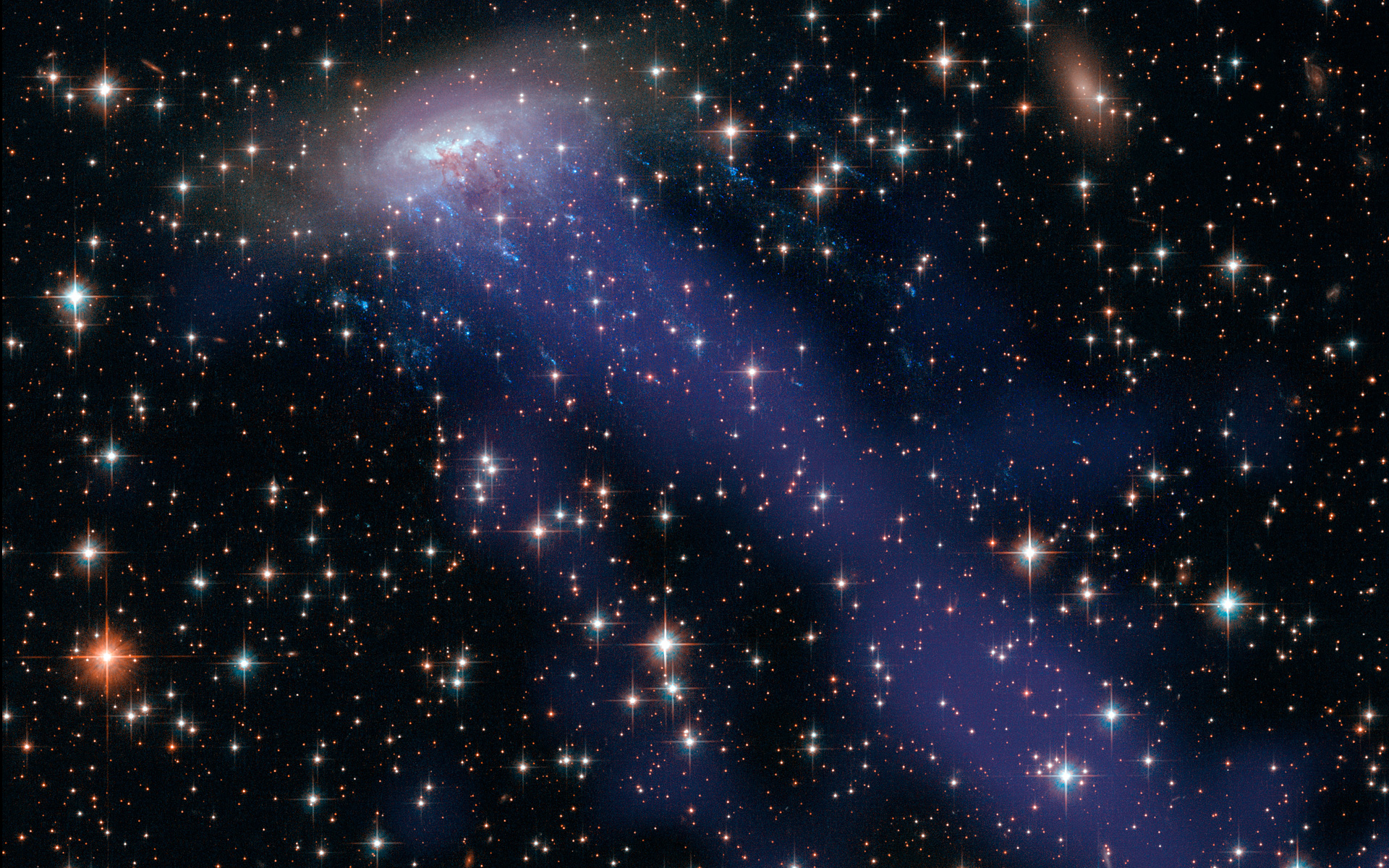
渦巻銀河ESO 137-001は、約2億2000万光年離れた巨大な銀河団Abell 3627を猛スピードで通過しています。この遠方の銀河は、ハッブル宇宙望遠鏡とチャンドラX線観測衛星によるカラフルな合成画像で、天の川銀河の星々を前景として、南天のさんかく座の方向に向かって写っています。渦巻銀河が時速約700万キロメートルで移動するにつれて、銀河団自身の高温で希薄な銀河団間物質との衝突圧力が銀河の重力に打ち勝ち、ガスと塵が剥ぎ取られます。ハッブル宇宙望遠鏡の近可視光データでは、剥ぎ取られた物質の中に、短い青い筋に沿って明るい星団が形成されていることが分かります。チャンドラX線観測衛星のX線データは、加熱されて剥ぎ取られたガスの巨大な広がりを、右下に向かって40万光年以上も伸びる、拡散した暗い青色の筋として示しています。塵とガスの大幅な損失により、この銀河では新たな星形成が困難になるでしょう。画像の中でESO 137-001のすぐ右側には、星形成に関わる塵やガスが不足している、黄色がかった楕円銀河が写っている。
原文(English)
Spiral galaxy ESO 137-001 hurtles through massive galaxy cluster Abell 3627 some 220 million light years away. The distant galaxy is seen in this colorful Hubble/Chandra composite image through a foreground of the Milky Way's stars toward the southern constellation Triangulum Australe. As the spiral speeds along at nearly 7 million kilometers per hour, its gas and dust are stripped away when ram pressure with the cluster's own hot, tenuous intracluster medium overcomes the galaxy's gravity. Evident in Hubble's near visible light data, bright star clusters have formed in the stripped material along the short, trailing blue streaks. Chandra's X-ray data shows off the enormous extent of the heated, stripped gas as diffuse, darker blue trails stretching over 400,000 light-years toward the bottom right. The significant loss of dust and gas will make new star formation difficult for this galaxy. A yellowish elliptical galaxy, lacking in star forming dust and gas, is just to the right of ESO 137-001 in the frame.
\ この感動を宇宙仲間にシェア /
宇宙をXでシェア
© NASA / APOD