モニュメントバレー上空のしし座流星群
Leonids Over Monument Valley
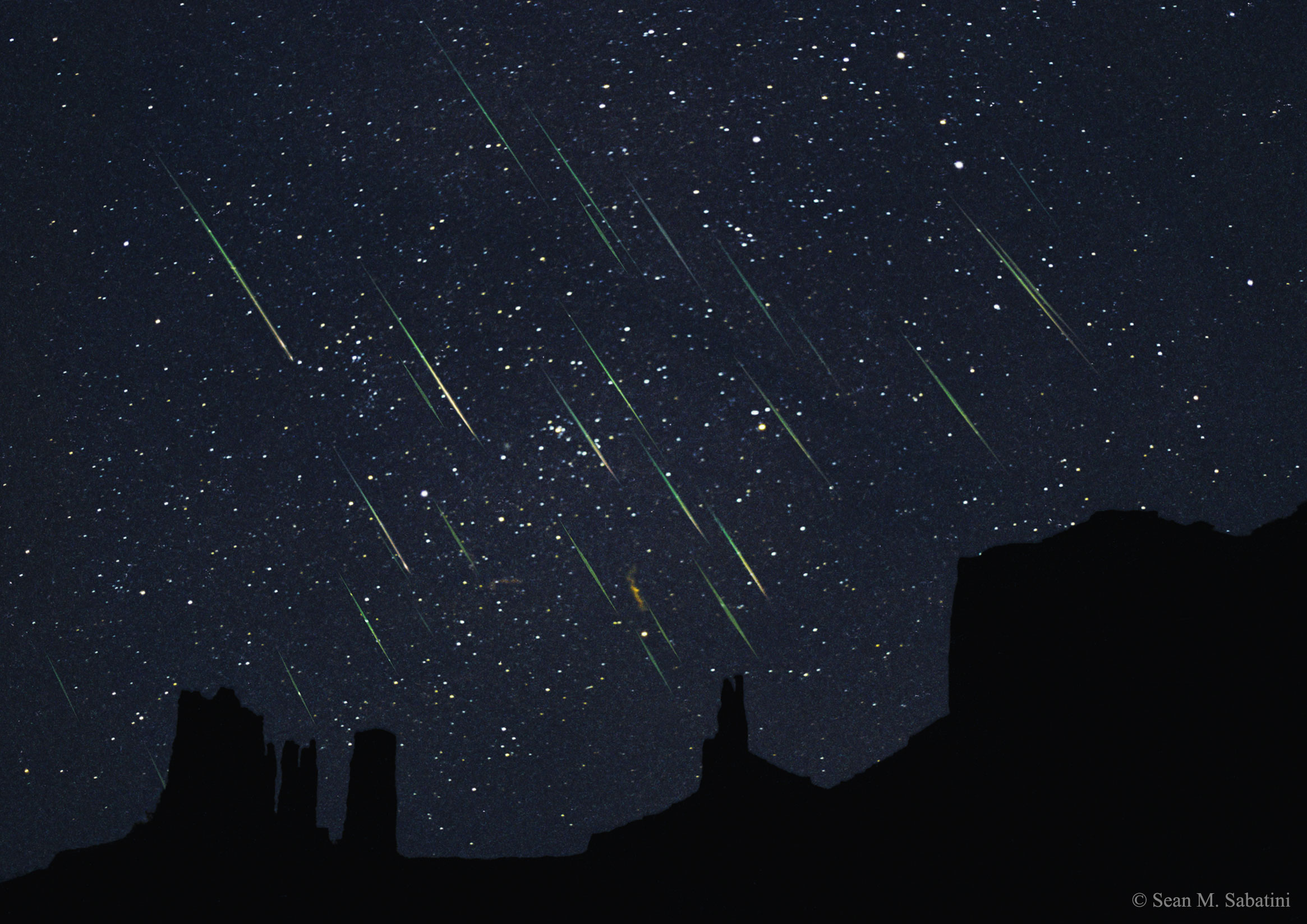
モニュメントバレー上空にシャワーが降り注いだが、それは水ではなく流星だった。掲載されている画像は、実際には約30秒露光した6枚の画像を合成したもので、2001年に撮影された。2001年は、しし座流星群が非常に活発だった年である。当時、地球はテンペル・タットル彗星から放出された砂粒サイズの塵の特に密度の高い群れの中を通過していたため、流星の出現率は1秒間に1本に匹敵するほどだった。流星が平行に見えるのは、すべて流星群の放射点、つまりしし座の方向にある空の一点から地球に落下するためである。毎年恒例のしし座流星群は今週再びピークを迎える。月の光が多くの流星の視界を妨げることはないだろうが、今年の流星群はピーク時に1時間に15個程度の流星が見られると予想されており、これは良い数値ではあるものの、2001年のしし座流星群に匹敵するとは考えられていない。ところで、掲載されている画像でいくつの流星を識別できますか?
原文(English)
There was a shower over Monument Valley -- but not water. Meteors. The featured image -- actually a composite of six exposures of about 30 seconds each -- was taken in 2001, a year when there was a very active Leonids shower. At that time, Earth was moving through a particularly dense swarm of sand-sized debris from Comet Tempel-Tuttle, so that meteor rates approached one visible streak per second. The meteors appear parallel because they all fall to Earth from the meteor shower radiant -- a point on the sky towards the constellation of the Lion (Leo). The yearly Leonids meteor shower peaks again this week. Although the Moon's glow should not obstruct the visibility of many meteors, this year's shower will peak with perhaps 15 meteors visible in an hour, a rate which is good but not expected to rival the 2001 Leonids. By the way -- how many meteors can you identify in the featured image?
\ この感動を宇宙仲間にシェア /
宇宙をXでシェア
© Sean M. Sabatini / APOD