雲に浮かぶオーロラ
Aurora over Clouds
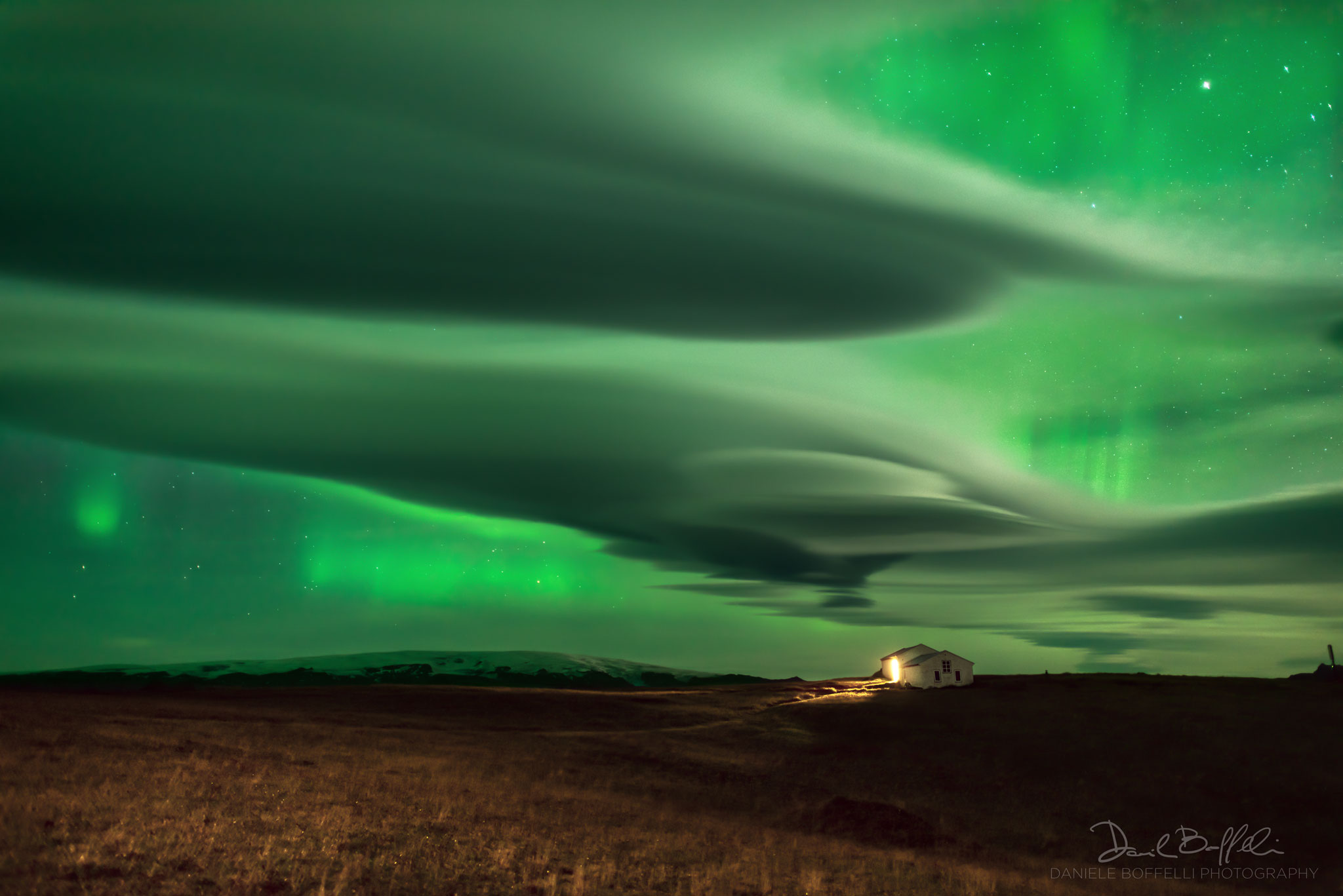
オーロラは通常、雲のはるか上空で発生します。オーロラの光は、太陽から放出された高速の粒子が地球の磁気圏に衝突し、そこから荷電粒子が地球の磁場に沿って螺旋状に進み、地球大気圏上層部の原子や分子に衝突することによって生じます。例えば、酸素原子は、このような衝突によってエネルギーを得た後、オーロラによく見られる緑色の光を放ちます。オーロラの最も低い部分は通常、高度100キロメートル付近に現れますが、ほとんどの雲は通常、高度約10キロメートル以下にしか存在しません。アイスランドのディルホラエイで撮影された特集写真では、雲とオーロラの相対的な高度がはっきりと示されています。そこで、ある熱心な天体写真家が、風光明媚な灯台の上空にオーロラを捉えようと、強風と当初は曇り空だった空に耐えながら撮影を続け、その途中で偶然にも特集写真のような写真を撮影することができました。
原文(English)
Auroras usually occur high above the clouds. The auroral glow is created when fast-moving particles ejected from the Sun impact the Earth's magnetosphere, from which charged particles spiral along the Earth's magnetic field to strike atoms and molecules high in the Earth's atmosphere. An oxygen atom, for example, will glow in the green light commonly emitted by an aurora after being energized by such a collision. The lowest part of an aurora will typically occur at 100 kilometers up, while most clouds usually exist only below about 10 kilometers. The relative heights of clouds and auroras are shown clearly in the featured picture from Dyrholaey, Iceland. There, a determined astrophotographer withstood high winds and initially overcast skies in an attempt to capture aurora over a picturesque lighthouse, only to take, by chance, the featured picture along the way.
\ この感動を宇宙仲間にシェア /
宇宙をXでシェア
© Daniele Boffelli / APOD