ぎょしゃ座の星雲
Nebulae in Auriga
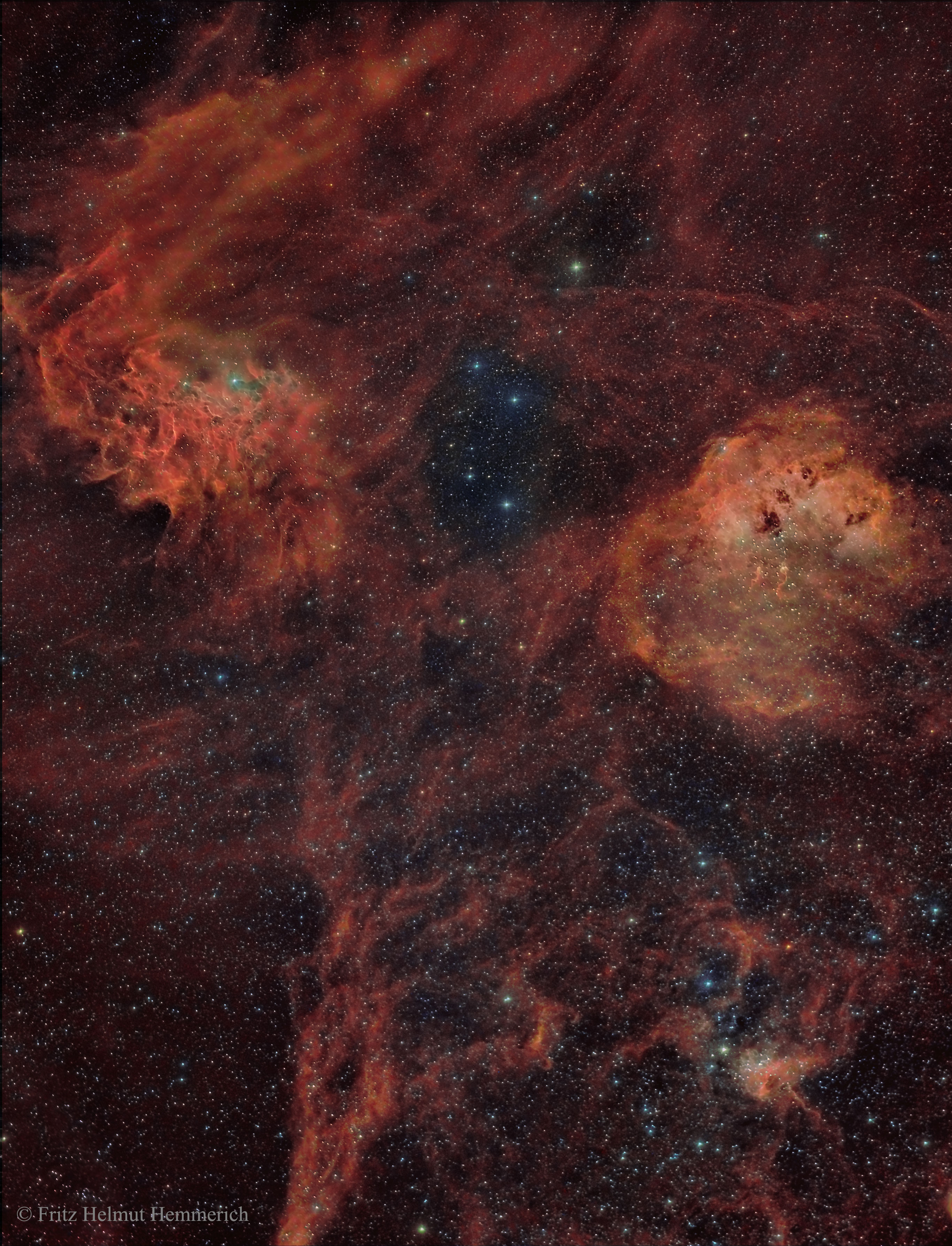
星団や星雲が豊富な古代の星座、ぎょしゃ座は、北半球の冬の夜空高くに輝いています。狭帯域および広帯域フィルターのデータから構成され、空で満月約8個分(4度)に及ぶこの望遠鏡による深宇宙像は、ぎょしゃ座の天体の豊かさの一部を示しています。視野には、約1,500光年離れた輝線領域IC 405(左上)が含まれています。燃える星雲としても知られるこの星雲の赤く複雑な水素ガスの雲は、高温のO型星AE Aurigaeによってエネルギーを与えられています。IC 410(右上)はさらに遠く、約12,000光年離れています。この星形成領域は、埋め込まれた若い星団NGC 1893と、オタマジャクシの形をした塵とガスの雲で有名です。右下にあるIC 417とNGC 1931(クモ星団とハエ星団)も、IC 405のはるか彼方にある誕生雲に埋め込まれた若い星団です。星団NGC 1907は、画面下端近く、中央のすぐ右に位置しています。この密集した視野は、銀河の反中心方向に近い、天の川銀河の平面に沿っています。天体物理学者の皆様へ:天体物理学ソースコードライブラリで1,100以上のコードをご覧ください。
原文(English)
Rich in star clusters and nebulae, the ancient constellation of the Charioteer (Auriga) rides high in northern winter night skies. Composed from narrow and broadband filter data and spanning nearly 8 Full Moons (4 degrees) on the sky, this deep telescopic view shows off some of Auriga's celestial bounty. The field includes emission region IC 405 (top left) about 1,500 light-years distant. Also known as the Flaming Star Nebula, its red, convoluted clouds of glowing hydrogen gas are energized by hot O-type star AE Aurigae. IC 410 (top right) is significantly more distant, some 12,000 light-years away. The star forming region is famous for its embedded young star cluster, NGC 1893, and tadpole-shaped clouds of dust and gas. IC 417 and NGC 1931 at the lower right, the Spider and the Fly, are also young star clusters embedded in natal clouds that lie far beyond IC 405. Star cluster NGC 1907 is near the bottom edge of the frame, just right of center. The crowded field of view looks along the plane of our Milky Way galaxy, near the direction of the galactic anticenter. Astrophysicists: Browse 1,100+ codes in the Astrophysics Source Code Library
\ この感動を宇宙仲間にシェア /
宇宙をXでシェア
© Fritz Helmut Hemmerich / APOD