ケレスで最も明るい点
The Brightest Spot on Ceres
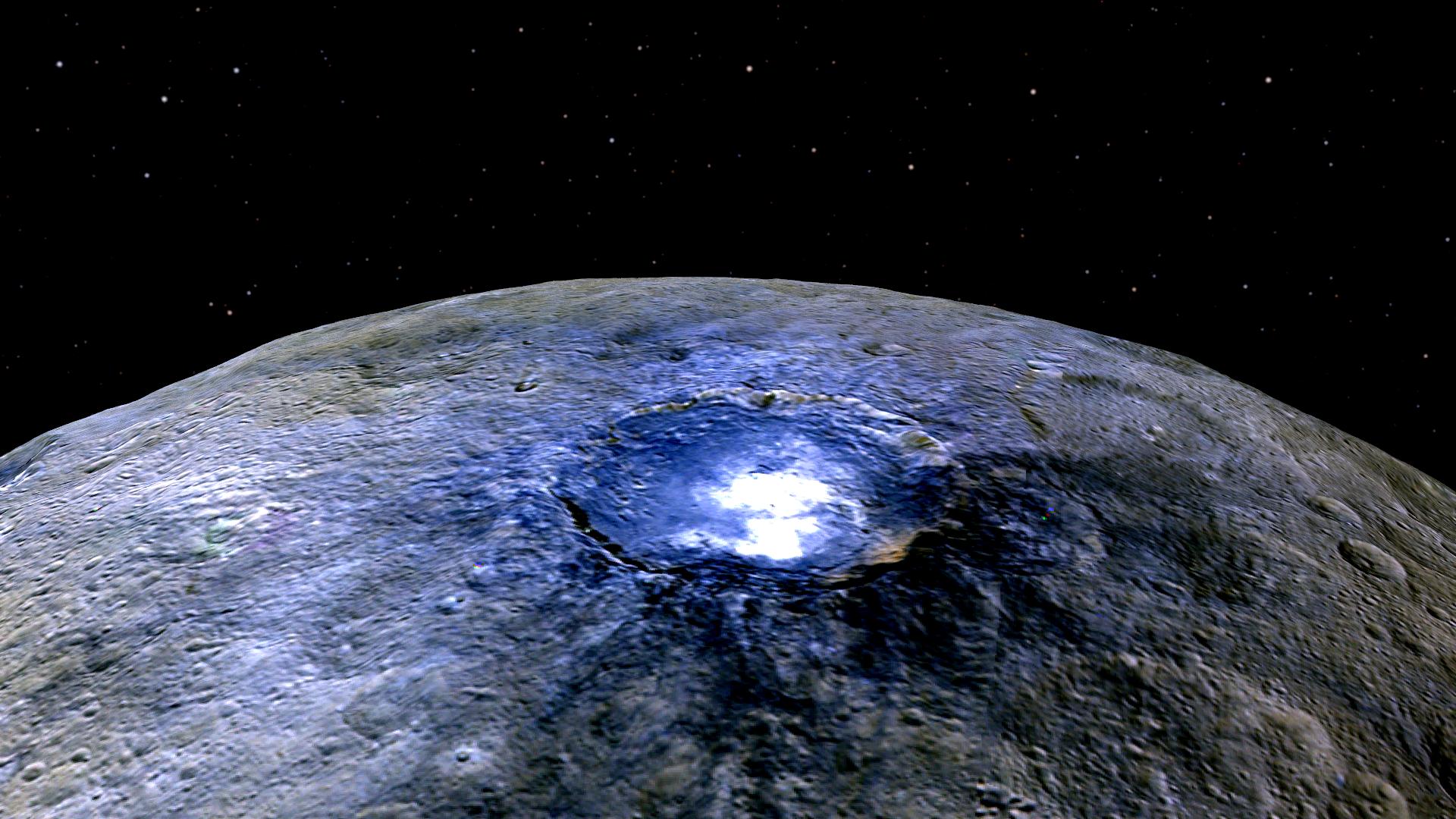
準惑星ケレスは、直径約950キロメートルで、太陽系の小惑星帯で最大の天体です。3月から軌道上からケレスを探査している探査機ドーンのカメラは、この小さな惑星の暗い表面に散らばる衝突クレーターに関連する、約130個の謎めいた明るい点を発見しました。最も明るい点は、直径90キロメートルのオッカトル・クレーターの中心付近にあり、近赤外線と可視光の画像データを組み合わせたこの劇的な擬似カラー画像に写っています。現在行われている研究では、この明るい点の反射光の特性は、六水和マグネシウムと呼ばれる硫酸マグネシウムの一種と最も一致する可能性が高いことがわかっています。もちろん、硫酸マグネシウムは地球の住人にはエプソム塩としても知られています。オッカトル内部で報告されているもやは、塩と氷水が表面で昇華した際に残った塩分物質である可能性を示唆しています。衝突によってこの物質が露出したはずなので、ケレスに多数存在し広範囲に散らばっている明るい点は、氷と塩の混合物の地下殻の存在を示している可能性があります。 12月中旬、探査機ドーンはケレスに最も近いマッピング軌道から観測を開始する予定だ。
原文(English)
Dwarf planet Ceres is the largest object in the Solar System's main asteroid belt with a diameter of about 950 kilometers. Exploring Ceres from orbit since March, the Dawn spacecraft's camera has revealed about 130 or so mysterious bright spots, mostly associated with impact craters scattered around the small world's otherwise dark surface. The brightest one is near the center of the 90 kilometer wide Occator Crater, seen in this dramatic false color view combining near-infrared and visible light image data. A study now finds the bright spot's reflected light properties are probably most consistent with a type of magnesium sulfate called hexahydrite. Of course, magnesium sulfate is also known to Earth dwellers as epsom salt. Haze reported inside Occator also suggests the salty material could be left over as a mix of salt and water-ice sublimates on the surface. Since impacts would have exposed the material, Ceres' numerous and widely scattered bright spots may indicate the presence of a subsurface shell of ice-salt mix. In mid-December, Dawn will begin taking observations from its closest Ceres mapping orbit.
\ この感動を宇宙仲間にシェア /
宇宙をXでシェア
© NASA / APOD