彗星が月と明けの明星に出会う
Comet Meets Moon and Morning Star
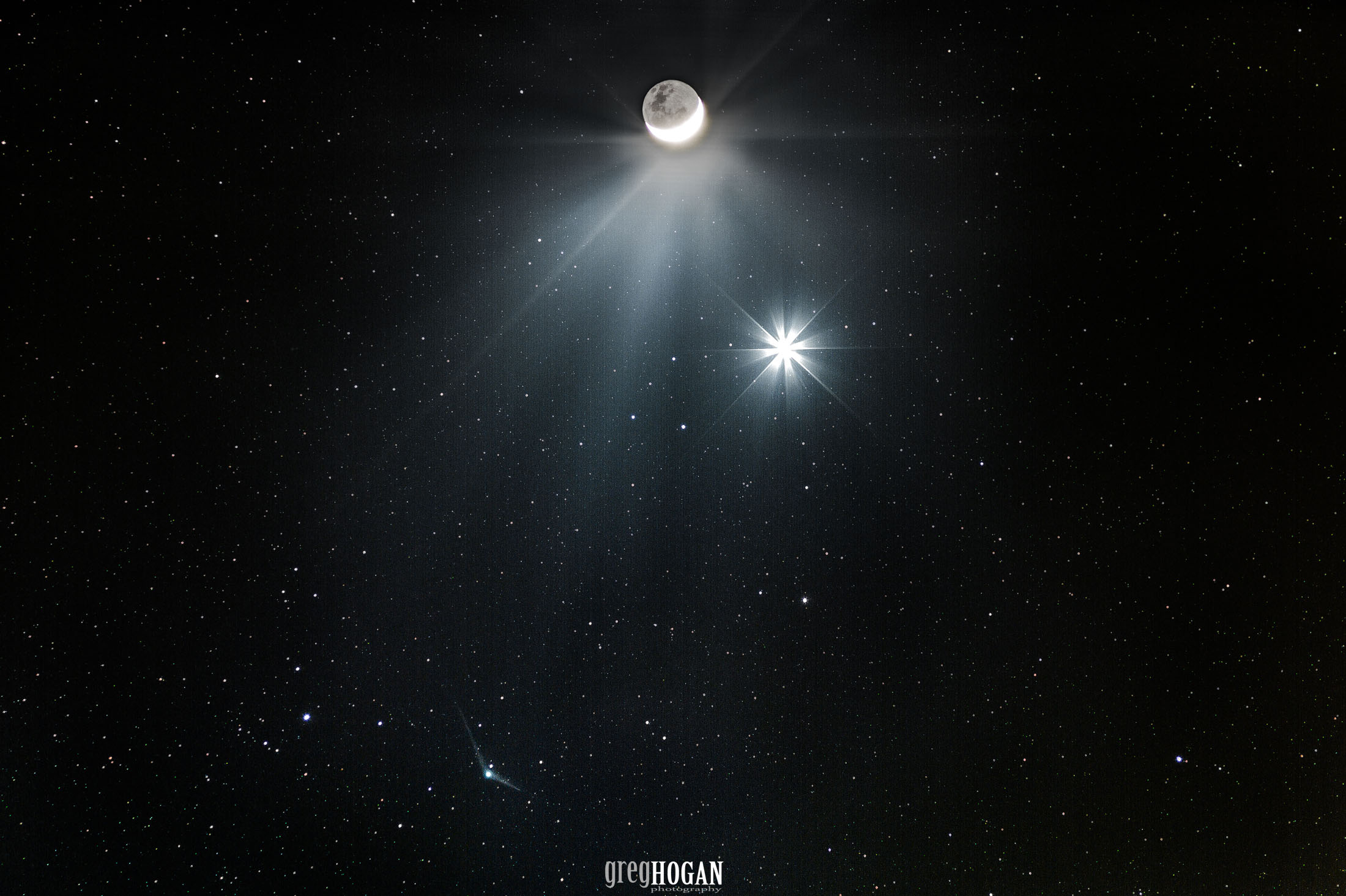
12月7日の夜明け前の空で、三日月と輝く金星が出会いました。太陽に次いで地球上で最も明るい2つの天体が美しく接近したのです。見えにくいものの、この空にはカタリナ彗星(C/2013 US10)も存在していました。かすかな彗星ですが、はっきりと2本の尾を持ち、月の夜側、明るく照らされた三日月、そして輝く明けの明星が写っています。これらはすべて、同じ視野を短時間露光と長時間露光で合成することで記録されています。カタリナ彗星の塵の尾は、右下方向を向いており、彗星の軌道の後ろに伸びています。一方、イオンの尾はフレームの左上方向に向かっており、太陽から遠ざかっています。2013年に発見されたオールトの雲からの新たな訪問者であるこの彗星は、11月15日に太陽に最接近し、現在は太陽から遠ざかっており、1月中旬に地球に最接近する予定です。動画:ふたご座流星群
原文(English)
A crescent Moon and brilliant Venus met in predawn skies on December 7, a beautiful conjunction of planet Earth's two brightest celestial beacons after the Sun. Harder to see but also on the scene was Comet Catalina (C/2013 US10). The fainter comet clearly sporting two tails, lunar night side, bright sunlit lunar crescent, and brilliant morning star, are all recorded here by combining short and long exposures of the same field of view. Pointing down and right, Catalina's dust tail tends to trail behind the comet's orbit. Its ion tail, angled toward the top left of the frame, is blowing away from the Sun. Discovered in 2013, the new visitor from the Oort cloud was closest to the Sun on November 15 and is now outbound, headed for its closest approach to Earth in mid-January. Watch: The Geminids
\ この感動を宇宙仲間にシェア /
宇宙をXでシェア
© Greg Hogan / APOD