星の流れとクジラ銀河
Star Streams and the Whale Galaxy
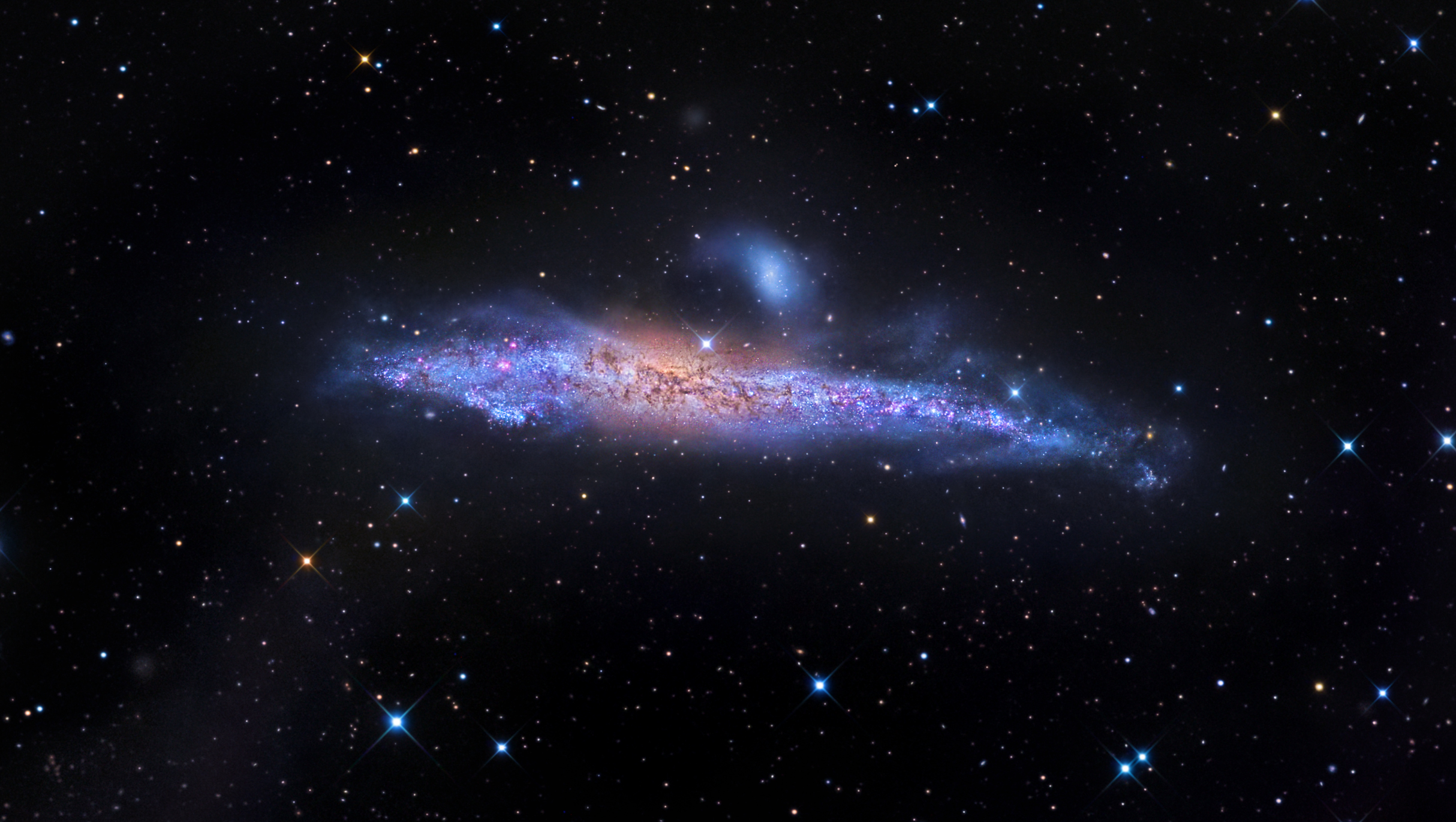
NGC 4631は、北天の星座であるりょうけん座の方向、わずか2500万光年先に位置する渦巻銀河です。横から見ると、天の川銀河とほぼ同じ大きさです。その歪んだ楔形は、宇宙のニシンを連想させる人もいれば、クジラ銀河という通称で親しまれている人もいます。この巨大銀河のすぐ上には、小さく、非常に明るい楕円形の伴銀河NGC 4627が、塵に覆われた黄色がかった中心部に位置していますが、NGC 4631のハロー内には、最近発見されたかすかな矮小銀河も識別できます。実際、NGC 4631の下(および上)に広がるかすかな構造は、潮汐星流であることが現在では分かっています。これらの星流は、約35億年前に始まったクジラ銀河との度重なる遭遇によって破壊された矮小衛星銀河の残骸です。近傍の銀河においても、潮汐星流の存在は、我々の銀河系を含む銀河形成の宇宙論モデルによって予測されている。
原文(English)
NGC 4631 is a spiral galaxy found only 25 million light-years away, toward the well-trained northern constellation Canes Venatici. Seen egde-on, the galaxy is similar in size to the Milky Way. Its distorted wedge shape suggests to some a cosmic herring and to others its popular moniker, The Whale Galaxy. The large galaxy's small, remarkably bright elliptical companion NGC 4627 lies just above its dusty yellowish core, but also identifiable are recently discovered, faint dwarf galaxies within the halo of NGC 4631. In fact, the faint extended features below (and above) NGC 4631 are now recognized as tidal star streams. The star streams are remnants of a dwarf satellite galaxy disrupted by repeated encounters with the Whale that began about 3.5 billion years ago. Even in nearby galaxies, the presence of tidal star streams is predicted by cosmological models of galaxy formation, including the formation of our own Milky Way.
\ この感動を宇宙仲間にシェア /
宇宙をXでシェア
© R Jay Gabany / APOD