興隆天文台上空のふたご座流星群
Geminid Meteors over Xinglong Observatory
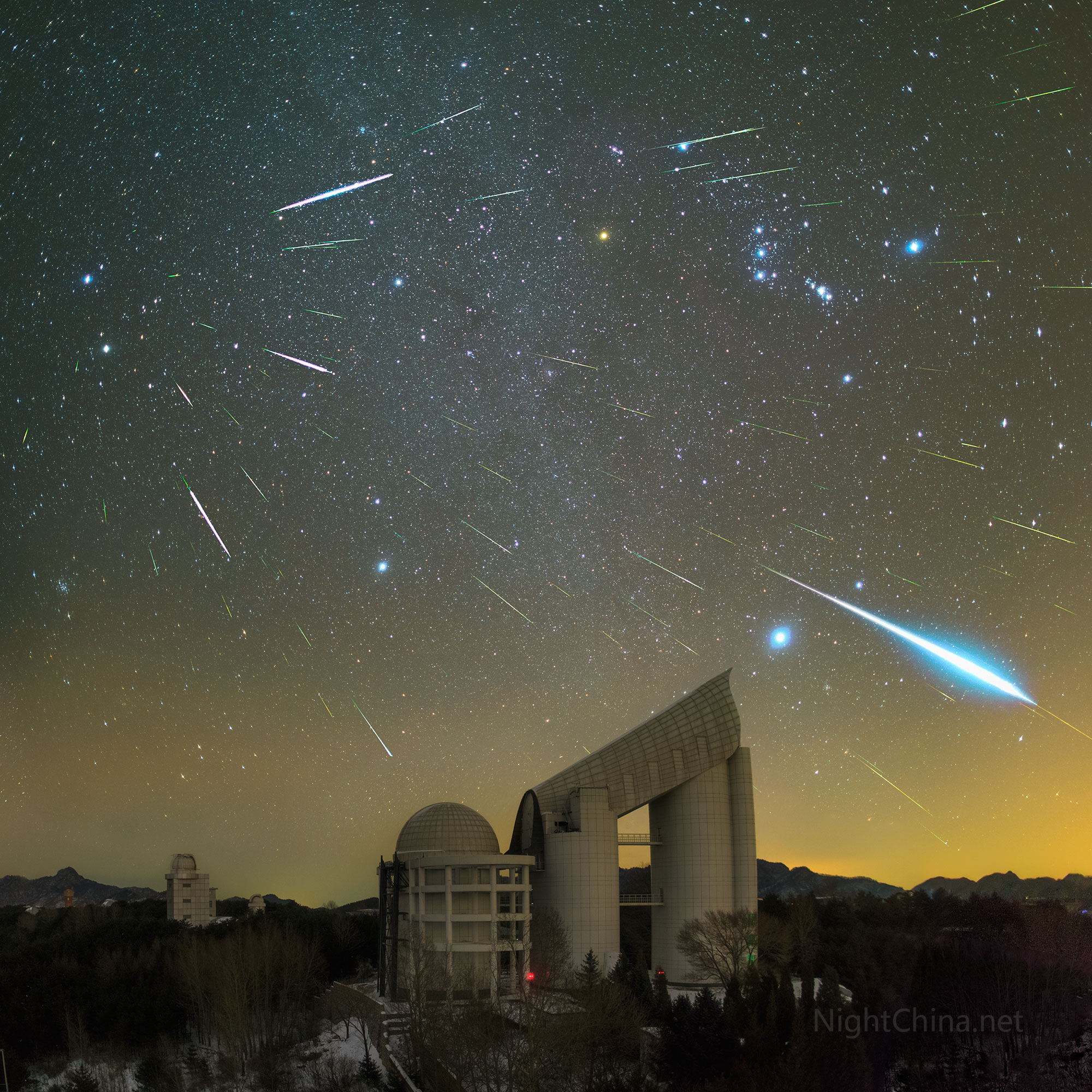
ふたご座流星群はどこから来るのでしょうか? 空の位置で言えば、掲載されている合成画像が美しく示しているように、ふたご座流星群の流星の筋を作る砂粒サイズの岩石は、ふたご座から流れ出ているように見えます。母天体という点では、太陽系の軌道は小惑星3200ファエトンを指し示していますが、この珍しい天体はほとんど活動していないように見えるため、これは少々謎です。おそらく、3200ファエトンは私たちが知っているよりも多くの塵を放出する現象を起こしているのでしょうが、たとえそうだとしても、何が起こっているのか、そしてなぜなのかは依然として謎のままです。先週ピークを迎えた中国の興隆天文台では、明るい火球を含む50個以上の流星が観測されました。12月のふたご座流星群は最も予測しやすく活発な流星群の一つであるため、その起源に関する詳細な調査は今後も続けられるでしょう。AASコンベンション参加者:APODタウンミーティングは水曜日午後2時15分から開催されます。
原文(English)
Where do Geminid meteors come from? In terms of location on the sky, as the featured image composite beautifully demonstrates, the sand-sized bits of rock that create the streaks of the Geminid Meteor Shower appear to flow out from the constellation of Gemini. In terms of parent body, Solar System trajectories point to the asteroid 3200 Phaethon -- but this results in a bit of a mystery since that unusual object appears mostly dormant. Perhaps, 3200 Phaethon undergoes greater dust-liberating events than we know, but even if so, exactly what happens and why remains a riddle. Peaking last week, over 50 meteors including a bright fireball were captured streaking above Xinglong Observatory in China. Since the Geminids of December are one of the most predictable and active meteor showers, investigations into details of its origin are likely to continue. AAS Conventioneers: APOD Town Meeting Wednesday at 2:15 pm
\ この感動を宇宙仲間にシェア /
宇宙をXでシェア
© Steed Yu and
NightChina.net / APOD