彗星67Pの表面から噴出する塵の噴流
A Dust Jet from the Surface of Comet 67P
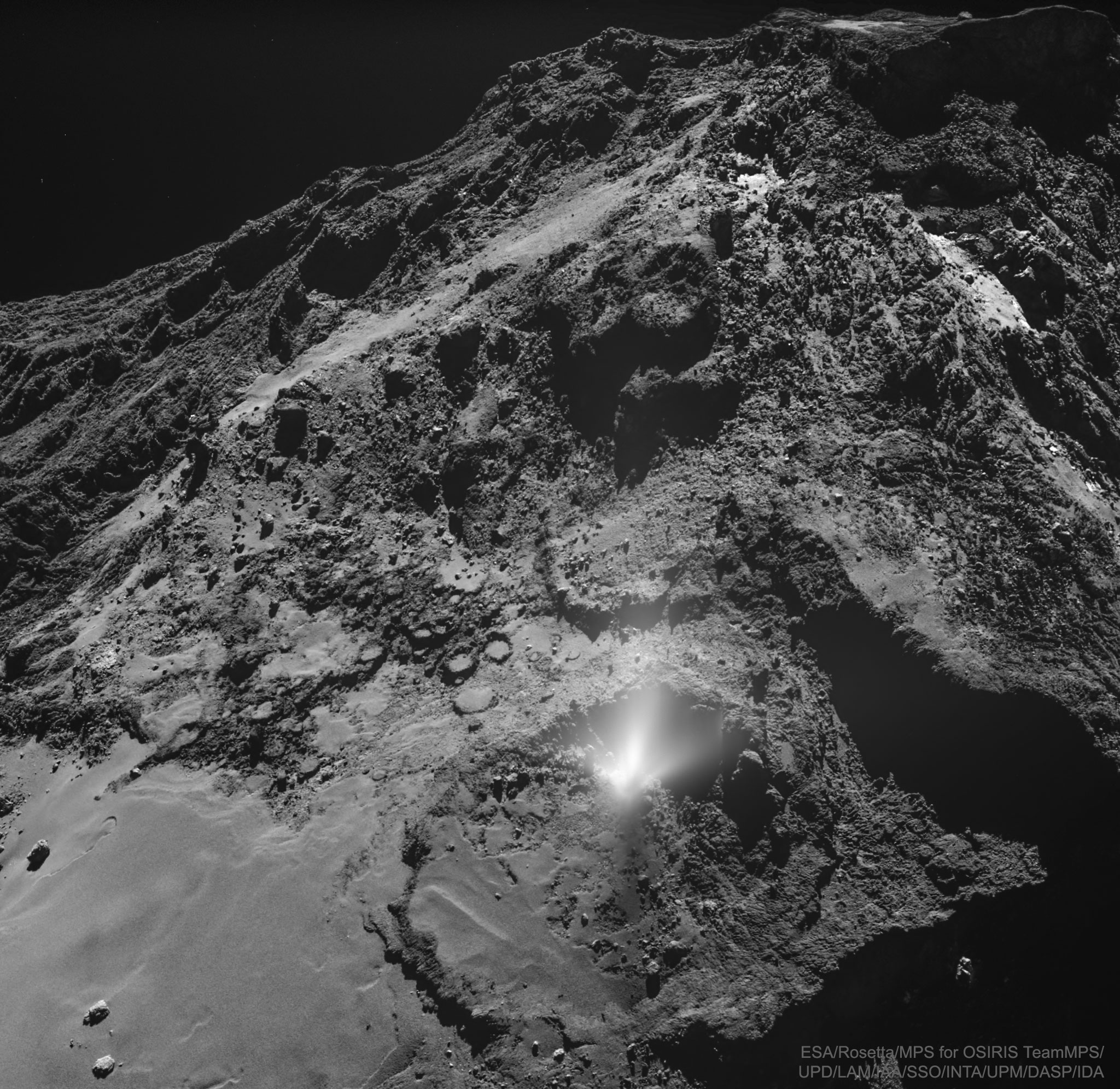
彗星の尾はどこから来るのでしょうか?彗星の核には、彗星の尾を形成するジェットが噴出する明確な場所はありません。しかし昨年、ESAのロゼッタ探査機は、67P/チュリュモフ・ゲラシメンコ彗星から噴出するジェットを撮影しただけでなく、その中を飛行しました。掲載されているのは、高さ10メートルの壁で片側が囲まれた小さな円形の窪みから明るい噴煙が噴出している様子を示す印象的な画像です。ロゼッタのデータの分析によると、このジェットは塵と水氷の両方で構成されていました。平凡な地形は、おそらく多孔質の表面のはるか下で何かが起こり、噴煙が生成されたことを示唆しています。この画像は昨年7月に撮影されたもので、ロゼッタのミッションが67P彗星の表面への制御された衝突で終了する約2か月前のことです。
原文(English)
Where do comet tails come from? There are no obvious places on the nuclei of comets from which the jets that create comet tails emanate. Last year, though, ESA's Rosetta spacecraft not only imaged a jet emerging from Comet 67P/Churyumov-Gerasimenko, but flew right through it. Featured is a telling picture showing a bright plume emerging from a small circular dip bounded on one side by a 10-meter high wall. Analyses of Rosetta data shows that the jet was composed of both dust and water-ice. The mundane terrain indicates that something likely happened far under the porous surface to create the plume. This image was taken last July, about two months before Rosetta's mission ended with a controlled impact onto Comet 67P's surface.
\ この感動を宇宙仲間にシェア /
宇宙をXでシェア
© ESA,
Rosetta,
MPS, OSIRIS;
UPD/LAM/IAA/SSO/INTA/UPM/DASP/IDA / APOD