NGC 2261:ハッブルの変光星雲
NGC 2261: Hubble's Variable Nebula
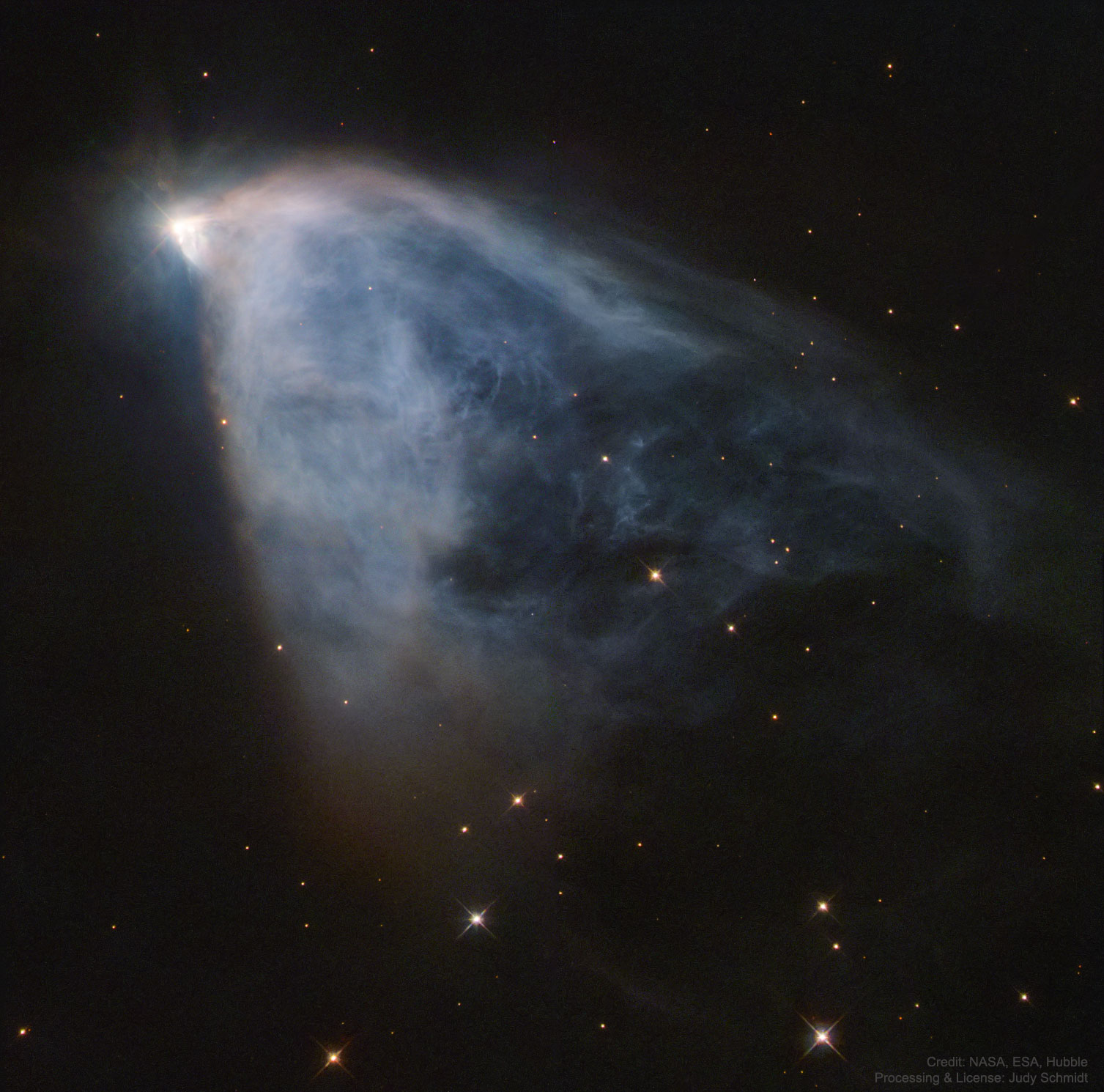
ハッブル変光星雲が変化する原因は何でしょうか? ここで紹介する珍しい星雲は、わずか数週間でその外観が著しく変化します。200年以上前に発見され、その後NGC 2261としてカタログ化されたこの注目すべき星雲は、20世紀初頭にそれを研究したエドウィン・ハッブルにちなんで名付けられました。おそらくふさわしいことに、この特集画像はハッブルの名にちなんだ別のもの、宇宙望遠鏡によって撮影されました。ハッブル変光星雲は、恒星R Monocerotisから扇状に広がるガスと微細な塵でできた反射星雲です。この淡い星雲は直径約1光年で、一角獣座(一角獣座)の方向に約2500光年離れています。ハッブル変光星雲の変動に関する有力な説明は、不透明な塵の密度の高い塊がR Monの近くを通過し、星雲の残りの部分で見られる反射塵に動く影を落とすというものです。オープンサイエンス:天体物理学ソースコードライブラリにある1,500以上のコードを閲覧しよう
原文(English)
What causes Hubble's Variable Nebula to vary? The unusual nebula featured here changes its appearance noticeably in just a few weeks. Discovered over 200 years ago and subsequently cataloged as NGC 2261, the remarkable nebula is named for Edwin Hubble, who studied it early last century. Fitting, perhaps, the featured image was taken by another namesake of Hubble: the Space Telescope. Hubble's Variable Nebula is a reflection nebula made of gas and fine dust fanning out from the star R Monocerotis. The faint nebula is about one light-year across and lies about 2500 light-years away towards the constellation of the Unicorn (Monocerotis). The leading variability explanation for Hubble's Variable Nebula holds that dense knots of opaque dust pass close to R Mon and cast moving shadows onto the reflecting dust seen in the rest of the nebula. Open Science: Browse 1,500+ codes in the Astrophysics Source Code Library
\ この感動を宇宙仲間にシェア /
宇宙をXでシェア
© NASA / APOD