内モンゴル上空のオリオン座流星群
Orionids Meteors over Inner Mongolia
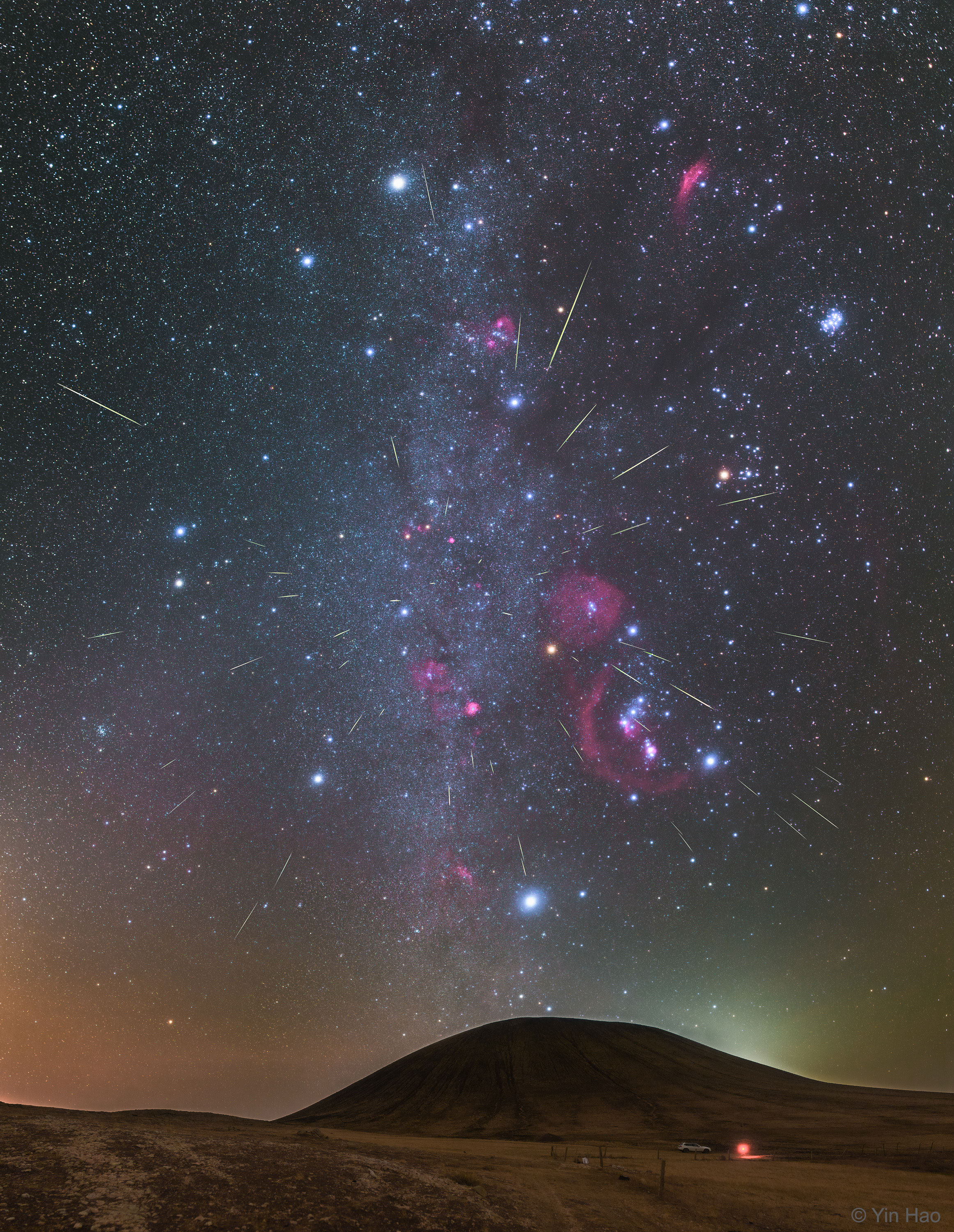
オリオン座から流星が飛び出しています。10月はオリオン座流星群の時期なので、これは予想されていました。ここに掲載されているのは、昨年10月に中国内モンゴルのウランハダ火山で連続して撮影された20個以上の流星です。特集画像には、オリオン座のベルトのすぐ上と左にある放射点と呼ばれる空の小さな領域にすべてつながる複数の流星の筋が写っています。オリオン座流星群は、ハレー彗星が太陽系内側への旅の途中で放出された砂粒サイズの破片から始まりました。ハレー彗星は実際には2つの既知の流星群の原因であり、もう1つはエータ・アクアリッドとして知られ、毎年5月に見ることができます。1年前の今日、同じ場所で撮影されたオリオン座流星群の画像には、同じ車が写っています。来月は、テンペル・タットル彗星によるしし座流星群によって、明るい流星の筋が見られるはずです。APODをフォローするには、Facebook、Instagram、Reddit、またはTwitterをご覧ください。
原文(English)
Meteors have been shooting out from the constellation of Orion. This was expected, as October is the time of year for the Orionids Meteor Shower. Pictured here, over two dozen meteors were caught in successively added exposures last October over Wulan Hada volcano in Inner Mongolia, China. The featured image shows multiple meteor streaks that can all be connected to a single small region on the sky called the radiant, here visible just above and to the left of the belt of Orion, The Orionids meteors started as sand sized bits expelled from Comet Halley during one of its trips to the inner Solar System. Comet Halley is actually responsible for two known meteor showers, the other known as the Eta Aquarids and visible every May. An Orionids image featured on APOD one year ago today from the same location shows the same car. Next month, the Leonids Meteor Shower from Comet Tempel-Tuttle should also result in some bright meteor streaks. Follow APOD on: Facebook, Instagram, Reddit, or Twitter
\ この感動を宇宙仲間にシェア /
宇宙をXでシェア
© Yin Hao / APOD