楕円銀河PGC 42871における星の殻
Shells of Stars in Elliptical Galaxy PGC 42871
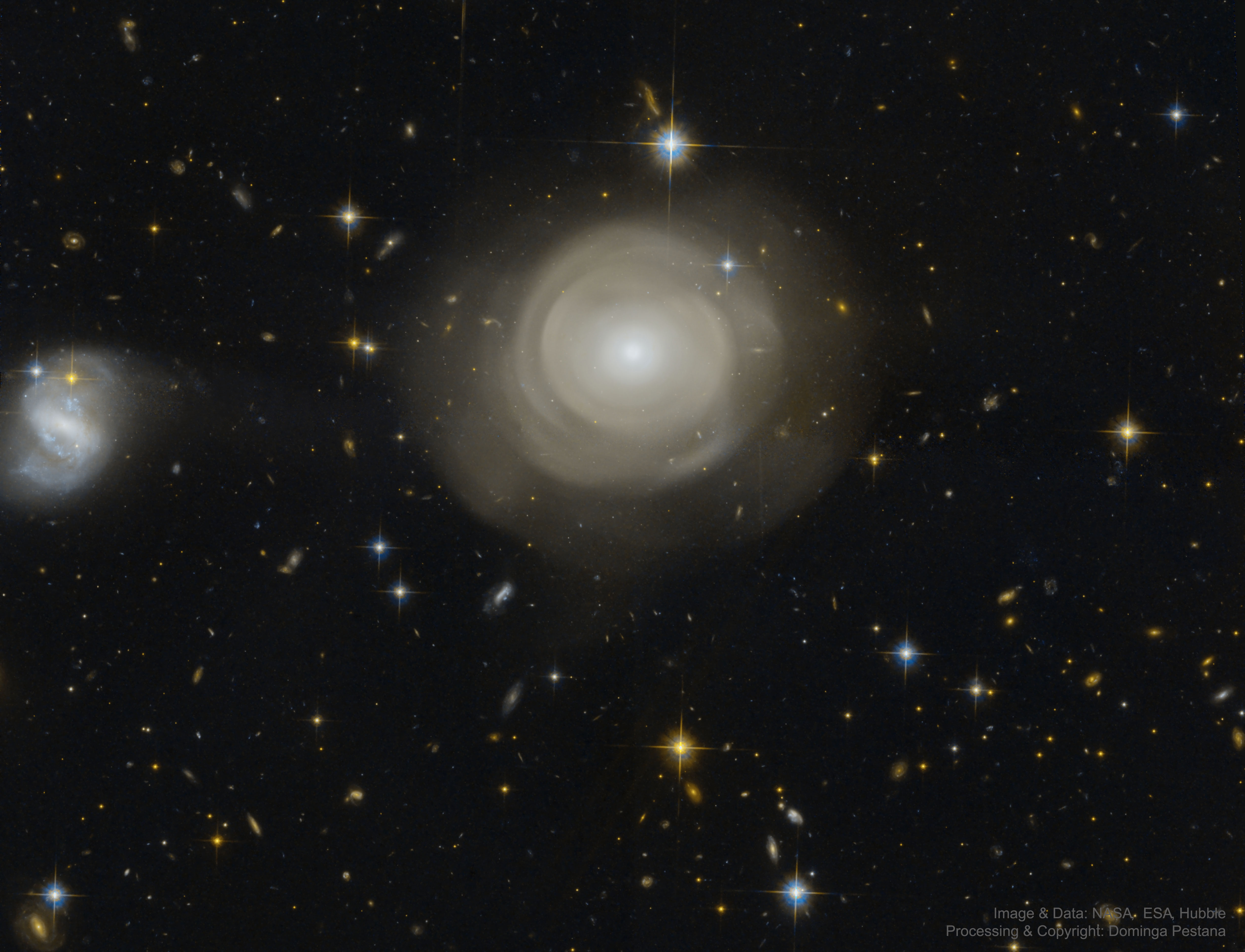
銀河はどのように成長するのでしょうか?その解明のため、ハッブル宇宙望遠鏡が特異な楕円銀河PGC 42871の撮影に投入されました。この銀河がどのようにして無数の星の殻に囲まれるようになったのかは、その進化の手がかりとなるかもしれません。拡散した星の殻の中には、巨大な球状星団が埋め込まれています。分析によると、これらの星は3つの異なる時代に誕生したことが分かっています。このデータやその他のデータから、PGC 42871は少なくとも2回の銀河衝突を経験しており、そのうち少なくとも1回はかつて渦巻銀河であった可能性があると推測されます。左端に残る渦巻銀河はPGC 42871と同じ距離にあり、衝突に関与していた可能性があります。PGC 42871は直径約2万光年で、ケンタウルス座の方向に約2億7000万光年離れたところに位置しています。オープンサイエンス:天体物理学ソースコードライブラリで1800以上のコードを閲覧できます。
原文(English)
How do galaxies grow? To help find out, the Hubble Space Telescope was deployed to image the unusual elliptical galaxy PGC 42871. How this galaxy came to be surrounded by numerous shells of stars may give clues about how it evolved. Embedded in the diffuse shells are massive globular clusters of stars -- stars which analyses show were born during three different epochs. This and other data indicate that PGC 42871 has been in at least two galactic collisions, at least one of which might have been with a former spiral galaxy. The remaining spiral galaxy on the far left is at the same distance as PGC 42871 and may have been involved in some of the collisions. PGC 42871 spans about 20 thousand light years and lies about 270 million light years away toward the constellation of Centaurus. Open Science: Browse 1,800+ codes in the Astrophysics Source Code Library
\ この感動を宇宙仲間にシェア /
宇宙をXでシェア
© NASA / APOD