くじら座の銀河と超新星
Cetus Galaxies and Supernova
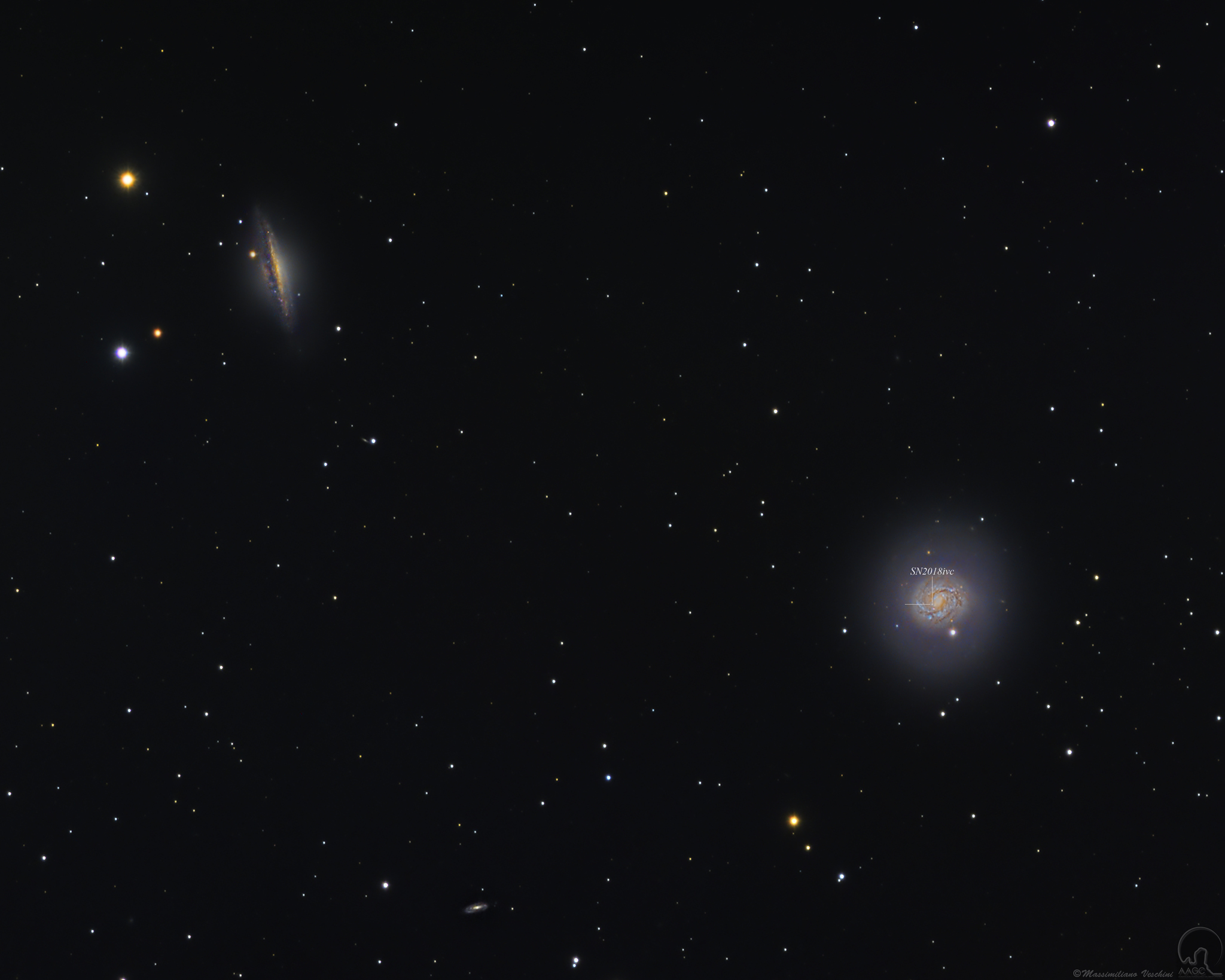
左上にある巨大な渦巻銀河NGC 1055は、右下にある渦巻銀河メシエ77(M77)とともに、くじら座の方向にある宇宙の眺めに写っています。横から見た渦巻銀河NGC 1055の細く塵っぽい外観は、正面から見たM77の明るい核と渦状腕と見事なコントラストを成しています。どちらも直径10万光年を超えるこの2つの銀河は、約6000万光年離れた小さな銀河群の主要メンバーです。この推定距離では、M77はシャルル・メシエのカタログの中で最も遠い天体の1つであり、同じ島宇宙に属するNGC 1055とは少なくとも50万光年離れています。視野は空に映る満月ほどの大きさで、色鮮やかな前景の天の川の星々や、より遠くの背景の銀河が含まれています。 11月28日に撮影されたこの鮮明な画像には、新たに発見された超新星SN2018ivcも写っており、その位置はM77銀河の腕の部分に示されている。M77銀河の巨大な星の一つが爆発した光は、わずか数日前の11月24日に地球上の望遠鏡によって発見された。
原文(English)
Large spiral galaxy NGC 1055 at top left joins spiral Messier 77 (bottom right) in this cosmic view toward the aquatic constellation Cetus. The narrowed, dusty appearance of edge-on spiral NGC 1055 contrasts nicely with the face-on view of M77's bright nucleus and spiral arms. Both over 100,000 light-years across, the pair are dominant members of a small galaxy group about 60 million light-years away. At that estimated distance, M77 is one of the most remote objects in Charles Messier's catalog, and is separated from fellow island universe NGC 1055 by at least 500,000 light-years. The field of view is about the size of the full Moon on the sky and includes colorful foreground Milky Way stars along with more distant background galaxies. Taken on November 28, the sharp image also includes newly discovered supernova SN2018ivc, its location indicated in the arms of M77. The light from the explosion of one of M77's massive stars was discovered by telescopes on planet Earth only a few days earlier on November 24.
\ この感動を宇宙仲間にシェア /
宇宙をXでシェア
© Massimiliano Veschini / APOD