虹色のふたご座流星群
A Rainbow Geminid Meteor
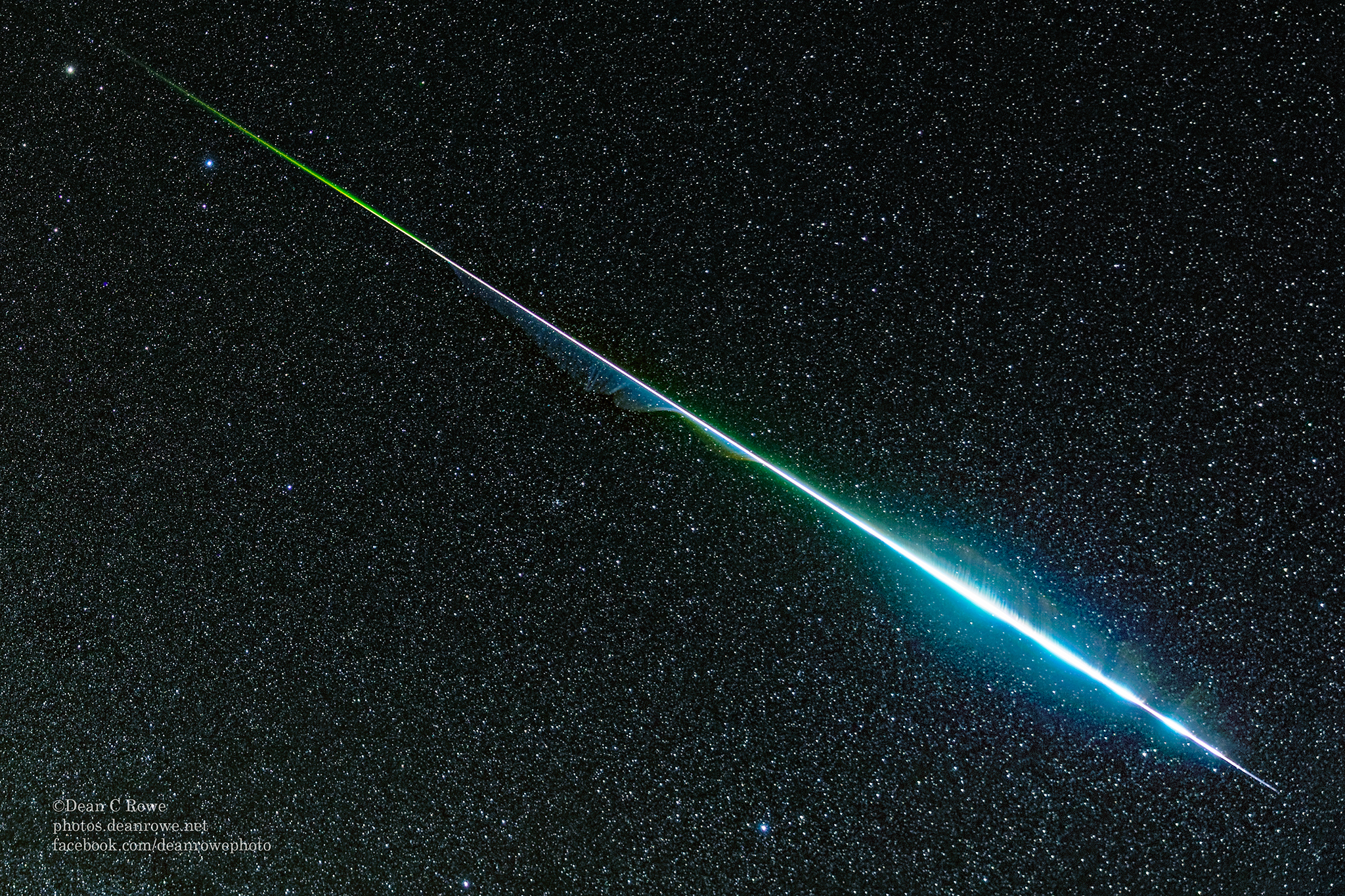
流星は色鮮やかなことがあります。人間の目は通常多くの色を識別できませんが、カメラはしばしばそれを捉えます。写真は先週の流星群でカメラに捉えられたふたご座流星群の流星で、驚くほど明るいだけでなく、色彩も豊かでした。小惑星3200ファエトンから放出された輝く塵は、地球の大気圏を横断し、月の視直径の60倍以上の長さの軌跡を残しました。流星の色は通常、流星が崩壊する際に放出されるイオン化された元素に由来し、青緑色はマグネシウム、紫色はカルシウム、緑色はニッケルに由来します。一方、赤色は通常、地球の大気中のエネルギーを受けた窒素と酸素に由来します。この明るい流星の火球は一瞬のうちに消え去りましたが、数分間は風に吹かれたイオン化の痕跡が残りました。その痕跡の始まりをここで見ることができます。ギャラリー:ふたご座流星群 2018
原文(English)
Meteors can be colorful. While the human eye usually cannot discern many colors, cameras often can. Pictured is a Geminid captured by camera during last week's meteor shower that was not only impressively bright, but colorful. The radiant grit cast off by asteroid 3200 Phaethon blazed a path across Earth's atmosphere longer than 60 times the angular diameter of the Moon. Colors in meteors usually originate from ionized elements released as the meteor disintegrates, with blue-green typically originating from magnesium, calcium radiating violet, and nickel glowing green. Red, however, typically originates from energized nitrogen and oxygen in the Earth's atmosphere. This bright meteoric fireball was gone in a flash -- less than a second -- but it left a wind-blown ionization trail that remained visible for several minutes, the start of which can be seen here. Gallery: Geminid Meteors 2018
\ この感動を宇宙仲間にシェア /
宇宙をXでシェア
© Dean Rowe / APOD