赤い星雲、緑の彗星、青い星々
Red Nebula, Green Comet, Blue Stars
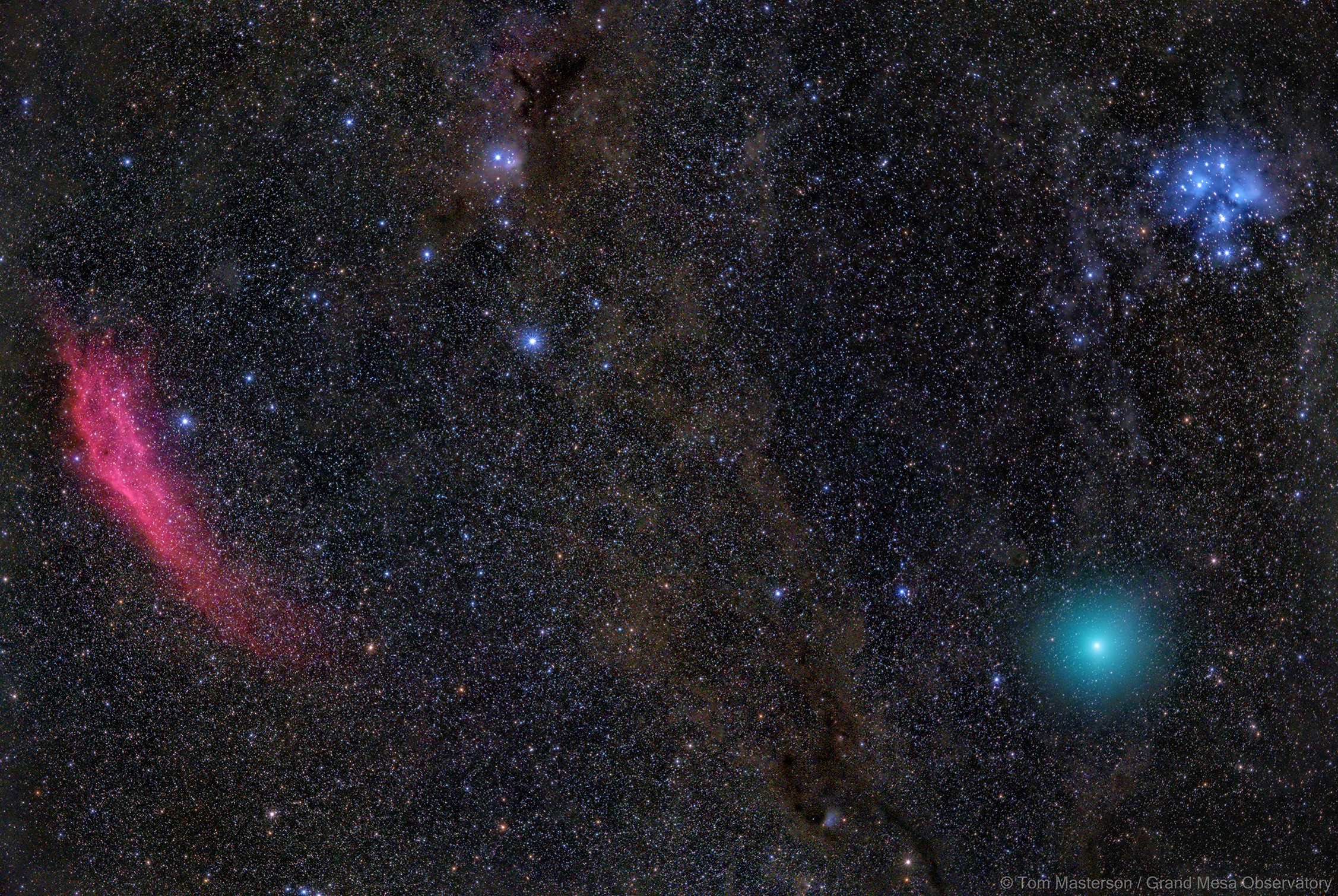
この祝祭的な色彩の空の風景は、ヴィルタネン彗星が地球に最接近した12月17日の早朝に撮影されました。彗星はかろうじて肉眼で見えました。彗星の蛍光を発する大気またはコマの美しい緑色は、プレアデス星団の下にある彗星の位置で記録されたデジタル露光を重ね合わせることによってのみ、ここで引き出されています。露光によって、若いプレアデス星を取り囲む塵の雲によって反射された青い星の光も引き出されています。ペルセウス分子雲の端に沿って塵の多い暗黒星雲を(左方向に)見つめると、カリフォルニア星雲としても知られる輝線星雲NGC 1499にたどり着きます。肉眼では暗すぎて見えないこの宇宙雲の際立った赤みがかった輝きは、電子が電離した水素原子と再結合することによって生じます。 12月23日頃、ヴィルタネン彗星は北天の冬の星座であるぎょしゃ座の明るい星カペラの近くを通過するため、双眼鏡を使えば簡単に見つけることができるでしょう。
原文(English)
This festively colored skyscape was captured in the early morning hours of December 17, following Comet Wirtanen's closest approach to planet Earth. The comet was just visible to the eye. The lovely green color of its fluorescing cometary atmosphere or coma is brought out here only by adding digital exposures registered on the comet's position below the Pleiades star cluster. The exposures also bring out blue starlight reflected by the dust clouds surrounding the young Pleiades stars. Gaze (toward the left) across dusty dark nebulae along the edge of the Perseus molecular cloud and you'll travel to emission nebula NGC 1499, also known as the California nebula. Too faint for the eye, the cosmic cloud's pronounced reddish glow is from electrons recombining with ionized hydrogen atoms. Around December 23rd, Comet Wirtanen should be easy to find with binoculars when it sweeps close to bright star Capella in the northern winter constellation Auriga, the Charioteer.
\ この感動を宇宙仲間にシェア /
宇宙をXでシェア
© Tom Masterson / APOD