地球の影
The Umbra of Earth
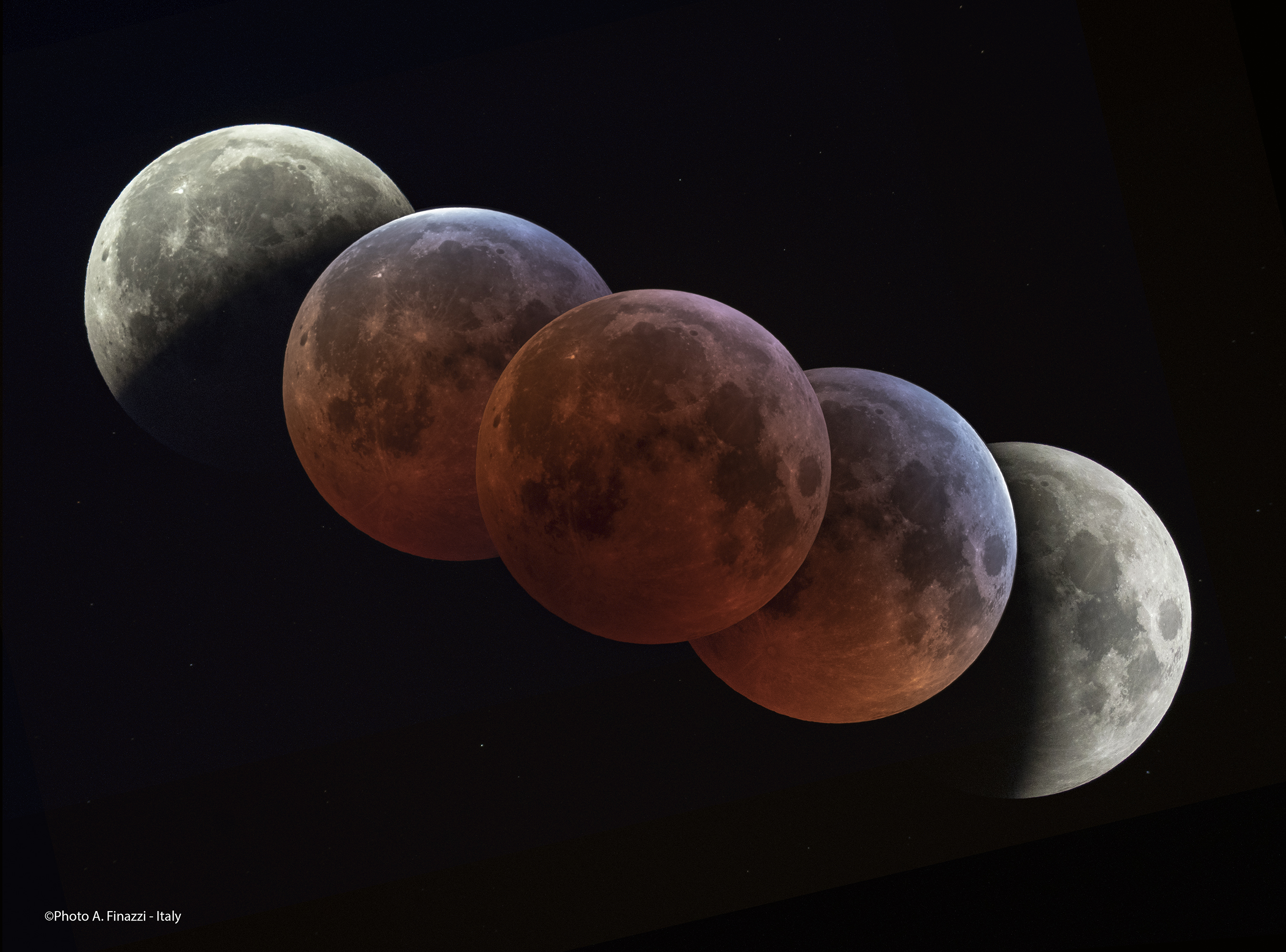
地球の暗い内側の影は本影と呼ばれます。円錐形をしており、宇宙に伸びていますが、断面は円形で、月食の際に最も見やすくなります。たとえば、1月21日には満月が地球の本影の北半分を横切り、地球上の多くの場所で月を観測する人々を楽しませました。皆既食の段階では、月は63分間完全に本影の中にありました。イタリアのキウドゥーノ近郊の丘から晴れた暗い空の下で撮影されたこの合成日食画像は、皆既食(中央)と部分食の連続した画像を使用して、本影の湾曲した縁の大部分をトレースしています。大気によって散乱された太陽光が地球の影に反射するため、月の表面は皆既食の間は赤く見えます。しかし、本影の縁に近いところでは、日食中の月の縁は独特の青みを帯びています。青みがかった月光は、太陽光線が成層圏上部の高層部を通過する際に、オゾン層によって赤色光が散乱され、青色光が透過されることで生じる。
原文(English)
The dark, inner shadow of planet Earth is called the umbra. Shaped like a cone extending into space, it has a circular cross section most easily seen during a lunar eclipse. For example, on January 21 the Full Moon slid across the northern half of Earth's umbral shadow, entertaining moonwatchers around much of the planet. In the total phase of the eclipse, the Moon was completely within the umbra for 63 minutes. Recorded under clear, dark skies from the hills near Chiuduno, Italy this composite eclipse image uses successive pictures from totality (center) and partial phases to trace out a large part of the umbra's curved edge. Reflecting sunlight scattered by the atmosphere into Earth's shadow, the lunar surface appears reddened during totality. But close to the umbra's edge, the limb of the eclipsed Moon shows a distinct blue hue. The blue eclipsed moonlight originates as rays of sunlight pass through layers high in the upper stratosphere, colored by ozone that scatters red light and transmits blue.
\ この感動を宇宙仲間にシェア /
宇宙をXでシェア
© Antonio
Finazzi / APOD