M78銀河の星屑と星明かり
Stardust and Starlight in M78
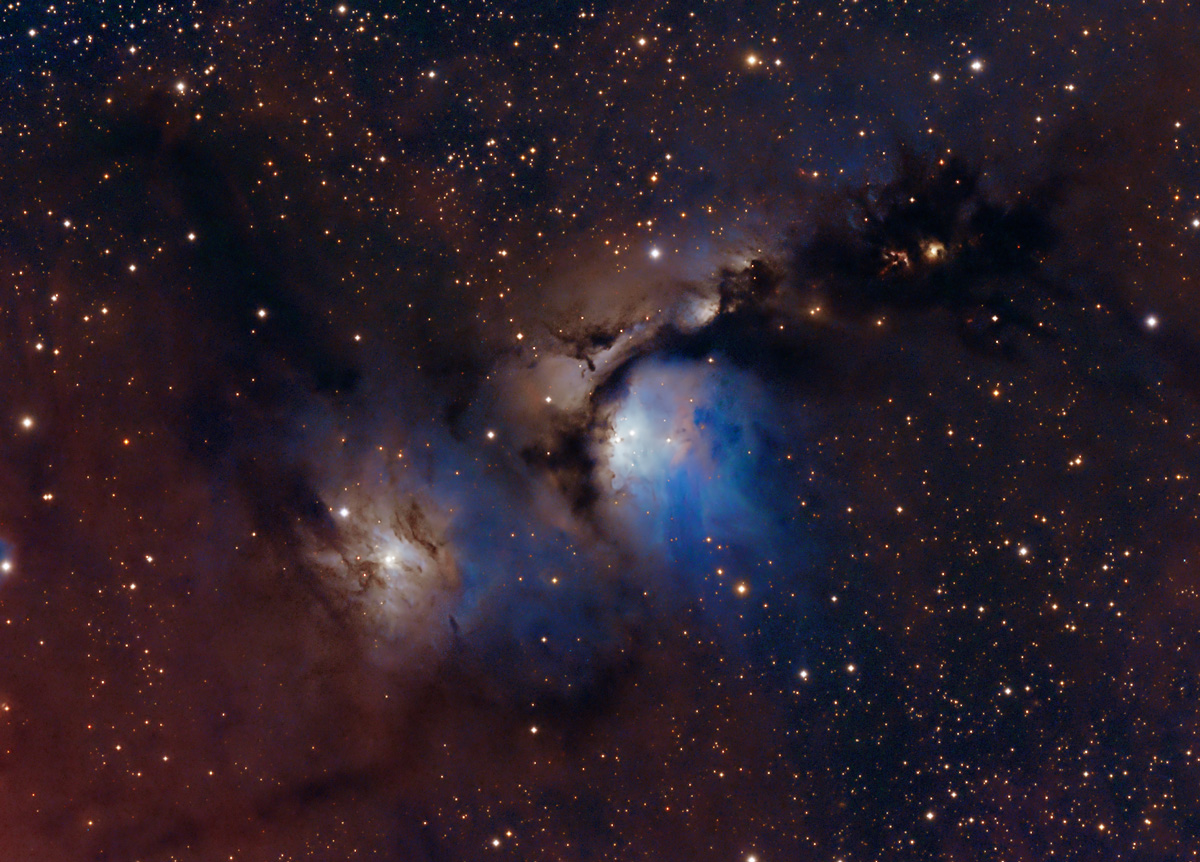
星間塵の雲や明るい星雲が、豊かなオリオン座に数多く存在します。中でも最も明るい星雲の一つであるM78は、この色鮮やかな望遠鏡画像の中心付近に位置し、オリオン座の三つ星の北側に広がっています。地球から約1500光年の距離にあるこの青みがかった星雲自体の直径は約5光年です。その青みがかった色は、この領域にある高温の若い星の青い光を塵が優先的に反射するためです。多くのハービッグ・ハロー天体(形成過程にある星からの活発なジェット)を含むこの壮大な星空には、暗い塵の帯や他の星雲が容易に見分けられます。しかし、この画像にはマクニール星雲が写っていません。2004年にようやく認められたこの謎めいた変光星雲は、より大きなM78の上方右側の暗い塵の帯に沿って発見されました。マクニール星雲は原始星と関連しており、この領域の画像では、写っている時と写っていない時が交互に現れる。マクニール星雲は昨年末に視界から消え、2019年2月に撮影されたこの深宇宙画像にも写っていない。
原文(English)
Interstellar dust clouds and bright nebulae abound in the fertile constellation of Orion. One of the brightest, M78, is near the center in this colorful telescopic view, covering an area north of Orion's belt. At a distance of about 1,500 light-years, the bluish nebula itself is about 5 light-years across. Its blue tint is due to dust preferentially reflecting the blue light of hot, young stars in the region. Dark dust lanes and other nebulae can easily be traced through the gorgeous skyscape that includes many Herbig- Haro objects, energetic jets from stars in the process of formation. But missing from this image is McNeil's nebula. A major discovery only recognized in 2004, the enigmatic, variable nebula was found along the dark lane of dust above and right of larger M78. McNeil's nebula is associated with a protostar and seen to be sometimes present and sometimes absent in photos of the well-imaged region. McNeil's nebula faded from view late last year and is still absent in this deep image recorded in February 2019.
\ この感動を宇宙仲間にシェア /
宇宙をXでシェア
© Richard S. Wright Jr. / APOD