三日月形のエンケラドゥス
Crescent Enceladus
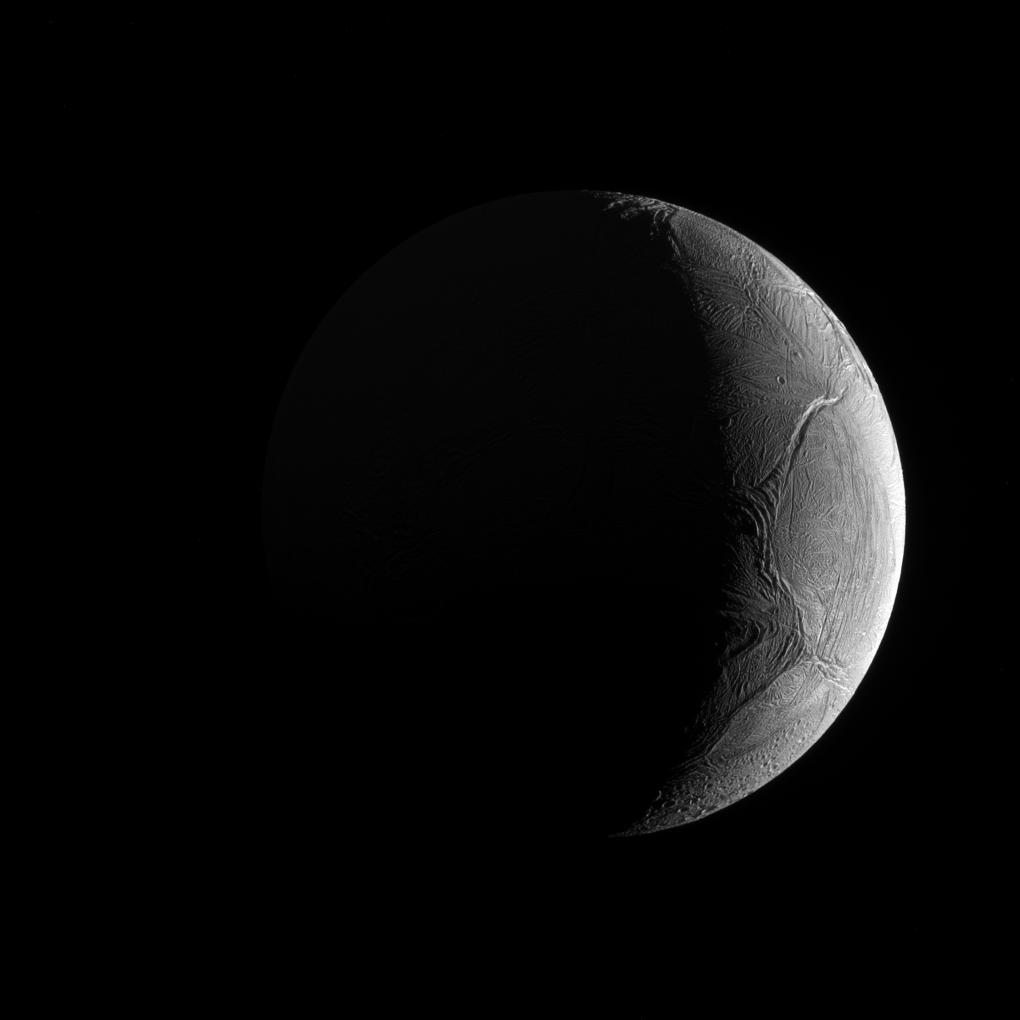
カッシーニ探査機が撮影したこの画像には、魅惑的な内衛星エンケラドゥスの土星に面した半球が影から顔を覗かせている。2016年11月に撮影されたこの劇的なシーンでは、北が上になっている。カッシーニのカメラは、衛星の明るい三日月形から約13万キロメートル離れた、ほぼ太陽方向を向いていた。実際、この遠い世界は、受け取る太陽光の90パーセント以上を反射し、その表面は新雪とほぼ同じ反射率を持っている。直径わずか500キロメートルのエンケラドゥスは、驚くほど活発な衛星である。カッシーニのフライバイで収集されたデータと長年にわたる画像から、南極の驚くべき間欠泉の存在と、氷の地殻の下に液体の水からなる可能性のある全球的な海の存在が明らかになった。
原文(English)
Peering from the shadows, the Saturn-facing hemisphere of tantalizing inner moon Enceladus poses in this Cassini spacecraft image. North is up in the dramatic scene captured during November 2016 as Cassini's camera was pointed in a nearly sunward direction about 130,000 kilometers from the moon's bright crescent. In fact, the distant world reflects over 90 percent of the sunlight it receives, giving its surface about the same reflectivity as fresh snow. A mere 500 kilometers in diameter, Enceladus is a surprisingly active moon. Data collected during Cassini's flybys and years of images have revealed the presence of remarkable south polar geysers and a possible global ocean of liquid water beneath an icy crust.
\ この感動を宇宙仲間にシェア /
宇宙をXでシェア
© NASA / APOD