ハレーダビッドと天の川
Halley Dust and Milky Way
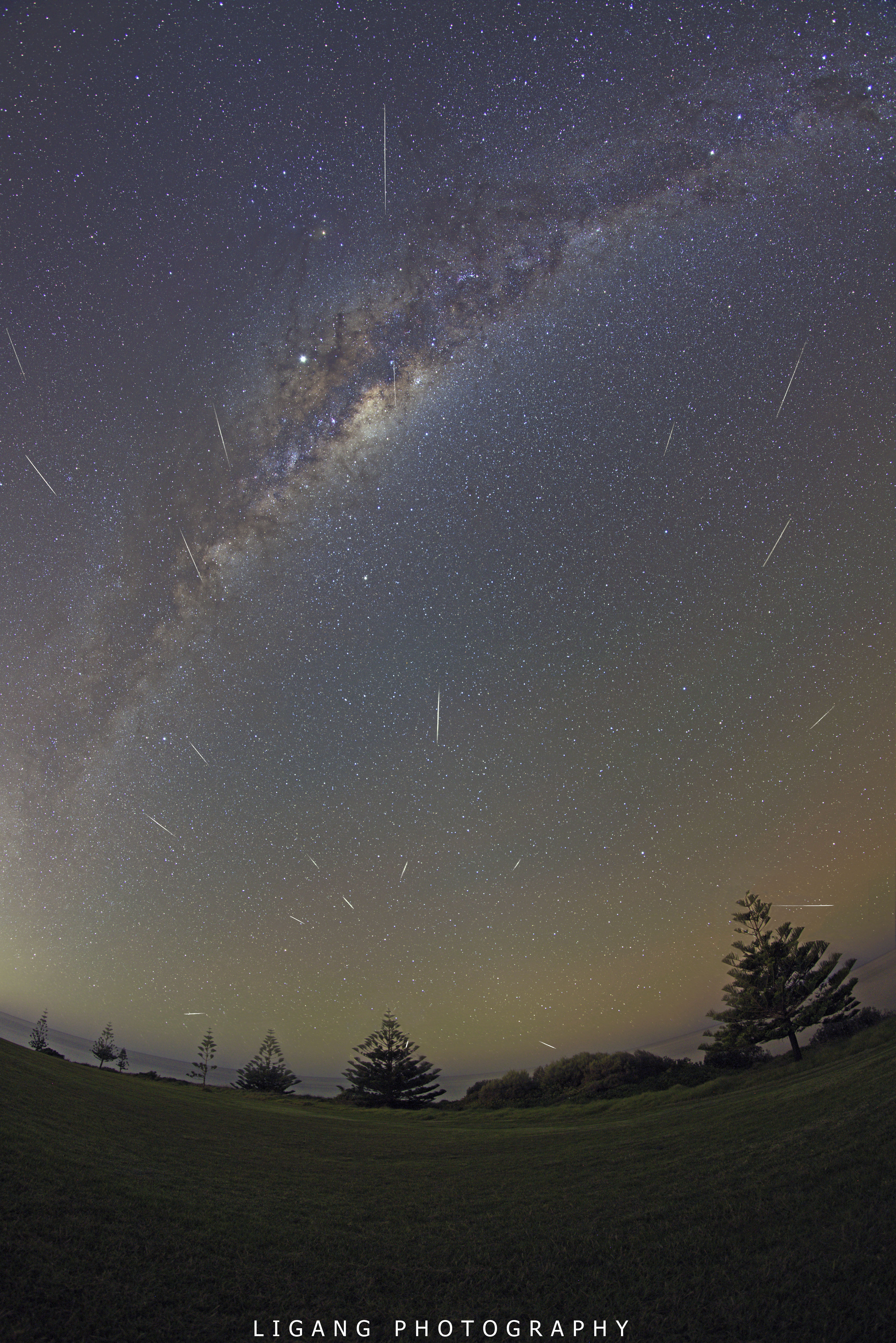
5月7日のほとんど月明かりのない夜空を、宇宙塵の粒が筋状に流れた。地球が周期彗星ハレーが残した塵の帯を突き進む際に巻き上げられたこの流星群は、エータ・アクアリッド流星群として知られている。この合成画像は流星群の予測極大の約1日後に作成されたが、それでも2時間かけて撮影された20個の流星を、背景の空に重ね合わせて捉えている。流星の軌跡は、オーストラリアのシドニーの南100キロメートルから見える、地平線近くの同名の淡い星エータ・アクアリイ付近にある流星群の放射点を指し示している。エータ・アクアリッド流星群の流星は、その速さで知られ、大気圏に突入する速度は約66キロメートル毎秒である。輝く木星は、地平線のはるか上にある天の川の中心の膨らみの近くで輝いている。南十字星は、フレームの右上隅にわずかに収まっている。
原文(English)
Grains of cosmic dust streaked through the mostly moonless night skies of May 7. Swept up as planet Earth plowed through the debris streams left behind by periodic Comet Halley, the annual meteor shower is known as the Eta Aquarids. Though it was made about a day after the shower's predicted maximum, this composite image still captures 20 meteors in exposures taken over a 2 hour period, registered on a background exposure of the sky. The meteor trails point back to the shower radiant near eponymous faint star Eta Aquarii close to the horizon, seen from 100 kilometers south of Sydney Australia. Known for speed, Eta Aquarid meteors move fast, entering the atmosphere at about 66 kilometers per second. Brilliant Jupiter shines near the central bulge of the Milky Way high above the horizon. The Southern Cross is just tucked in to the upper right corner of the frame.
\ この感動を宇宙仲間にシェア /
宇宙をXでシェア
© Gang Li / APOD