天の川銀河、打ち上げ、着陸
Milky Way, Launch, and Landing
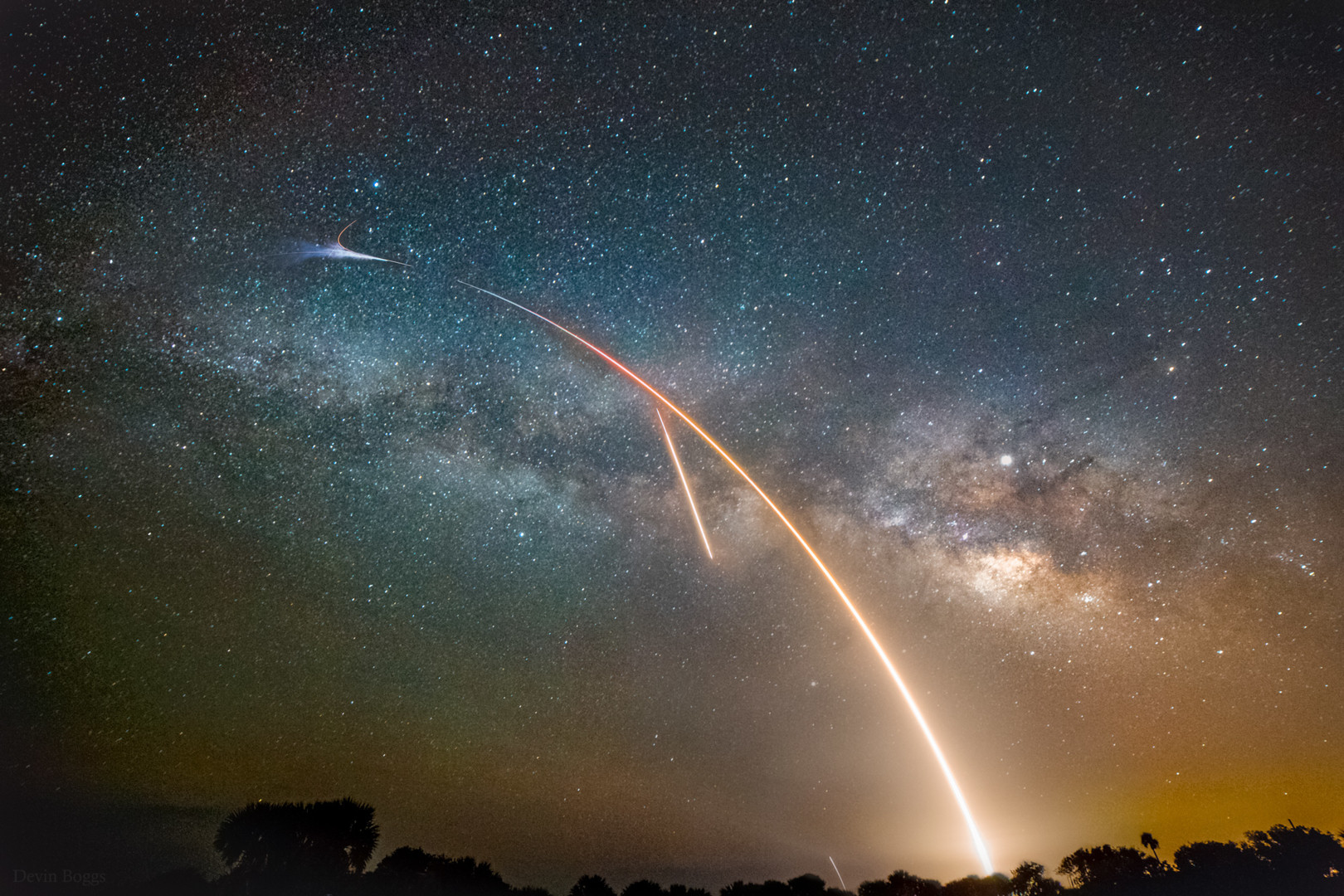
天の川は肉眼ではそれほどカラフルで明るくは見えませんが、ロケットの打ち上げはそう見えます。そのため、この合成された空の風景では、銀河の中心にある密集した星野と宇宙塵の雲を際立たせるために、感度の高いデジタルカメラで別の長時間露光が使用されました。メリット島国立野生生物保護区のシーンでは、天の川の画像の約20分後に開始された9分間の長時間露光で、ロケットの打ち上げと着陸が記録されました。スター・ウォーズのミレニアム・ファルコンにちなんで名付けられたファルコン9ロケットは、5月4日の早朝に国際宇宙ステーションへのドラゴン補給船を打ち上げました。打ち上げ弧の頂点にある噴煙とフレアは、ロケットの第1段のブーストバックバーンを示しています。2本の短い斜めの筋は、ファルコン9の第1段を自律型ドローン船「もちろん、まだ愛している」への洋上着陸に戻すロケットエンジンです。
原文(English)
The Milky Way doesn't look quite this colorful and bright to the eye, but a rocket launch does. So a separate deep exposure with a sensitive digital camera was used in this composite skyscape to bring out our galaxy's central crowded starfields and cosmic dust clouds. In the scene from Merritt Island National Wildlife Refuge, a nine minute long exposure begun about 20 minutes after the Miky Way image recorded a rocket launch and landing. The Falcon 9 rocket, named for the Millennium Falcon of Star Wars fame, appropriately launched a Dragon resupply ship to the International Space Station in the early morning hours of May the 4th. The plume and flare at the peak of the launch arc mark the rocket's first stage boost back burn. Two shorter diagonal streaks are the rocket engines bringing the Falcon 9 stage back to an offshore landing on autonomous drone ship Of course I Still Love You.
\ この感動を宇宙仲間にシェア /
宇宙をXでシェア
© Devin Boggs / APOD