暗い空:夜を照らそう
Dark Skies: Turn on the Night
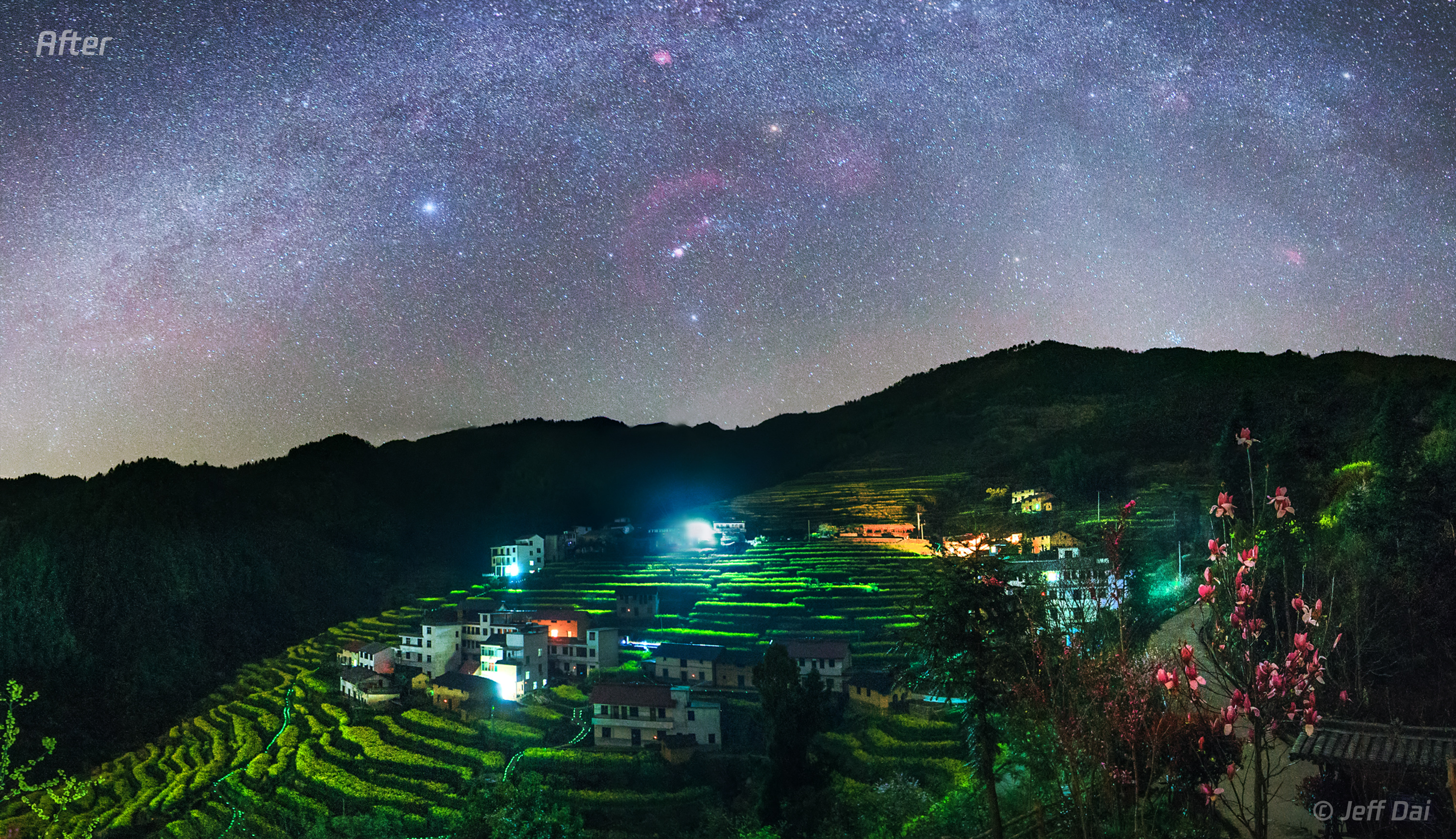
本当に暗い夜空を体験したことはありますか? 地平線から地平線まで伸びる輝く天の川銀河の帯は、よく見られる素晴らしい特徴の一つです。しかし、大都市に住んでいる、あるいはその近郊に住んでいる場合、地球の大気に反射する街の明かりのために、月といくつかの星しか見えないため、このことを知らないかもしれません。しかし、今日はユネスコの国際光の日であり、国際天文学連合は、光害をよりよく理解し、将来的にそれをより良く減らすことで、夜を明るくしようと呼びかけています。NASAのAPODメインウェブサイトにアクセスし、カーソルをBefore画像の上に置くことで、今すぐにでも実践できます。表示されるAfter画像は、同じカメラで同じ場所から撮影された4枚の露出のパノラマで、最近中国の開化県の人々が多くの明かりを消すことに決めたときに何が起こったかを示しています。Before画像には、シリウス(中央左)とベテルギウスが見えます。一方、After画像には、天の川銀河の弧を描く帯とともに、何千もの星が見えます。人類は何千年もの間、暗い夜空の下で暮らしてきた。そして、夜空との繋がりは、自然遺産と文化遺産の両方にとって重要な意味を持つ。
原文(English)
Have you ever experienced a really dark night sky? One common and amazing feature is the glowing band of our Milky Way galaxy stretching from horizon to horizon. If you live in or near a big city, though, you might not know this because city lights reflecting off the Earth's atmosphere could only allow you to see the Moon and a few stars. Today, however, being UNESCO's International Day of Light, the International Astronomical Union is asking people to Turn on the Night by trying to better understand, and in the future better reduce, light pollution. You can practice even now by going to the main APOD website at NASA and hovering your cursor over the Before image. The After picture that comes up is a panorama of four exposures taken with the same camera and from the same location, showing what happened recently in China when people in Kaihua County decided to turn down many of their lights. Visible in the Before picture are the stars Sirius (left of center) and Betelgeuse, while visible in the After picture are thousands of stars with the arching band of our Milky Way Galaxy. Humanity has lived for millennia under a dark night sky, and connecting to it has importance for both natural and cultural heritage.
\ この感動を宇宙仲間にシェア /
宇宙をXでシェア
© Jeff Dai
(TWAN) / APOD