ハッブル宇宙望遠鏡が捉えた木星と縮小する大赤斑
Hubble's Jupiter and the Shrinking Great Red Spot
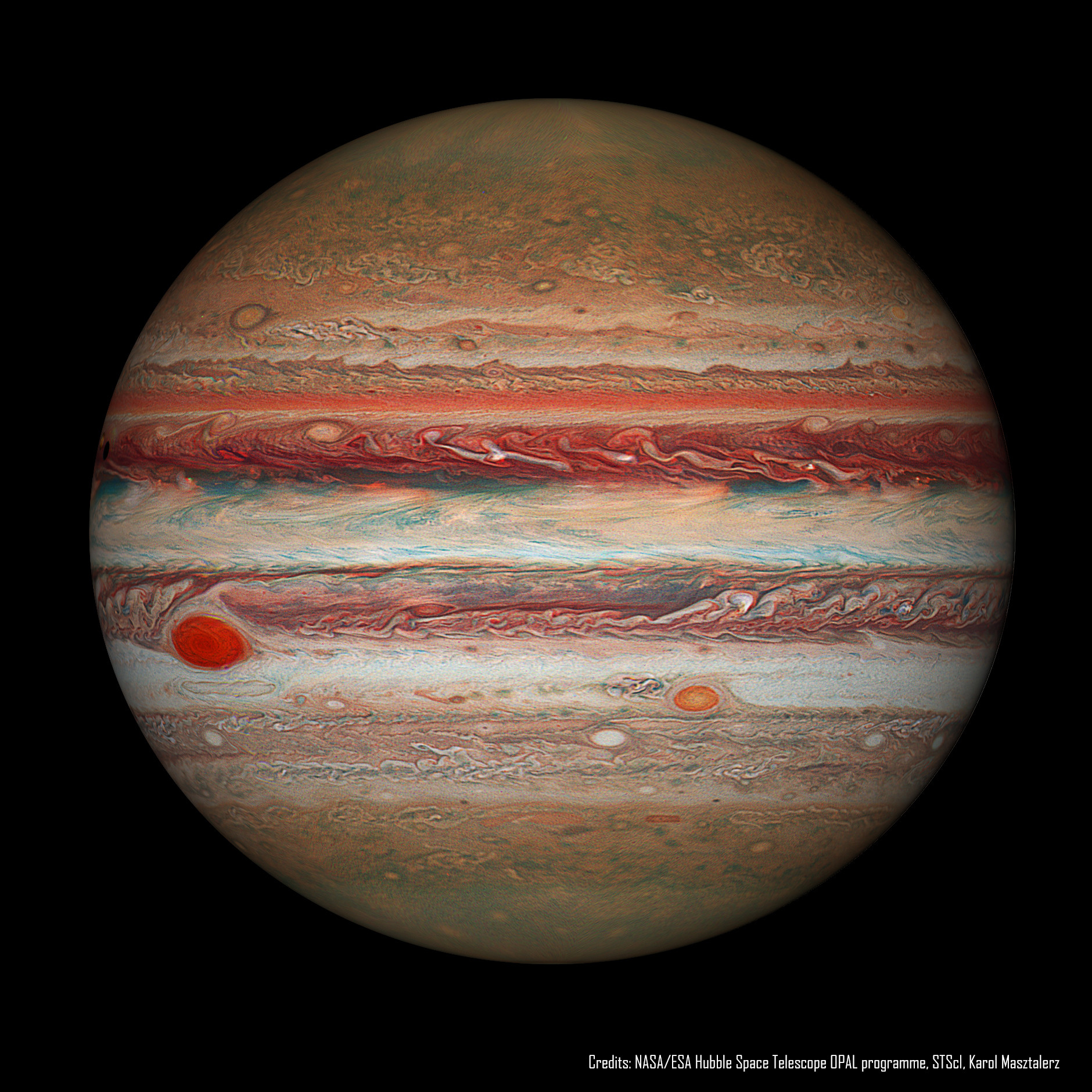
木星の大赤斑はどうなるのでしょうか? ガス惑星である木星は、地球の約320倍の質量を持つ太陽系最大の惑星です。木星には、左に見える大赤斑(GRS)という、知られている中で最大かつ最も長く続く嵐のシステムの1つがあります。GRSは地球を飲み込むほど大きいですが、縮小しています。過去の記録と比較すると、嵐は150年前の露出した表面積の約3分の1にしか広がっていないことがわかっています。NASAの外惑星大気遺産(OPAL)プログラムは、ハッブル宇宙望遠鏡を使用して、より最近嵐を監視しています。掲載されているハッブルOPAL画像は、2016年に木星がどのように見えたかを示しており、赤色が非常に鮮やかに見えるように処理されています。最新のGRSデータによると、嵐は表面積を縮小し続けていますが、垂直方向にはわずかに高くなっています。 GRSの将来は誰にも分かりません。縮小傾向が続けば、木星の小さな斑点のように、GRSもいつか完全に消滅してしまう可能性さえあります。火曜日にZoomで:APOD編集者が2021年のベストAPOD宇宙画像を発表
原文(English)
What will become of Jupiter's Great Red Spot? Gas giant Jupiter is the solar system's largest world with about 320 times the mass of planet Earth. Jupiter is home to one of the largest and longest lasting storm systems known, the Great Red Spot (GRS), visible to the left. The GRS is so large it could swallow Earth, although it has been shrinking. Comparison with historical notes indicate that the storm spans only about one third of the exposed surface area it had 150 years ago. NASA's Outer Planets Atmospheres Legacy (OPAL) program has been monitoring the storm more recently using the Hubble Space Telescope. The featured Hubble OPAL image shows Jupiter as it appeared in 2016, processed in a way that makes red hues appear quite vibrant. Modern GRS data indicate that the storm continues to constrict its surface area, but is also becoming slightly taller, vertically. No one knows the future of the GRS, including the possibility that if the shrinking trend continues, the GRS might one day even do what smaller spots on Jupiter have done -- disappear completely. Tuesday over Zoom: APOD editor to present the Best APOD Space Images of 2021
\ この感動を宇宙仲間にシェア /
宇宙をXでシェア
© NASA / APOD