西の月、東の海
Western Moon, Eastern Sea
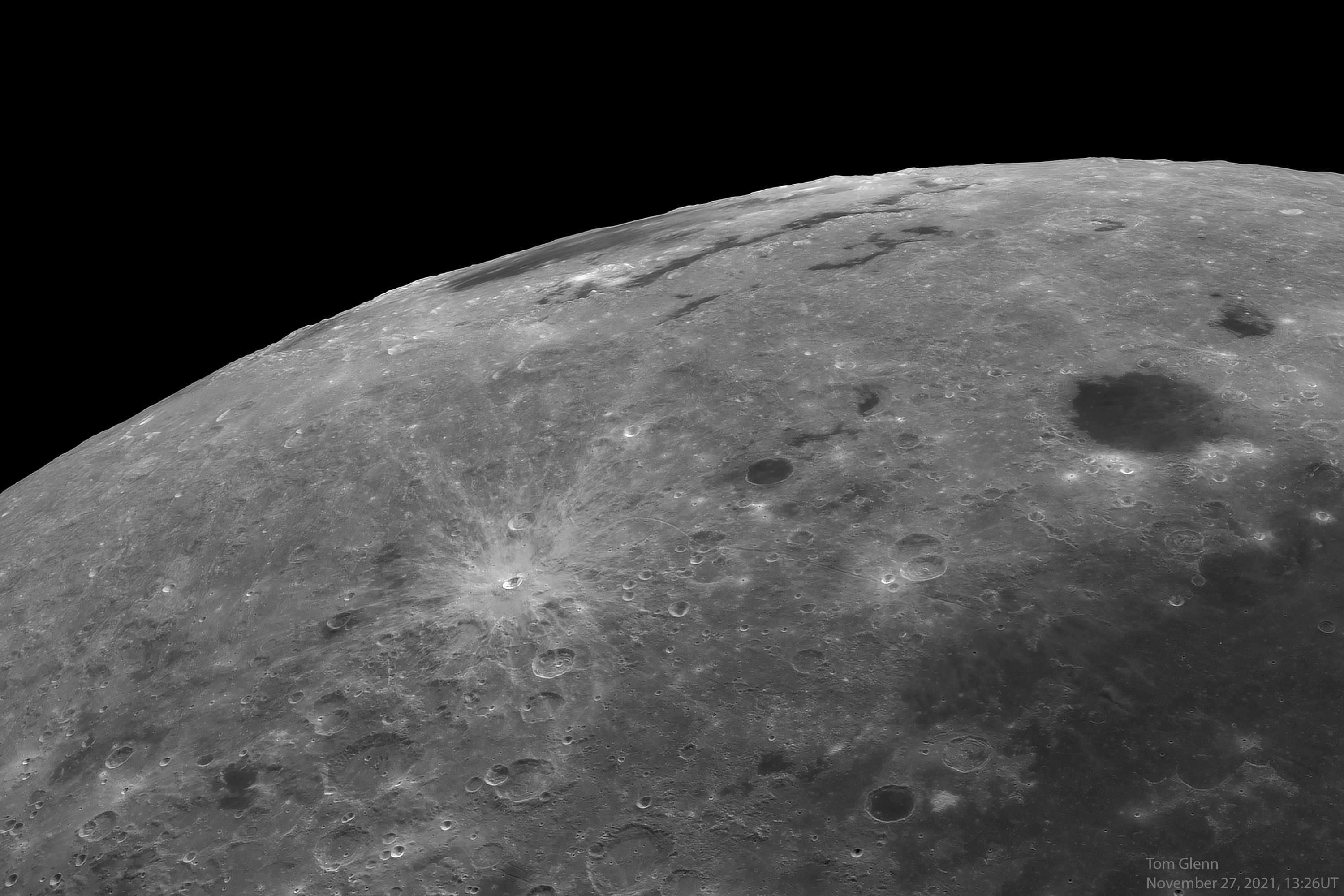
マレ・オリエンターレ(ラテン語で「東の海」)は、最も印象的な大規模な月の地形の 1 つです。月の大きな衝突盆地の中で最も新しいもので、地球からの視点では非常に見えにくいです。それでも、月の表側の傾き、つまり秤動が好ましい時期に撮影されたこの鮮明な望遠鏡画像では、月の西端に沿って極端に短縮された東の海が、上部中央付近に見つかります。30 億年以上前に小惑星の衝突によって形成され、直径が 1000 キロメートル近くあるこの衝突盆地の同心円状の地形は、月の地殻のさざ波です。しかし、月周回軌道から撮影されたこの地域のより直接的な画像では、それらを少し見つけやすくなります。では、なぜ東の海は月の西端にあるのでしょうか? マレ・オリエンターレという月の地形は 1961 年以前に命名されました。その年、月の地図で東と西をラベル付けする慣例が逆転しました。
原文(English)
The Mare Orientale, Latin for Eastern Sea, is one of the most striking large scale lunar features. The youngest of the large lunar impact basins it's very difficult to see from an earthbound perspective. Still, taken during a period of favorable tilt, or libration of the lunar nearside, the Eastern Sea can be found near top center in this sharp telescopic view, extremely foreshortened along the Moon's western edge. Formed by the impact of an asteroid over 3 billion years ago and nearly 1000 kilometers across, the impact basin's concentric circular features are ripples in the lunar crust. But they are a little easier to spot in more direct images of the region taken from lunar orbit. So why is the Eastern Sea at the Moon's western edge? The Mare Orientale lunar feature was named before 1961. That's when the convention labeling east and west on lunar maps was reversed.
\ この感動を宇宙仲間にシェア /
宇宙をXでシェア
© Tom Glenn / APOD