夜の決闘バンド
Dueling Bands in the Night
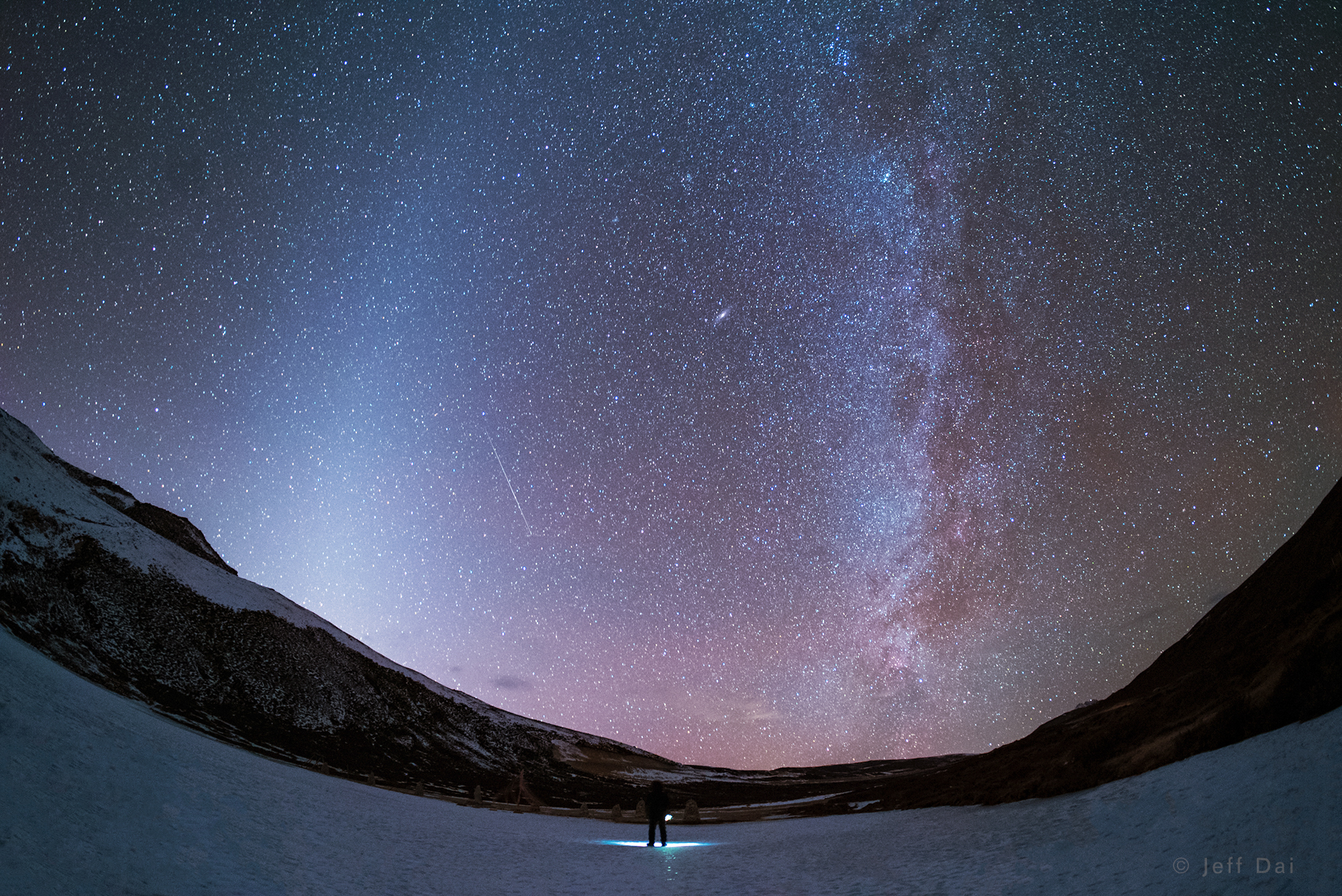
空に見えるこの2つの帯は何でしょうか? 右側の帯は、より一般的に見られるもので、私たちの銀河系である天の川銀河の中心帯です。太陽はこの渦巻銀河の円盤の中を公転しているため、内側から見ると、この円盤は空全体にほぼ均一な明るさの帯として見えます。天の川の帯は、街の明かりから離れた場所であれば、一年中見ることができます。左側の、あまり見かけない帯は黄道光です。これは、太陽系の太陽の周りを公転する塵から反射された太陽光です。黄道光は太陽の近くで最も明るいため、日の出直前または日没直後に最もよく見えます。北半球では、特に3月と4月の夜には、日没後にこの黄道光の帯がかなり目立つことがあります。黄道塵の大部分が木星の近くを通過した彗星によって放出されたものであることが判明したのは、今世紀になってからのことです。このように、2つの帯が空の一部で並んで見えるのは、一年の特定の時期だけです。アンドロメダ銀河と流星を含むこの写真は、1月下旬に中国四川省康定市の凍った湖上で撮影されたものです。
原文(English)
What are these two bands in the sky? The more commonly seen band is the one on the right and is the central band of our Milky Way galaxy. Our Sun orbits in the disk of this spiral galaxy, so that from inside, this disk appears as a band of comparable brightness all the way around the sky. The Milky Way band can also be seen all year -- if out away from city lights. The less commonly seem band, on the left, is zodiacal light -- sunlight reflected from dust orbiting the Sun in our Solar System. Zodiacal light is brightest near the Sun and so is best seen just before sunrise or just after sunset. On some evenings in the north, particularly during the months of March and April, this ribbon of zodiacal light can appear quite prominent after sunset. It was determined only this century that zodiacal dust was mostly expelled by comets that have passed near Jupiter. Only on certain times of the year will the two bands be seen side by side, in parts of the sky, like this. The featured image, including the Andromeda galaxy and a meteor, was captured in late January over a frozen lake in Kanding, Sichuan, China.
\ この感動を宇宙仲間にシェア /
宇宙をXでシェア
© Jeff Dai
(TWAN) / APOD