ハッブル宇宙望遠鏡が捉えたバブル星雲
The Bubble Nebula from Hubble
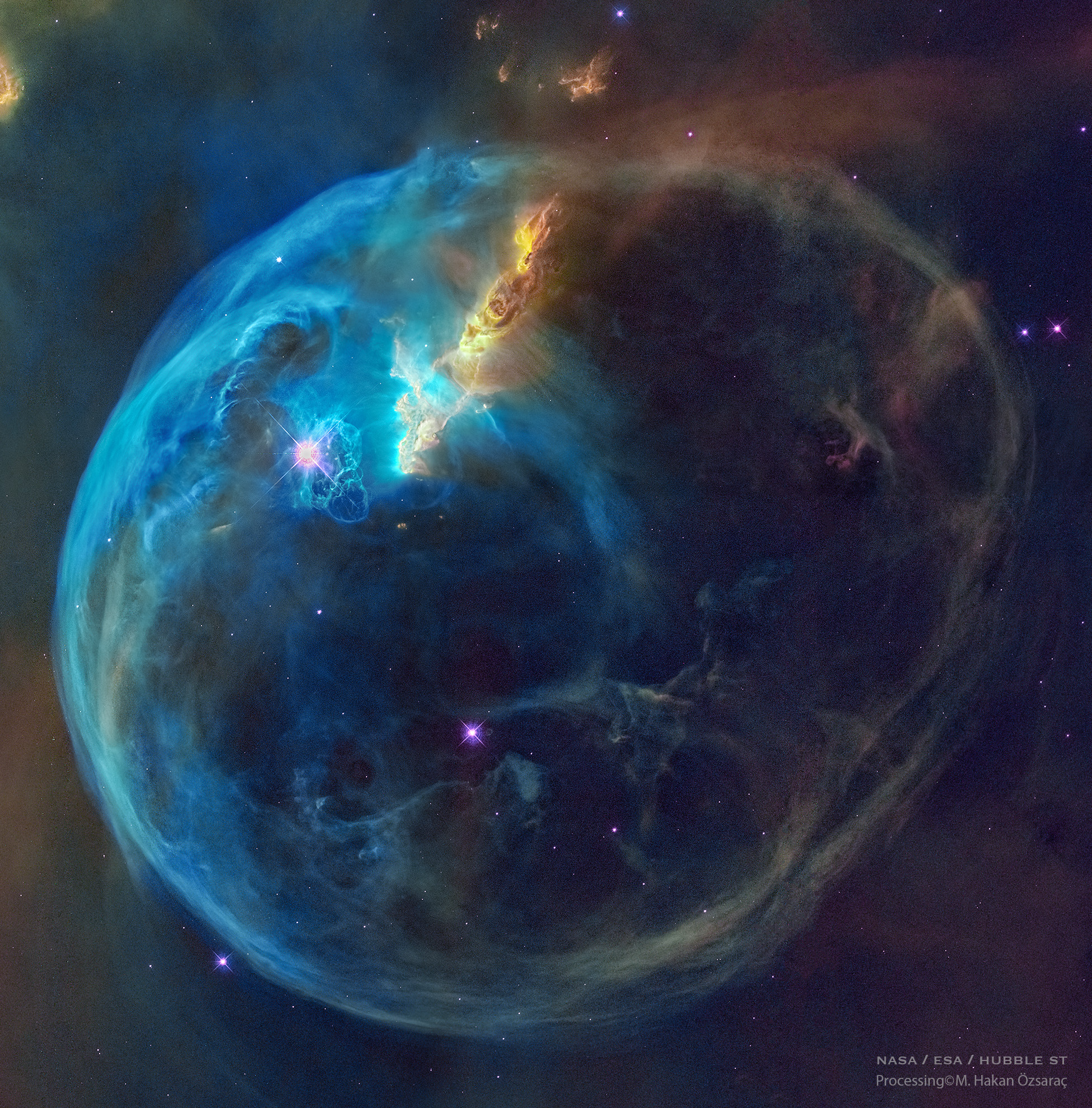
巨大な星は泡を吹くことがあります。掲載されている画像は、おそらく最も有名な星の泡、NGC 7635、通称「泡星雲」です。繊細に見えますが、直径7光年のこの泡は、激しいプロセスが働いている証拠を示しています。泡の中心の上方と左には、太陽よりも数十万倍明るく、約45倍の質量を持つ高温のO型星があります。この星からの激しい恒星風と強烈な放射線が、周囲の分子雲のより密度の高い物質に対して、輝くガスの構造を吹き飛ばしました。この興味深い泡星雲とそれに付随する雲複合体は、誇らしげな星座カシオペヤ座の方向にわずか7,100光年離れたところにあります。この宇宙の泡の鮮明で魅力的な画像は、以前に取得されたハッブル宇宙望遠鏡の画像データを再処理した合成画像です。誕生日サプライズ:あなたの誕生日にAPODで紹介された写真はどれですか?(1995年以降)
原文(English)
Massive stars can blow bubbles. The featured image shows perhaps the most famous of all star-bubbles, NGC 7635, also known simply as The Bubble Nebula. Although it looks delicate, the 7-light-year diameter bubble offers evidence of violent processes at work. Above and left of the Bubble's center is a hot, O-type star, several hundred thousand times more luminous and some 45-times more massive than the Sun. A fierce stellar wind and intense radiation from that star has blasted out the structure of glowing gas against denser material in a surrounding molecular cloud. The intriguing Bubble Nebula and associated cloud complex lie a mere 7,100 light-years away toward the boastful constellation Cassiopeia. This sharp, tantalizing view of the cosmic bubble is a reprocessed composite of previously acquired Hubble Space Telescope image data. Birthday Surprise: What picture did APOD feature on your birthday? (post 1995)
\ この感動を宇宙仲間にシェア /
宇宙をXでシェア
© NASA / APOD