宇宙ステーションが忙しい太陽を横切る
A Space Station Crosses a Busy Sun
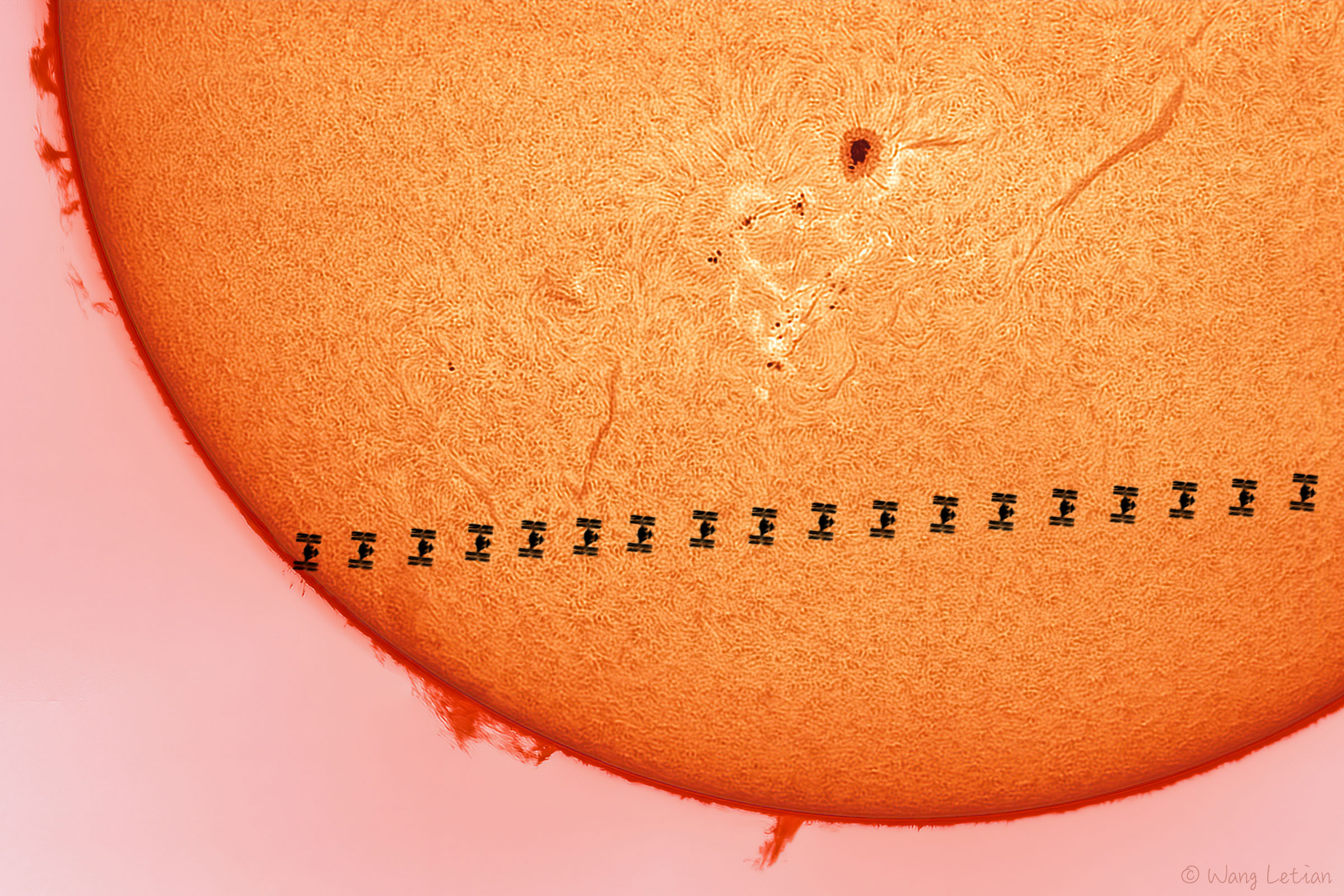
通常、国際宇宙ステーションは夜間にしか見えません。地球を周回しながら夜空をゆっくりと漂う国際宇宙ステーション(ISS)は、年に数回、多くの場所から明るい点として見ることができます。ISSは太陽光を反射して輝いているため、日没直後か日の出直前にしか見えません。ISSが地球の影に入ると、見えなくなります。ISSが日中に見えるのは、太陽の真前を通過する時だけです。その際、ISSは非常に速く通過するため、短時間露光のカメラでなければ、背景の太陽にISSのシルエットを視覚的に固定することはできません。掲載されている写真はまさにそれを実現したもので、今月初めに中国の北京で完璧なタイミングで撮影された一連の画像です。この一連の画像は、ほぼ同時刻に撮影されたものの、活発な太陽の質感と活動を強調した別の画像と後に合成されました。太陽活動には、縁の周りに見られる多数のガス状プロミネンス(赤く強調表示)、太陽の表面に見られるフィラメント、そして暗い黒点などが含まれます。
原文(English)
Typically, the International Space Station is visible only at night. Slowly drifting across the night sky as it orbits the Earth, the International Space Station (ISS) can be seen as a bright spot several times a year from many locations. The ISS is then visible only just after sunset or just before sunrise because it shines by reflected sunlight -- once the ISS enters the Earth's shadow, it will drop out of sight. The only occasion when the ISS is visible during the day is when it passes right in front of the Sun. Then, it passes so quickly that only cameras taking short exposures can visually freeze the ISS's silhouette onto the background Sun. The featured picture did exactly that -- it is actually a series of images taken earlier this month from Beijing, China with perfect timing. This image series was later combined with separate images taken at nearly the same time but highlighting the texture and activity on the busy Sun. The solar activity included numerous gaseous prominences seen around the edge, highlighted in red, filaments seen against the Sun's face, and a dark sunspot.
\ この感動を宇宙仲間にシェア /
宇宙をXでシェア
© Wang Letian
(Eyes at Night) / APOD