太平洋上の船の航跡
Ship Tracks over the Pacific Ocean
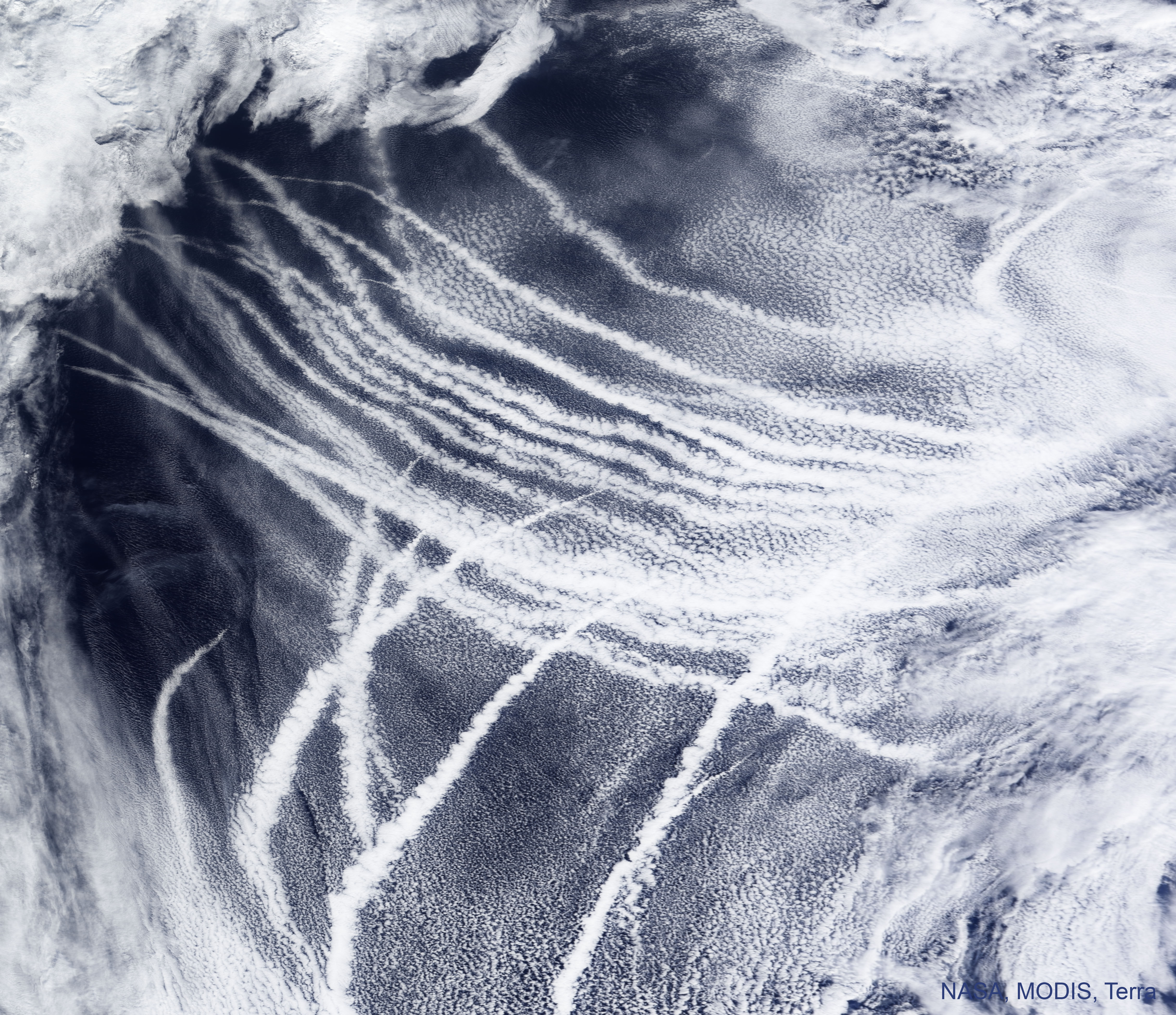
あの奇妙な筋は何でしょう?地球の画像には、船の航路に沿って明瞭で明るい筋が写っているものがあります。船の航跡として知られるこれらの低く細い帯は、船のエンジンの排気ガスによって引き起こされます。エアロゾルと呼ばれる小さな排気ガスの粒子の周りに水蒸気が凝結し、やがて水滴となって太陽光を効率的に反射します。船の航跡は、1965年にNASAのTIROS衛星が撮影した地球の画像で初めて発見されました。NASAのテラ衛星に搭載されたMODIS機器が2009年に太平洋上で撮影したこの画像には、複数の船の航跡が写っています。船の航跡に着想を得て、一部の科学者は、世界の海洋に海水を含む塩エアロゾルを空中に噴霧する浮遊ブイのネットワークを展開し、風の助けを借りて太陽光を反射する雲の流れを形成させることを提案しています。なぜこのようなことをするのでしょうか?これらの人工雲は非常に多くの太陽光を反射するため、地球温暖化対策に役立つ可能性があるからです。今日は世界海洋デーです。
原文(English)
What are those unusual streaks? Some images of planet Earth show clear bright streaks that follow the paths of ships. Known as ship tracks, these low and narrow bands are caused by the ship's engine exhaust. Water vapor condenses around small bits of exhaust known as aerosols, which soon grow into floating water drops that efficiently reflect sunlight. Ship tracks were first discovered in 1965 in Earth images taken by NASA's TIROS satellites. Multiple ship tracks are visible across the featured image that was captured in 2009 over the Pacific Ocean by the MODIS instrument on NASA's Terra satellite. Inspired by ship-tracks, some scientists have suggested deploying a network of floating buoys in the worlds' oceans that spray salt-aerosol containing sea-water into the air so that, with the help of the wind, streams of sunlight-reflecting clouds would also form. Why do this? These human-made clouds could reflect so much sunlight they might help fight global warming. Today is: World Oceans Day
\ この感動を宇宙仲間にシェア /
宇宙をXでシェア
© NASA / APOD