太陽系ファミリーポートレート
Solar System Family Portrait
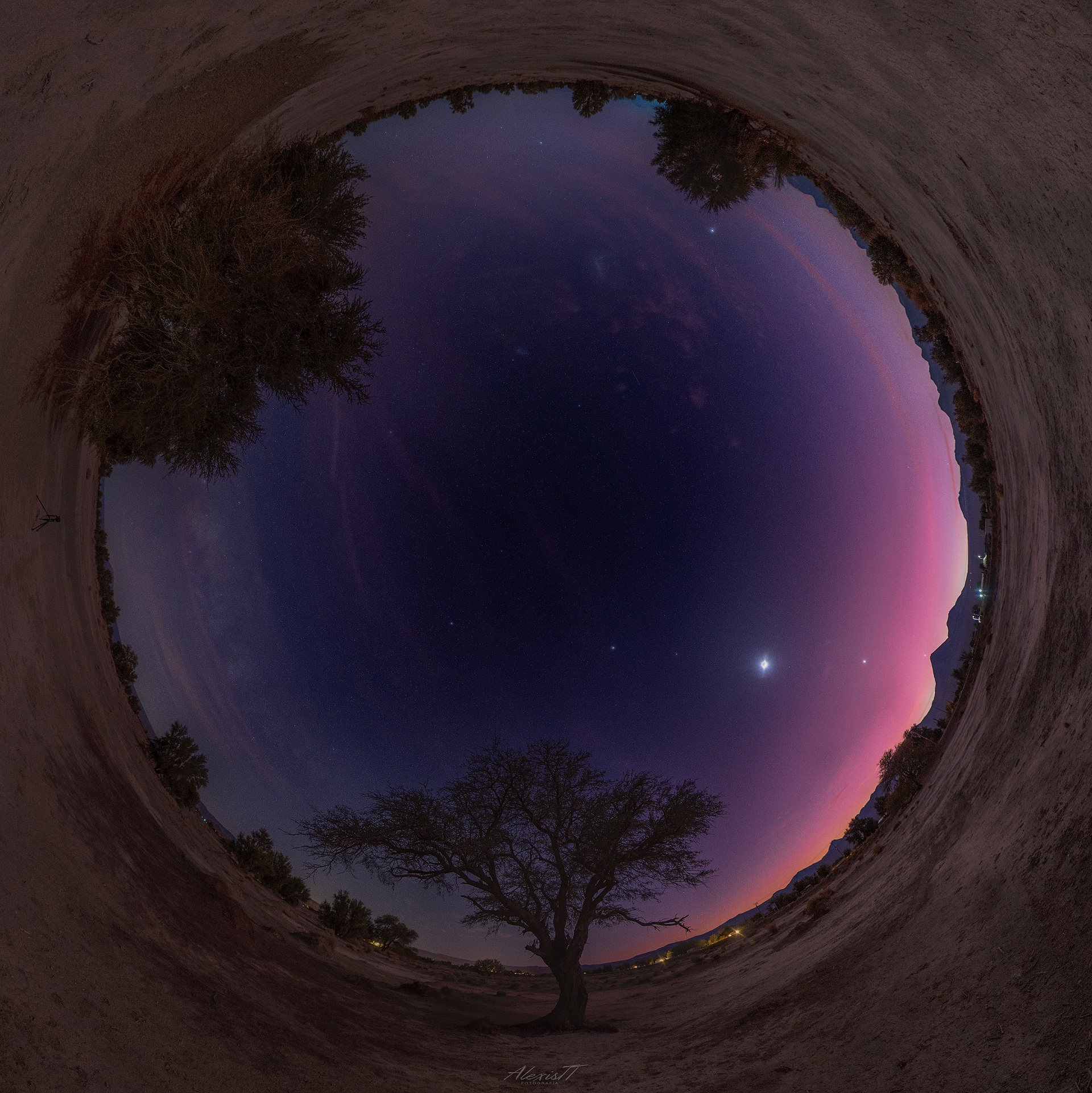
はい、でも、惑星を一度に全部見たことはありますか?6月のほとんどの間、朝の空で珍しい惑星の列が見られました。チリのサン・ペドロ・デ・アタカマの町の近くで数日前に撮影された、特集されている魚眼レンズの全天画像には、惑星の列全体だけでなく、火星と金星の間にある月も写っています。黄道面に沿って左から右に、この太陽系の家族写真のメンバーは、地球、土星、海王星、木星、火星、天王星、金星、水星、そして地球です。位置を強調するために、海王星と天王星は人工的に強調されています。水星のすぐ下にある火山はリカンカブールです。7月には、水星は太陽のまぶしさの中に移動しますが、数日後に夕方側に再び現れます。そして8月には、土星が太陽の反対方向を通過するため、夜明けではなく夕暮れ時に見えるようになります。 8つの惑星すべてが同時に夕方の空に見えるのは、次に2122年になります。APODへの注目すべき投稿:モーニングプラネットパレード2022年6月
原文(English)
Yes, but have you ever seen all of the planets at once? A rare roll-call of planets has been occurring in the morning sky for much of June. The featured fisheye all-sky image, taken a few mornings ago near the town of San Pedro de Atacama in Chile, caught not only the entire planet parade, but the Moon between Mars and Venus. In order, left to right along the ecliptic plane, members of this Solar System family portrait are Earth, Saturn, Neptune, Jupiter, Mars, Uranus, Venus, Mercury, and Earth. To emphasize their locations, Neptune and Uranus have been artificially enhanced. The volcano just below Mercury is Licancabur. In July, Mercury will move into the Sun's glare but reappear a few days later on the evening side. Then, in August, Saturn will drift past the direction opposite the Sun and so become visible at dusk instead of dawn. The next time that all eight planets will be simultaneously visible in the evening sky will be in 2122. Notable Submissions to APOD: Morning Planet Parade 2022 June
\ この感動を宇宙仲間にシェア /
宇宙をXでシェア
© Alexis Trigo / APOD