彗星C/2017 K2(PanSTARRS)
Comet C/2017 K2 (PanSTARRS)
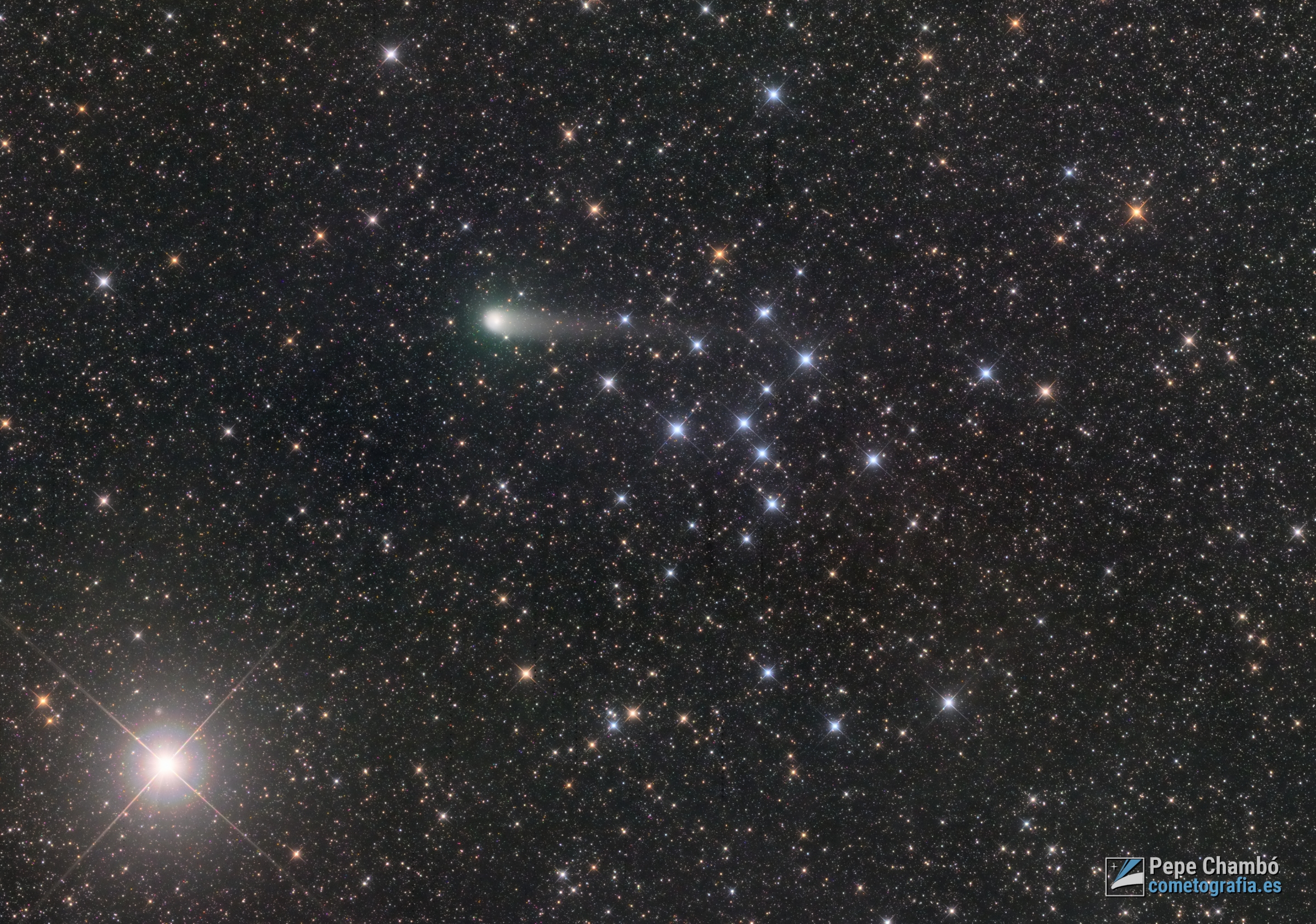
2022年6月20日に撮影された彗星C/2017 K2(PanSTARRS)は、この広い望遠鏡の視野を散開星団IC 4665と明るい星ベータ・オフィウキと共有しており、天の川の星の多い端付近に位置しています。暗く遠いオールトの雲から太陽系内側への初航海中のこの彗星PanSTARRSは、5年以上前の2017年5月に最初に発見されました。当時、太陽から約24億キロメートル離れたときに発見された、これまで発見された中で最も遠い活動的な接近彗星でした。これは、天王星と土星の軌道距離の間に位置します。ハッブル宇宙望遠鏡の観測では、この彗星の核は直径18キロメートル未満であることが示されました。現在小型望遠鏡でも見えるC/2017 K2は、7月14日に地球に最接近し、今年の12月に太陽に最接近します。この画像では、約2億9000万キロメートル、わずか16光分の距離から、その広大なコマと発達中の尾部が捉えられている。
原文(English)
Imaged on June 20 2022, comet C/2017 K2 (PanSTARRS) shares this wide telescopic field of view with open star cluster IC 4665 and bright star Beta Ophiuchi, near a starry edge of the Milky Way. On its maiden voyage to the inner Solar System from the dim and distant Oort cloud, this comet PanSTARRS was initially spotted over five years ago, in May 2017. Then it was the most distant active inbound comet ever found, discovered when it was some 2.4 billion kilometers from the Sun. That put it between the orbital distances of Uranus and Saturn. Hubble Space Telescope observations indicated the comet had a large nucleus less than 18 kilometers in diameter. Now visible in small telescopes C/2017 K2 will make its closest approach to planet Earth on July 14 and closest approach to the Sun this December. Its extended coma and developing tail are seen here at a distance of some 290 million kilometers, a mere 16 light-minutes away.
\ この感動を宇宙仲間にシェア /
宇宙をXでシェア
© Jose J. Chambo / APOD