メシエ10と彗星
Messier 10 and Comet
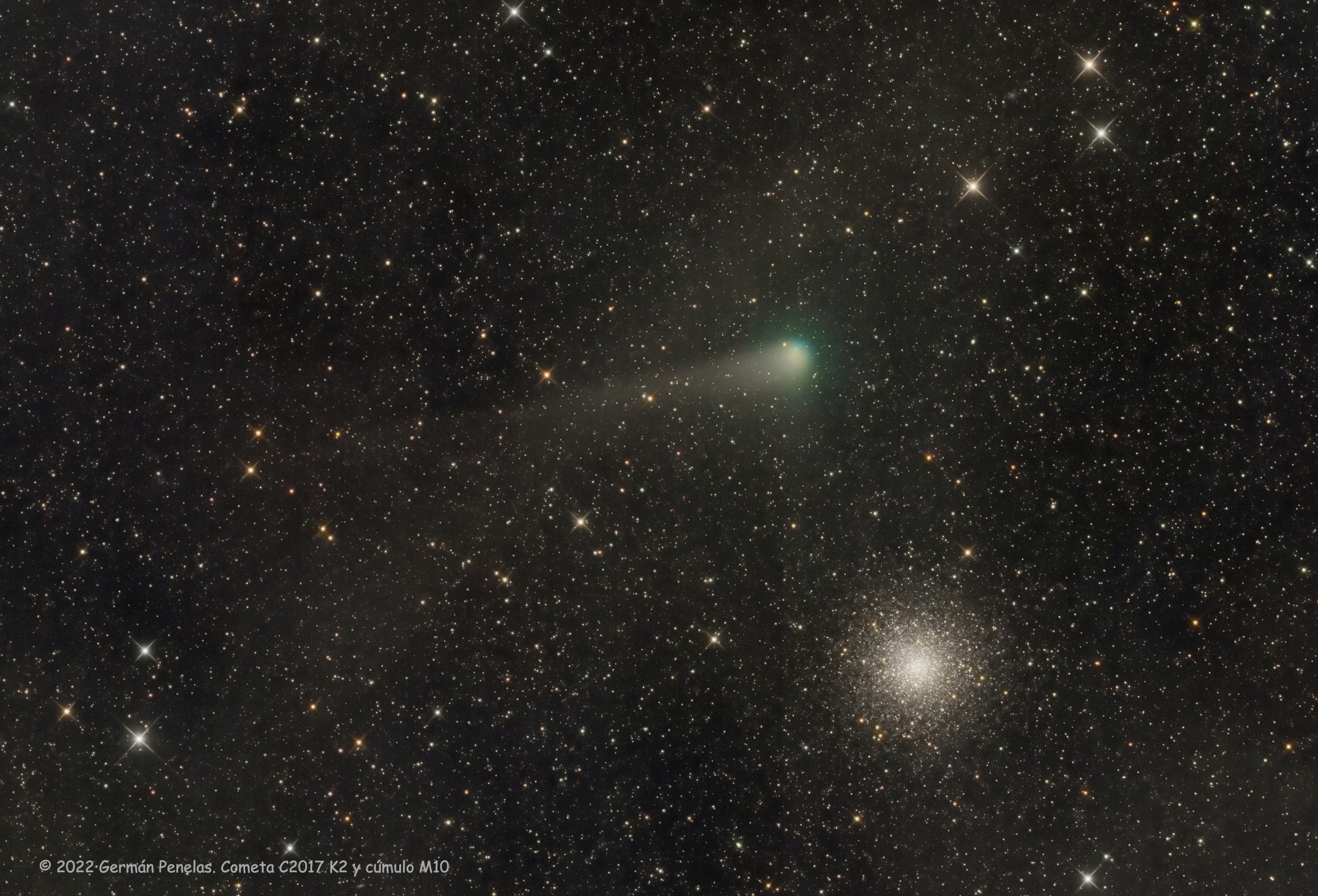
2022年7月15日に撮影された彗星C/2017 K2(PanSTARRS)は、球状星団メシエ10とこの広い望遠鏡視野を共有し、メシエの瞬間を迎えた。もちろん、M10は18世紀の彗星ハンター、シャルル・メシエによって、間違いなく彗星ではないもののリストの10番目の天体としてカタログ化された。M10は約1万4千光年離れているが、この彗星PanSTARRSは7月14日の最接近後、地球から約15光分の距離にあった。緑がかったコマと塵の尾が21世紀の彗星観測者を楽しませているC/2017 K2は、北半球の夏の空で引き続き素晴らしい望遠鏡彗星であると予想される。太陽系の遠いオールトの雲からの処女航海で、この彗星PanSTARRSは土星の軌道の外側にあった2017年5月に発見された。当時、それは既知の活動中の接近彗星の中で最も遠い位置にあった。太陽への最接近は12月19日で、火星の軌道距離よりも遠い1.8天文単位以内となる。
原文(English)
Imaged on July 15 2022, comet C/2017 K2 (PanSTARRS) had a Messier moment, sharing this wide telescopic field of view with globular star cluster Messier 10. Of course M10 was cataloged by 18th century comet hunter Charles Messier as the 10th object on his list of things that were definitely not comets. While M10 is about 14 thousand light-years distant, this comet PanSTARRS was about 15 light-minutes from our fair planet following its July 14 closest approach. Its greenish coma and dust tail entertaining 21st century comet watchers, C/2017 K2 is expected to remain a fine telescopic comet in northern summer skies. On a maiden voyage from our Solar System's remote Oort Cloud this comet PanSTARRS was discovered in May 2017 when it was beyond the orbit of Saturn. At the time that made it the most distant active inbound comet known. Its closest approach to the Sun will be within 1.8 astronomical units on December 19, beyond the orbital distance of Mars.
\ この感動を宇宙仲間にシェア /
宇宙をXでシェア
© German Penelas Perez / APOD