ウェッブ宇宙望遠鏡による赤外線画像で見る木星と環
Jupiter and Ring in Infrared from Webb
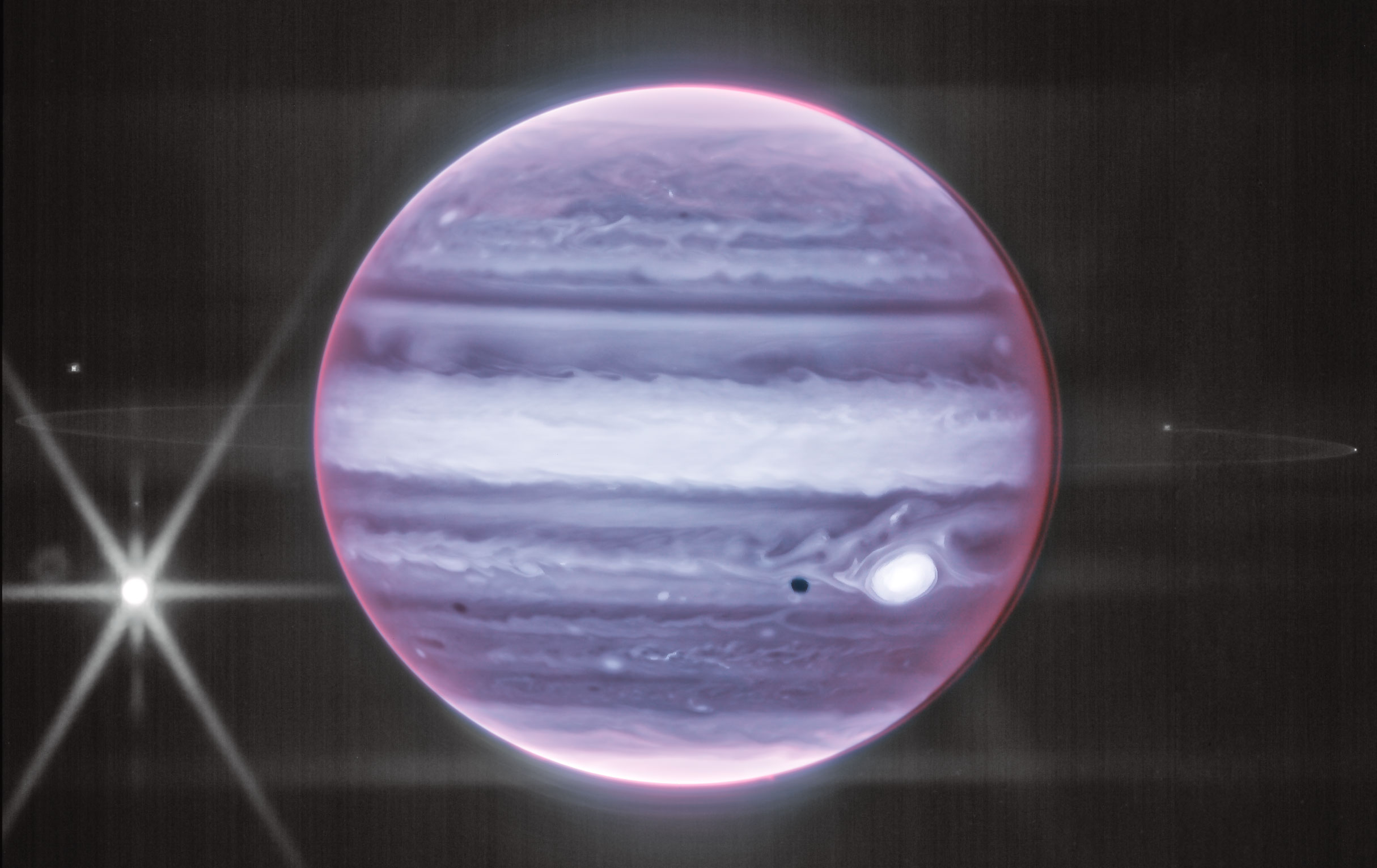
なぜ木星には環があるのか? 木星の主環は、1979 年にNASAのボイジャー1号探査機によって発見されましたが、その起源は当時謎でした。しかし、1995年から2003年にかけて木星を周回したNASAのガリレオ探査機のデータにより、この環は近くの小さな衛星への隕石の衝突によって形成されたという仮説が裏付けられました。たとえば、小さな隕石が小さなメティスに衝突すると、衛星に穴を開け、蒸発し、塵や土を木星の軌道に吹き飛ばします。ジェームズ・ウェッブ宇宙望遠鏡による赤外線で撮影された木星の画像には、木星とその雲だけでなく、この環も写っています。また、右側の比較的明るい色で木星の大赤斑 (GRS)、左側の回折スパイクの中心にある木星の大きな衛星エウロパ、そして大赤斑の隣にあるエウロパの影も見えます。画像には、木星の右縁にある分離したように見える雲層など、まだ十分に解明されていない特徴がいくつかあります。天体のサプライズ:あなたの誕生日にAPODで紹介された写真はどれですか?(1995年以降)
原文(English)
Why does Jupiter have rings? Jupiter's main ring was discovered in 1979 by NASA's passing Voyager 1 spacecraft, but its origin was then a mystery. Data from NASA's Galileo spacecraft that orbited Jupiter from 1995 to 2003, however, confirmed the hypothesis that this ring was created by meteoroid impacts on small nearby moons. As a small meteoroid strikes tiny Metis, for example, it will bore into the moon, vaporize, and explode dirt and dust off into a Jovian orbit. The featured image of Jupiter in infrared light by the James Webb Space Telescope shows not only Jupiter and its clouds, but this ring as well. Also visible is Jupiter's Great Red Spot (GRS) -- in comparatively light color on the right, Jupiter's large moon Europa -- in the center of diffraction spikes on the left, and Europa's shadow -- next to the GRS. Several features in the image are not yet well understood, including the seemingly separated cloud layer on Jupiter's right limb. Celestial Surprise: What picture did APOD feature on your birthday? (post 1995)
\ この感動を宇宙仲間にシェア /
宇宙をXでシェア
© NASA / APOD