太陽を周回する
Circling the Sun
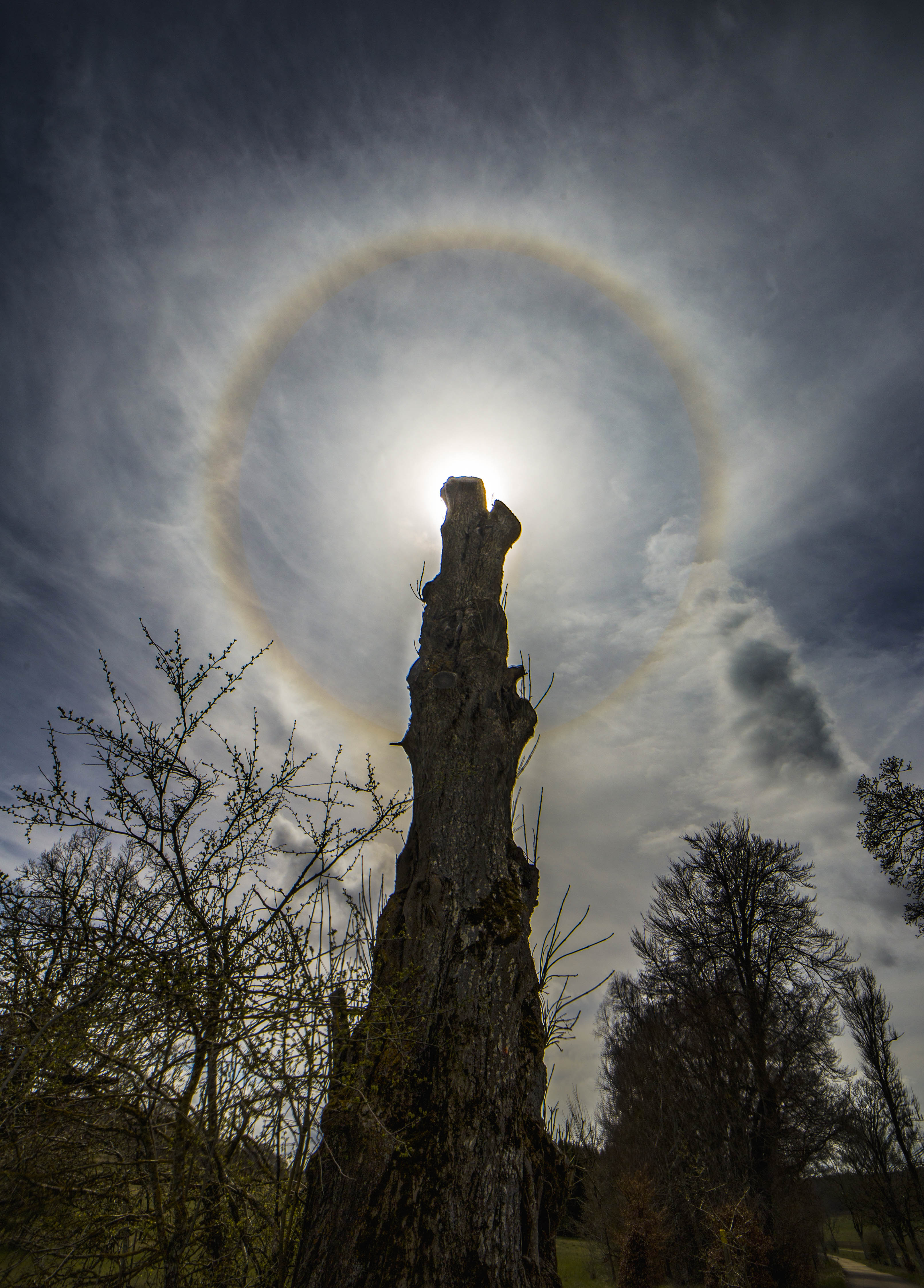
地球の太陽を周回する軌道は円ではなく楕円です。この楕円軌道上で地球が太陽に最も近づく点を近日点と呼びます。今年は、1月2日午前1時(UTC)が近日点で、地球は楕円軌道上で最も遠い点である遠日点(昨年7月6日)よりも太陽に約300万マイル近づきました。もちろん、太陽からの距離は季節を決定するものではなく、太陽のハローの大きさを決定するものでもありません。高い木の幹の後ろに太陽が隠れると見やすくなるこの美しい氷のハローは、ドイツのヘロルトシュタット近郊の田園地帯を散策中に撮影されたもので、太陽の周りに22度の円を形成しています。太陽のハローの22度の角度直径は、地球の大気圏上層を漂う水氷結晶の六角形の幾何学によって決まります。
原文(English)
rth's orbit around the Sun is not a circle, it's an ellipse. The point along its elliptical orbit where our fair planet is closest to the Sun is called perihelion. This year, perihelion was on January 2 at 01:00 UTC, with the Earth about 3 million miles closer to the Sun than it was at aphelion (last July 6), the farthest point in its elliptical orbit. Of course, distance from the Sun doesn't determine the seasons, and it doesn't the determine size of Sun halos. Easier to see with the Sun hidden behind a tall tree trunk, this beautiful ice halo forms a 22 degree-wide circle around the Sun, recorded while strolling through the countryside near Heroldstatt, Germany. The Sun halo's 22 degree angular diameter is determined by the six-sided geometry of water ice crystals drifting high in planet Earth's atmosphere.
\ この感動を宇宙仲間にシェア /
宇宙をXでシェア
© Radoslav Zboran / APOD