プレアデス星団:七人の塵まみれの姉妹
The Pleiades: Seven Dusty Sisters
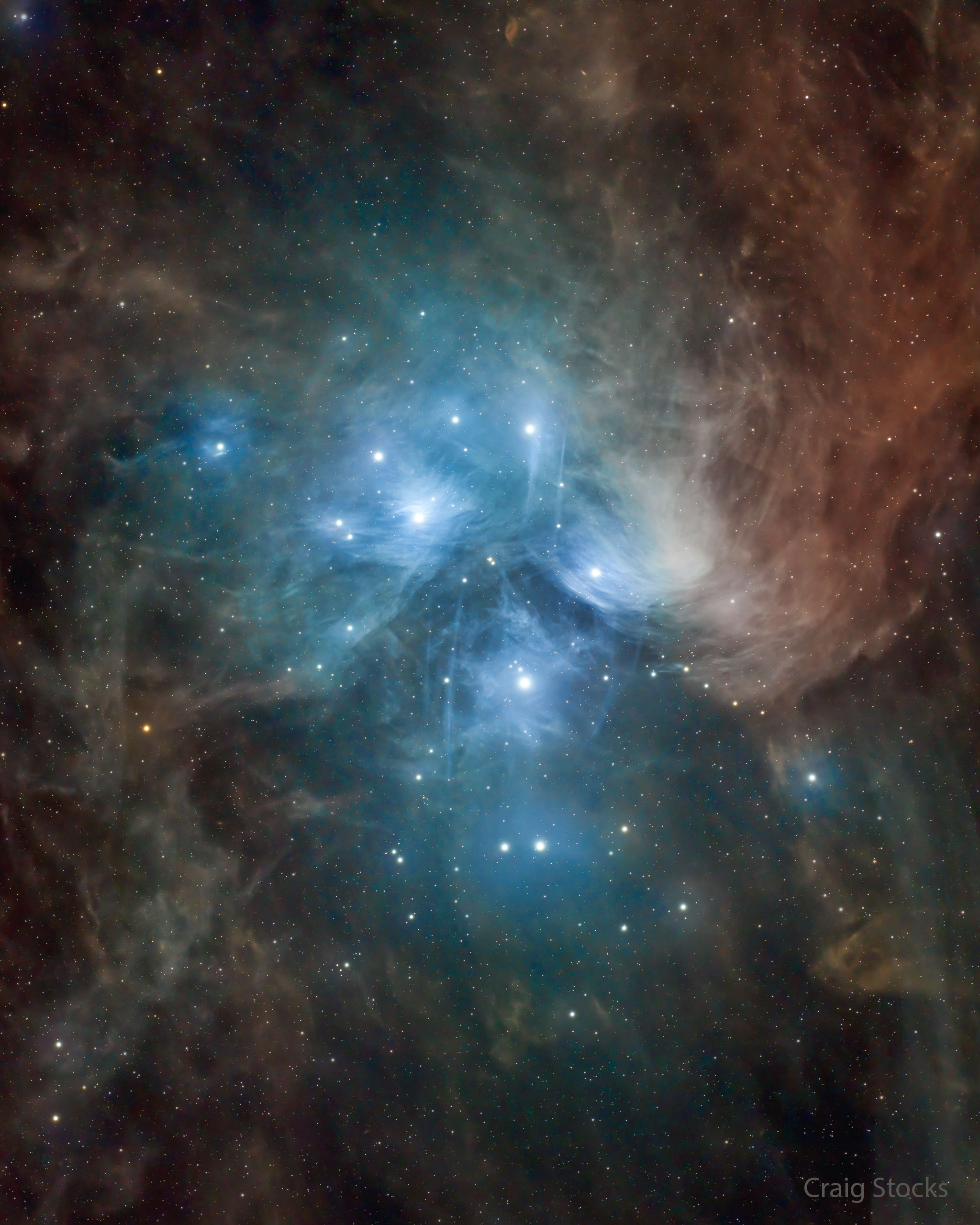
有名なプレアデス星団は、通過するガスと塵の雲の一部をゆっくりと破壊しています。プレアデス星団は地球の空で最も明るい散開星団であり、北半球のほぼどこからでも肉眼で見ることができます。過去10万年の間に、ガスと塵の領域が偶然にもプレアデス星団を通過し、星と塵の間で強い反応を引き起こしています。この通過する雲は、天の川銀河の近傍にある複数の星形成領域をつなぐ、新たに発見されたガスと塵の構造であるラドクリフ波の一部である可能性があります。星の光による圧力は、周囲の青い反射星雲の塵を大きく反発させ、塵の粒子が小さいほど強く反発されます。短期的には、塵の雲の一部が糸状になり、層状になっています。掲載されている深宇宙画像は、約9時間の露光時間で撮影されたもので、昨年、アメリカ合衆国ユタ州のユタ砂漠遠隔天文台で撮影されました。
原文(English)
The well-known Pleiades star cluster is slowly destroying part of a passing cloud of gas and dust. The Pleiades is the brightest open cluster of stars on Earth's sky and can be seen from almost any northerly location with the unaided eye. Over the past 100,000 years, a field of gas and dust is moving by chance right through the Pleiades star cluster and is causing a strong reaction between the stars and dust. The passing cloud might be part of the Radcliffe wave, a newly discovered structure of gas and dust connecting several regions of star formation in the nearby part of our Milky Way galaxy. Pressure from the stars' light significantly repels the dust in the surrounding blue reflection nebula, with smaller dust particles being repelled more strongly. A short-term result is that parts of the dust cloud have become filamentary and stratified. The featured deep image incorporates nearly 9 hours of exposure and was captured from Utah Desert Remote Observatory in Utah, USA, last year.
\ この感動を宇宙仲間にシェア /
宇宙をXでシェア
© Craig Stocks / APOD