NGC 1566:ウェッブ宇宙望遠鏡とハッブル宇宙望遠鏡が捉えた渦巻銀河
NGC 1566: A Spiral Galaxy from Webb and Hubble
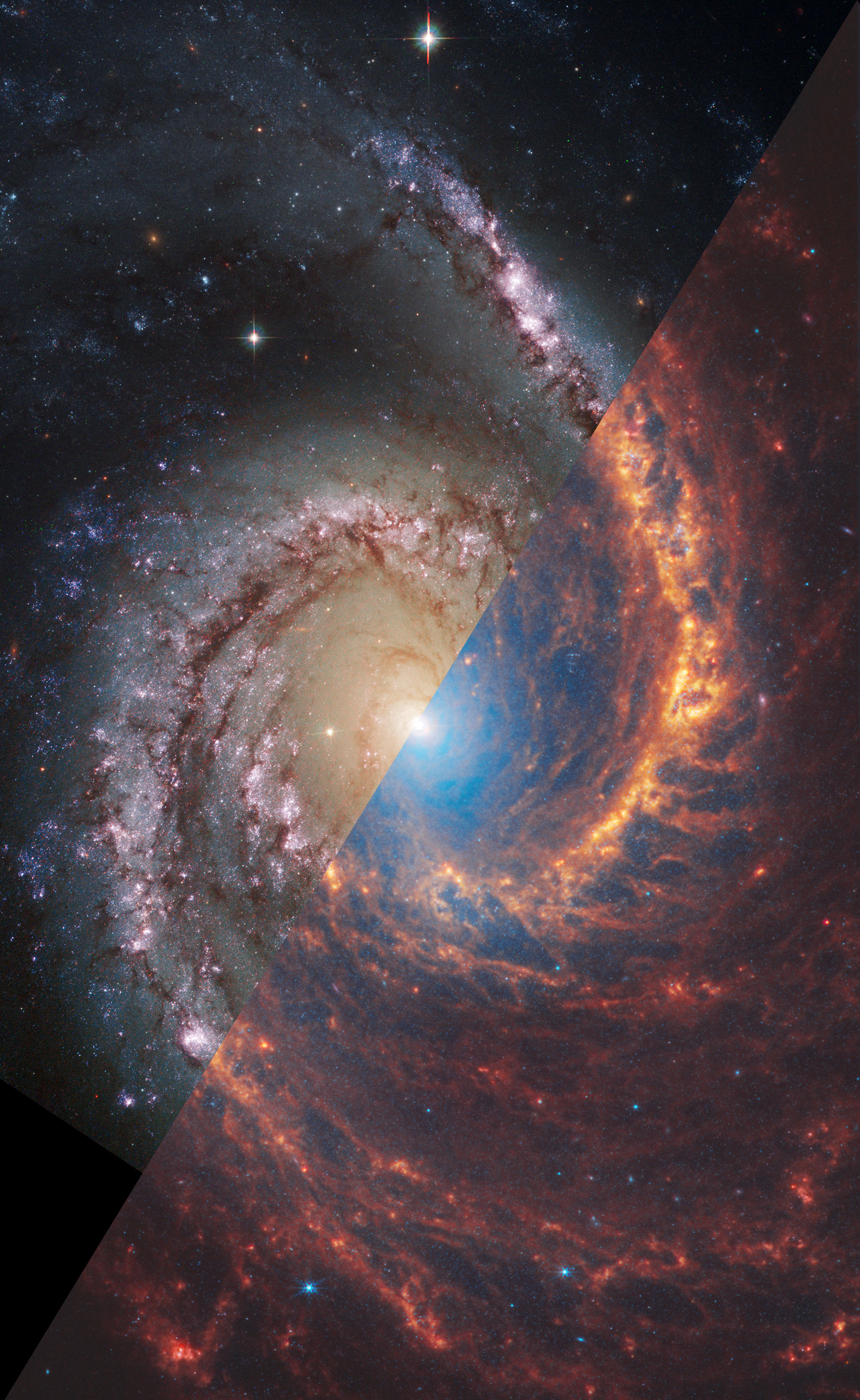
この銀河の何が他と違うのでしょうか?ほとんど違いはありません。そのため、スペインの踊り子銀河(NGC 1566)は、空で最も典型的で写真映えする渦巻銀河の一つとなっています。しかし、この銀河の画像には一つだけ違いがあります。それは、ハッブル宇宙望遠鏡が左上に、ジェームズ・ウェッブ宇宙望遠鏡が右下にそれぞれ撮影した画像を斜めに合成した画像だからです。ハッブルの画像は紫外線で撮影されており、銀河の印象的な渦状腕に沿って明るい青い星と暗い塵の位置が強調されています。一方、ウェッブの画像は赤外線で撮影されており、同じ塵が吸収する光よりも多くの光を放出している場所が強調されています。ロールオーバー画像では、これらの画像のもう一方の2つの側面が表示されます。2つの画像を交互に表示することで、紫外線でより明るく輝くため特に高温になっている星と、一見何もない空間と赤外線で輝く塵との違いが分かります。画像解析のチャンス:NASAの天体写真チャレンジに参加しよう
原文(English)
What's different about this galaxy? Very little, which makes the Spanish Dancer galaxy, NGC 1566, one of the most typical and photogenic spirals on the sky. There is something different about this galaxy image, though, because it is a diagonal combination of two images: one by the Hubble Space Telescope on the upper left, and the other by the James Webb Space Telescope on the lower right. The Hubble image was taken in ultraviolet light and highlights the locations of bright blue stars and dark dust along the galaxy's impressive spiral arms. In contrast, the Webb image was taken in infrared light and highlights where the same dust emits more light than it absorbed. In the rollover image, the other two sides of these images are revealed. Blinking between the two images shows which stars are particularly hot because they glow brighter in ultraviolet light, and the difference between seemingly empty space and infrared-glowing dust. Image Crunching Opportunity: Take NASA's Astrophoto Challenge
\ この感動を宇宙仲間にシェア /
宇宙をXでシェア
© NASA,
ESA,
CSA,
STScI,
J. Lee (STScI),
T. Williams (Oxford),
R. Chandar (UToledo),
D. Calzetti (UMass),
PHANGS Team / APOD