ハート型のアンテナ銀河
The Heart Shaped Antennae Galaxies
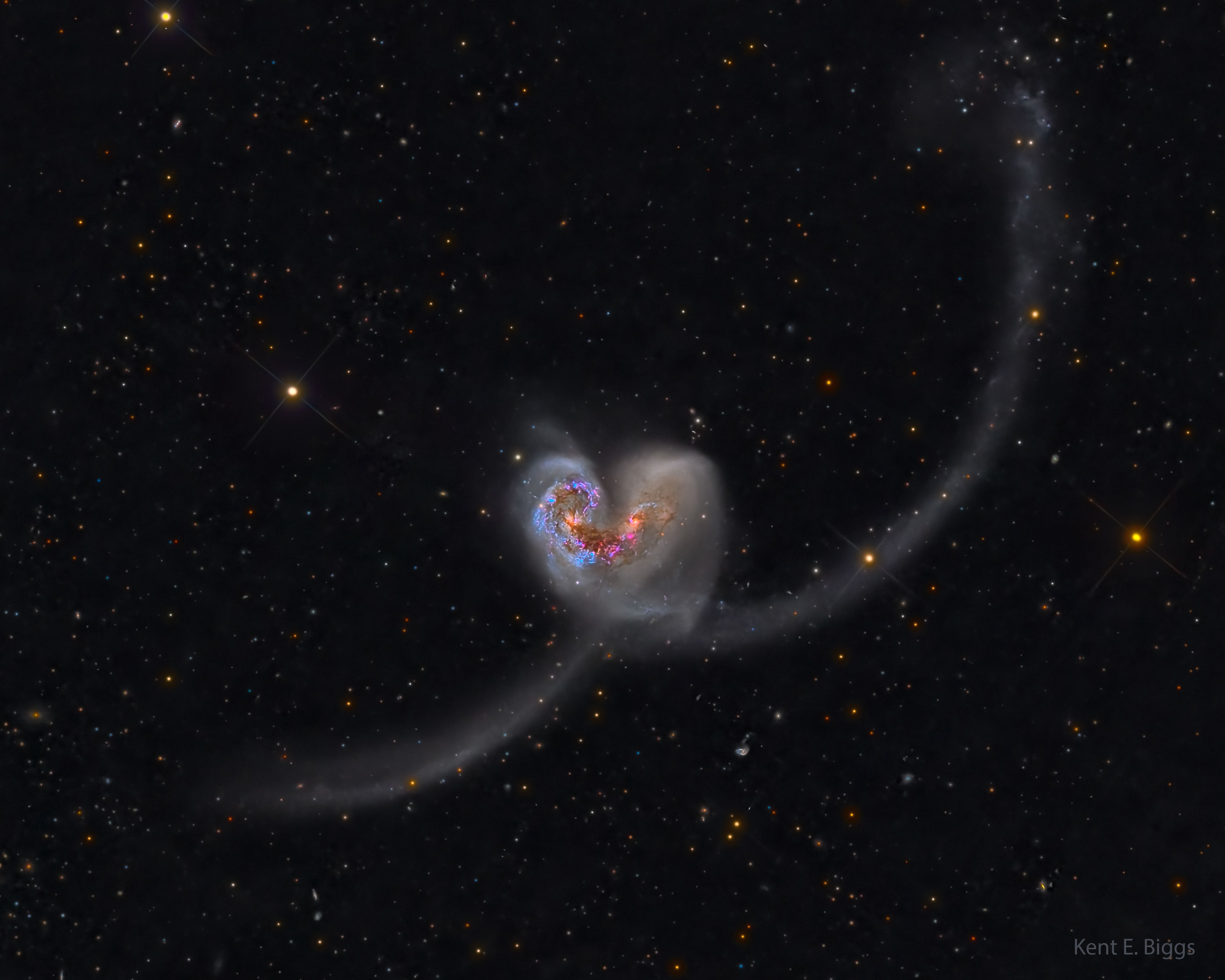
この2つの銀河は本当に互いに引き合っているのでしょうか?はい、重力によって引き合っており、その結果、少なくとも今のところは巨大な象徴的なハートの形に見えます。写真に写っているのは、NGC 4038とNGC 4039としてカタログ化されているアンテナ銀河のペアです。銀河間空間の基準からするとわずか6000万光年しか離れていないため、このペアは夜空で最もよく研究されている相互作用銀河の1つです。この2つの銀河の強い引力は、約10億年前に異常に接近したことから始まりました。2つの銀河が相互作用するにつれて、恒星同士が衝突することは稀ですが、恒星間ガスが衝突すると新しい星が形成されます。例えば、踊る2つの銀河の両側から伸びている長いアンテナのような部分には、すでにいくつかの新しい星が形成されています。銀河の合体が完了する頃には、おそらく10億年以上先になりますが、数十億個の新しい星が形成されている可能性があります。オープンサイエンス:天体物理学ソースコードライブラリで3,300以上のコードを閲覧できます。
原文(English)
Are these two galaxies really attracted to each other? Yes, gravitationally, and the result appears as an enormous iconic heart -- at least for now. Pictured is the pair of galaxies cataloged as NGC 4038 and NGC 4039,known as the Antennae Galaxies. Because they are only 60 million light years away, close by intergalactic standards, the pair is one of the best studied interacting galaxies on the night sky. Their strong attraction began about a billion years ago when they passed unusually close to each other. As the two galaxies interact, their stars rarely collide, but new stars are formed when their interstellar gases crash together. Some new stars have already formed, for example, in the long antennae seen extending out from the sides of the dancing duo. By the time the galaxy merger is complete, likely over a billion years from now, billions of new stars may have formed. Open Science: Browse 3,300+ codes in the Astrophysics Source Code Library
\ この感動を宇宙仲間にシェア /
宇宙をXでシェア
© Kent E. Biggs / APOD