ポンズ・ブルックス彗星(12P)の尾部の構造
Structure in the Tail of Comet 12P/Pons-Brooks
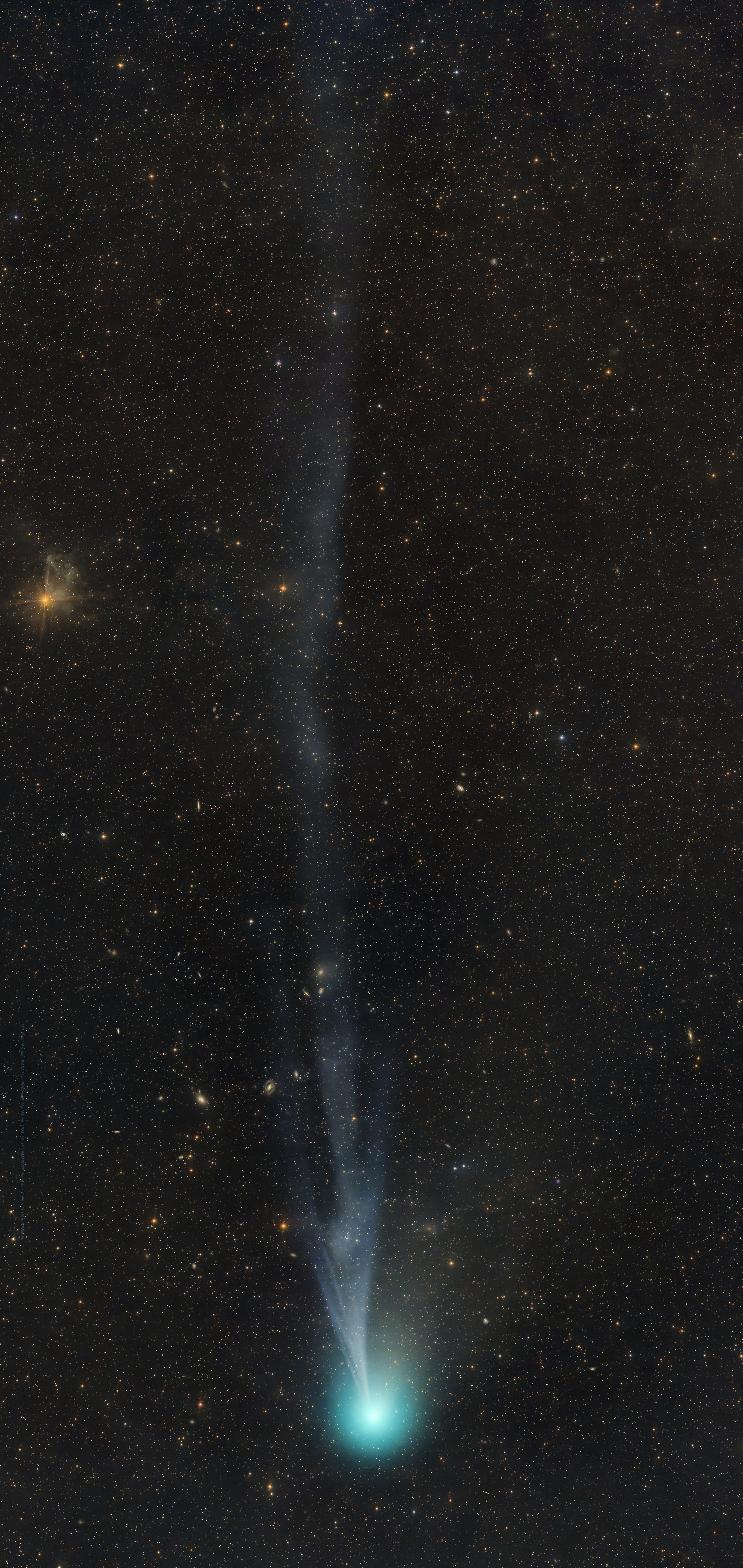
4月21日に次の近日点通過を迎える12P/ポンスブルックス彗星は、ますます明るくなっています。この周期的なハレー型彗星の緑がかったコマは、小型望遠鏡でも比較的容易に観測できるようになりました。しかし、現在活動中の彗星のコマから流れ出し、太陽風に揺さぶられている青みがかったイオンの尾は、かすかで追跡が困難です。それでも、2月11日の夜に撮影されたこのスタック画像では、かすかな尾の詳細な構造が明らかになっています。この画像は、北天の星座であるとさび座の方向にあるかすかな星や背景銀河を背景に、2度以上にわたって撮影されています。もちろん、12P彗星の4月21日の近日点通過は、4月8日の皆既日食からわずか2週間後であり、彗星は皆既日食中の太陽とともに地球の空に現れます。
原文(English)
Heading for its next perihelion passage on April 21, Comet 12P/Pons-Brooks is growing brighter. The greenish coma of this periodic Halley-type comet has become relatively easy to observe in small telescopes. But the bluish ion tail now streaming from the active comet's coma and buffeted by the solar wind, is faint and difficult to follow. Still, in this image stacked exposures made on the night of February 11 reveal the fainter tail's detailed structures. The frame spans over two degrees across a background of faint stars and background galaxies toward the northern constellation Lacerta. Of course Comet 12P's April 21 perihelion passage will be only two weeks after the April 8 total solar eclipse, putting the comet in planet Earth's sky along with a totally eclipsed Sun.
\ この感動を宇宙仲間にシェア /
宇宙をXでシェア
© Dan Bartlett / APOD