超新星残骸シメイス147
Supernova Remnant Simeis 147
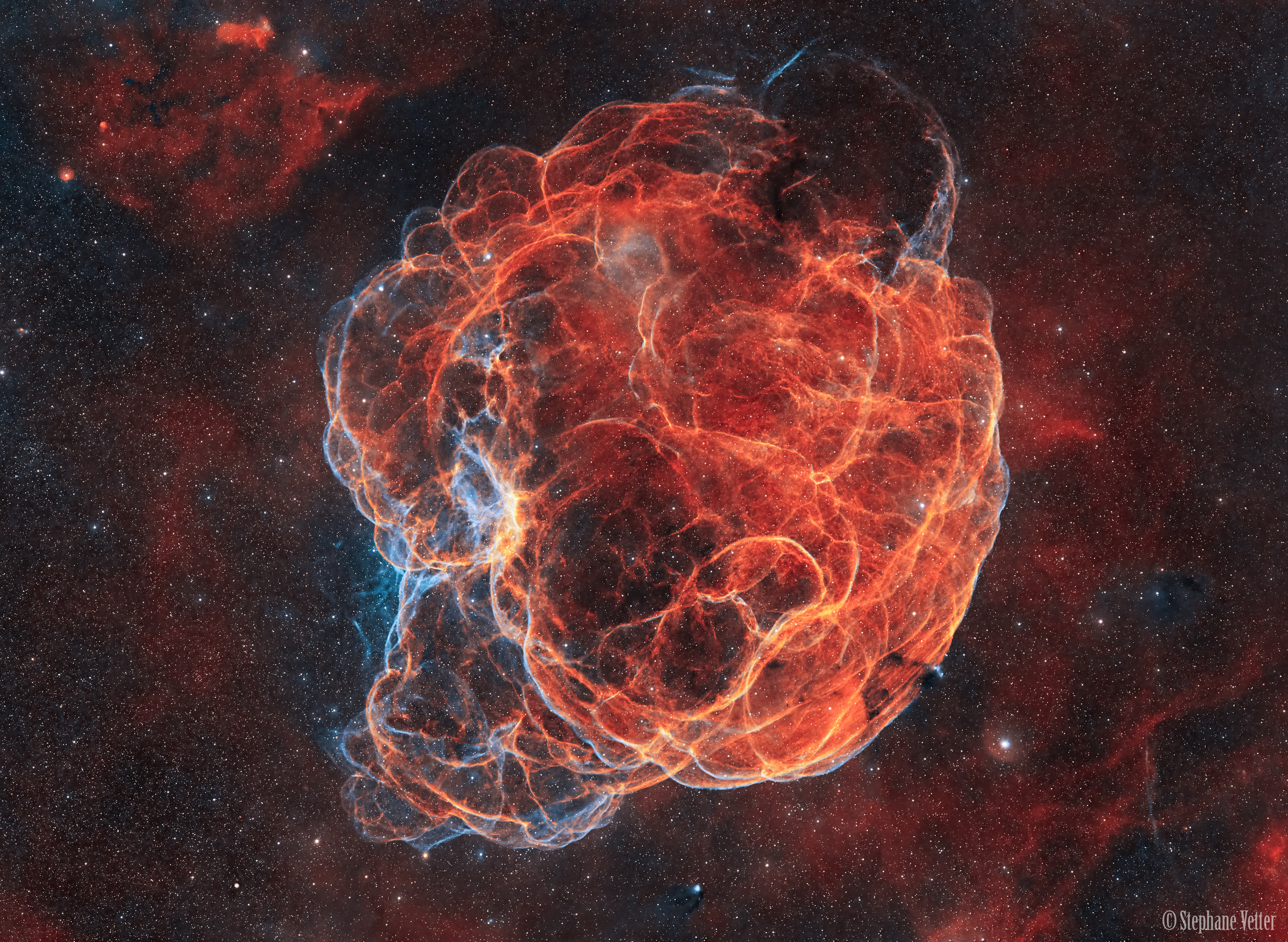
超新星残骸シメイス147の複雑に入り組んだループ状のねじれたフィラメントを追っていくと、迷子になりやすい。シャープレス2-240としてもカタログ化されているこのフィラメント星雲は、スパゲッティ星雲という愛称で親しまれている。おうし座とぎょしゃ座の境界付近に見られるこの印象的なガス構造は、空の約3度、満月6個分に相当する大きさを覆っている。これは、恒星残骸雲の推定距離3,000光年で、約150光年に相当する。この合成画像には、水素(赤)と酸素(青)の輝くガスからの放射を分離する狭帯域フィルターを通して取得されたデータが含まれている。この超新星残骸の推定年齢は約4万年であり、この巨大な恒星爆発からの光が初めて地球に到達したのは、マンモスが自由に歩き回っていた頃である。この宇宙規模の大惨事は、膨張する残骸の他に、元の恒星の核の残骸である回転する中性子星、パルサーを残した。
原文(English)
It's easy to get lost following the intricate, looping, and twisting filaments of supernova remnant Simeis 147. Also cataloged as Sharpless 2-240, the filamentary nebula goes by the popular nickname the Spaghetti Nebula. Seen toward the boundary of the constellations of the Bull (Taurus) and the Charioteer (Auriga), the impressive gas structure covers nearly 3 degrees on the sky, equivalent to 6 full moons. That's about 150 light-years at the stellar debris cloud's estimated distance of 3,000 light-years. This composite image includes data taken through narrow-band filters isolating emission from hydrogen (red) and oxygen (blue) glowing gas. The supernova remnant has an estimated age of about 40,000 years, meaning light from this massive stellar explosion first reached the Earth when woolly mammoths roamed free. Besides the expanding remnant, this cosmic catastrophe left behind a pulsar, a spinning neutron star that is the remnant of the original star's core.
\ この感動を宇宙仲間にシェア /
宇宙をXでシェア
© Stéphane Vetter
(Nuits sacrées) / APOD