夜の陰影
Shades of Night
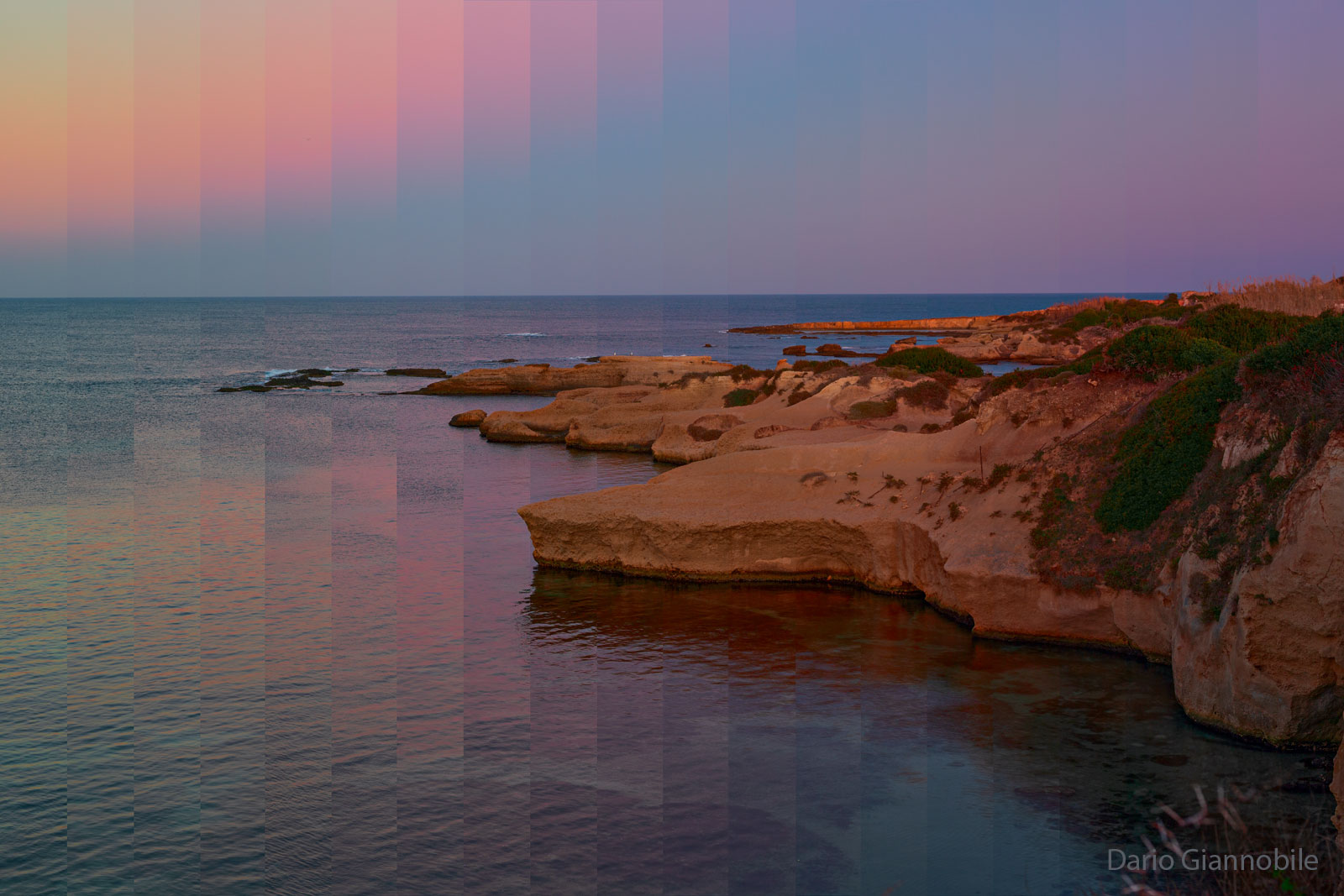
夜空はどのようにして暗くなるのでしょうか?それは段階的に、そして地平線から昇る特徴的な色によって変化します。掲載されている画像は、日没後の薄明の時間が徐々に遅くなる様子を、左から右へ20本の異なる垂直の帯で示しています。この写真は先月、イタリアのシチリア島シラキュースで、太陽とは反対方向から撮影されました。左端は日没前の上空の空です。右に向かって、目立つ帯には金星帯、青帯、地平線帯、赤帯などがあります。地球の暗い影が昇るにつれて、これらの帯の色は、地球の大気中の空気やエアロゾルからの直射日光の反射、赤みを帯びた夕日を含む多重反射、そして屈折によって生じます。実際には、これらの帯はぼやけて判別しにくく、その色は沈む太陽付近の色によって左右されることがあります。最後に、太陽は完全に沈み、空は暗くなります。でも、がっかりしないでください。朝、太陽が再び昇ると、すべてが逆の順序で起こります。
原文(English)
How does the sky turn dark at night? In stages, and with different characteristic colors rising from the horizon. The featured image shows, left to right, increasingly late twilight times after sunset in 20 different vertical bands. The picture was taken last month in Syracuse, Sicily, Italy, in the direction opposite the Sun. On the far left is the pre-sunset upper sky. Toward the right, prominent bands include the Belt of Venus, the Blue Band, the Horizon Band, and the Red Band. As the dark shadow of the Earth rises, the colors in these bands are caused by direct sunlight reflecting from air and aerosols in the Earth's atmosphere, multiple reflections sometimes involving a reddened sunset, and refraction. In practice, these bands can be diffuse and hard to discern, and their colors can depend on colors near the setting Sun. Finally, the Sun completely sets and the sky becomes dark. Don't despair -- the whole thing will happen in reverse when the Sun rises again in the morning.
\ この感動を宇宙仲間にシェア /
宇宙をXでシェア
© Dario Giannobile / APOD