オデュッセウスと皿
Odysseus and The Dish
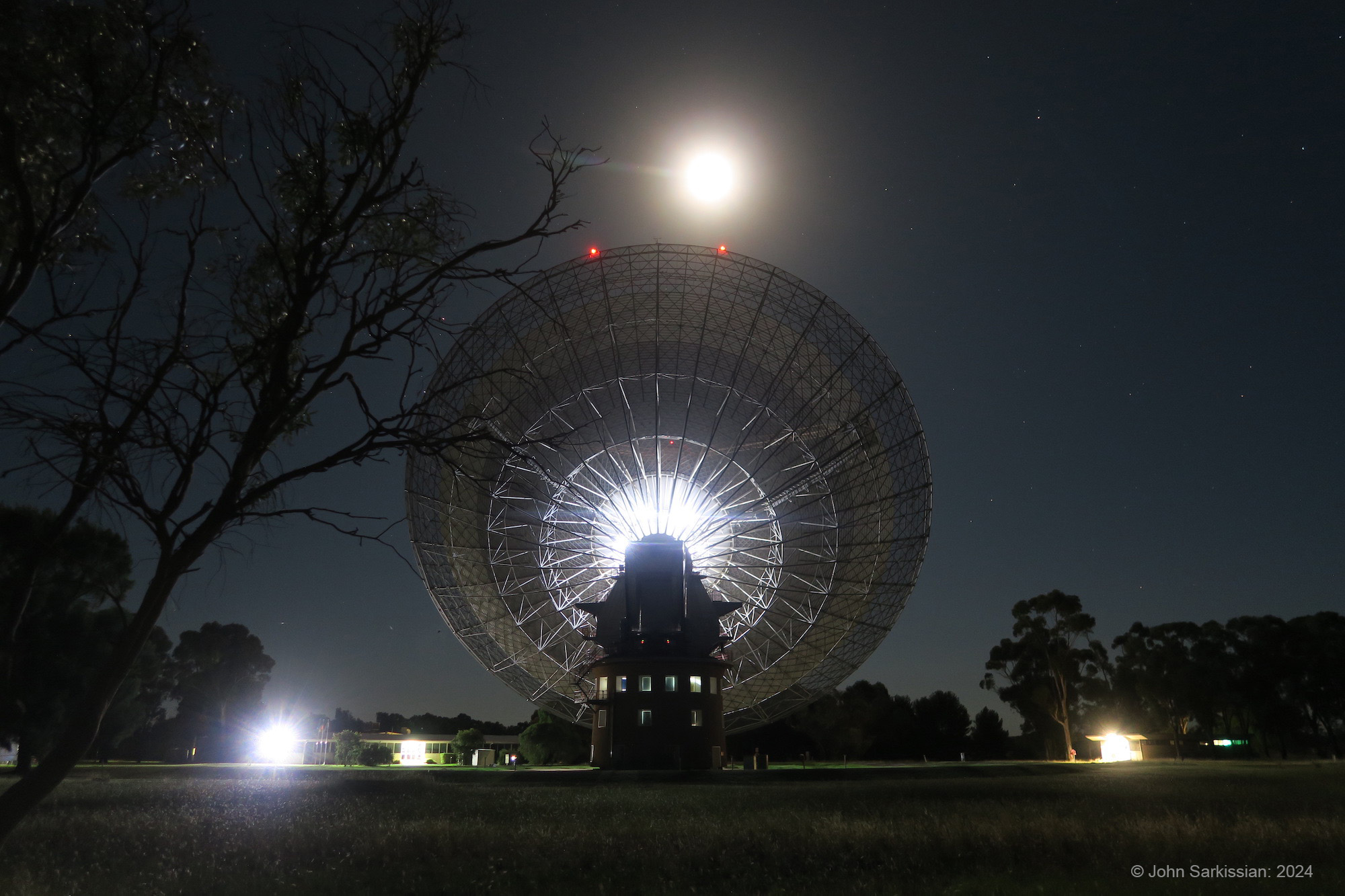
オーストラリアのニューサウスウェールズ州から撮影されたこの画像では、CSIROのパークス電波望遠鏡「ムリヤン」がほぼ満月を向いています。月光に照らされた直径64メートルのこのアンテナは、2月22日に月の南極から北へ約300キロメートルの地点に着陸した探査機オデュッセウスからの微弱な電波信号を受信しています。オデュッセウスの着陸は、1972年のアポロ17号以来、米国による初の月面着陸となります。オデュッセウスは月面で傾いた姿勢をとっているため、高利得アンテナを地球に向けることができません。しかし、大型で可動式のパークス電波望遠鏡の感度により、探査機が月面に持ち込んだ実験データからの受信が大幅に改善されました。もちろん、パークス電波望遠鏡は、1969年のアポロ11号ミッションで優れた月面テレビ受信性能を発揮し、地球の人々が史上初の月面歩行を目撃できたことで有名になりました。
原文(English)
Murriyang, the CSIRO’s Parkes Radio Telescope, points toward a nearly Full Moon in this image from New South Wales, Australia, planet Earth. Bathed in moonlight, the 64 meter dish is receiving weak radio signals from Odysseus, following the robotic lander's February 22 touch down some 300 kilometers north of the Moon's south pole. The landing of Odysseus represents the first U.S. landing on the Moon since the Apollo 17 mission in 1972. Odysseus' tilted orientation on the lunar surface prevents its high-gain antenna from pointing toward Earth. But the sensitivity of the large, steerable Parkes dish significantly improved the reception of data from the experiments delivered to the lunar surface by the robotic moon lander. Of course the Parkes Radio Telescope dish became famous for its superior lunar television reception during the Apollo 11 mission in 1969, allowing denizens of planet Earth to watch the first moonwalk.
\ この感動を宇宙仲間にシェア /
宇宙をXでシェア
© John Sarkissian / APOD