ハッブル宇宙望遠鏡が捉えたオタマジャクシ銀河
The Tadpole Galaxy from Hubble
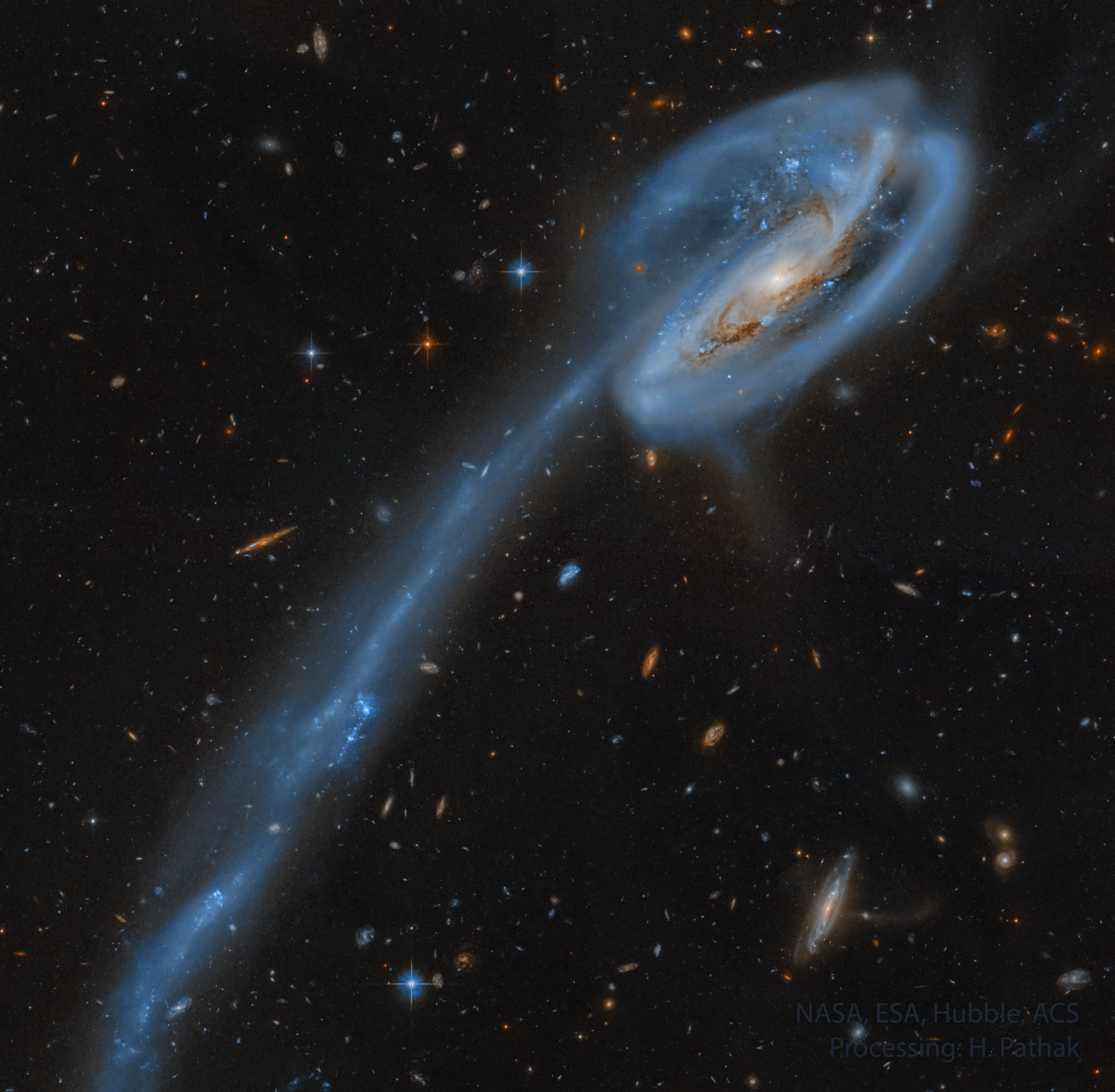
なぜこの銀河はこんなに長い尾を持っているのでしょうか?ハッブル・レガシー・アーカイブの画像データに基づいたこの見事な眺めでは、遠くの銀河が、崩壊した渦巻銀河Arp 188(オタマジャクシ銀河)の劇的な背景を形成しています。この宇宙のオタマジャクシは、北の星座であるりゅう座の方向にわずか4億2000万光年離れています。その目を引く尾は約28万光年の長さで、巨大で明るい青い星団が特徴です。ある説によると、よりコンパクトな侵入銀河がArp 188の前を横切り(この図では右から左)、オタマジャクシの重力によって後ろに振り回されたと言われています。接近遭遇中に、潮汐力が渦巻銀河の星、ガス、塵を引きずり出し、壮大な尾を形成したのです。侵入銀河自体は、オタマジャクシ銀河の約30万光年後方に位置すると推定されており、右上の前景にある渦状腕を通して見ることができます。地球上の同名の銀河に倣い、オタマジャクシ銀河は成長するにつれて尾を失い、尾の星団は大きな渦状銀河の小さな衛星銀河を形成すると考えられています。APOD(今日の天気)は、アラビア語(IG)、ブルガリア語、カタルーニャ語、中国語(北京)、中国語(台湾)、チェコ語、オランダ語、ペルシア語、フランス語、ドイツ語、ヘブライ語、日本語、ポルトガル語、ロシア語、セルビア語、スロベニア語、スペイン語、台湾語、トルコ語、ウクライナ語で提供されています。
原文(English)
Why does this galaxy have such a long tail? In this stunning vista, based on image data from the Hubble Legacy Archive, distant galaxies form a dramatic backdrop for disrupted spiral galaxy Arp 188, the Tadpole Galaxy. The cosmic tadpole is a mere 420 million light-years distant toward the northern constellation of the Dragon (Draco). Its eye-catching tail is about 280 thousand light-years long and features massive, bright blue star clusters. One story goes that a more compact intruder galaxy crossed in front of Arp 188 - from right to left in this view - and was slung around behind the Tadpole by their gravitational attraction. During the close encounter, tidal forces drew out the spiral galaxy's stars, gas, and dust forming the spectacular tail. The intruder galaxy itself, estimated to lie about 300 thousand light-years behind the Tadpole, can be seen through foreground spiral arms at the upper right. Following its terrestrial namesake, the Tadpole Galaxy will likely lose its tail as it grows older, the tail's star clusters forming smaller satellites of the large spiral galaxy. APOD in world languages: Arabic (IG), Bulgarian, Catalan, Chinese (Beijing), Chinese (Taiwan), Czech, Dutch, Farsi, French, German, Hebrew, Japanese, Portuguese, Russian, Serbian, Slovenian, Spanish, Taiwanese, Turkish, and Ukrainian
\ この感動を宇宙仲間にシェア /
宇宙をXでシェア
© NASA / APOD