白鳥、地図帳、そして火星
A SWAN, an ATLAS, and Mars
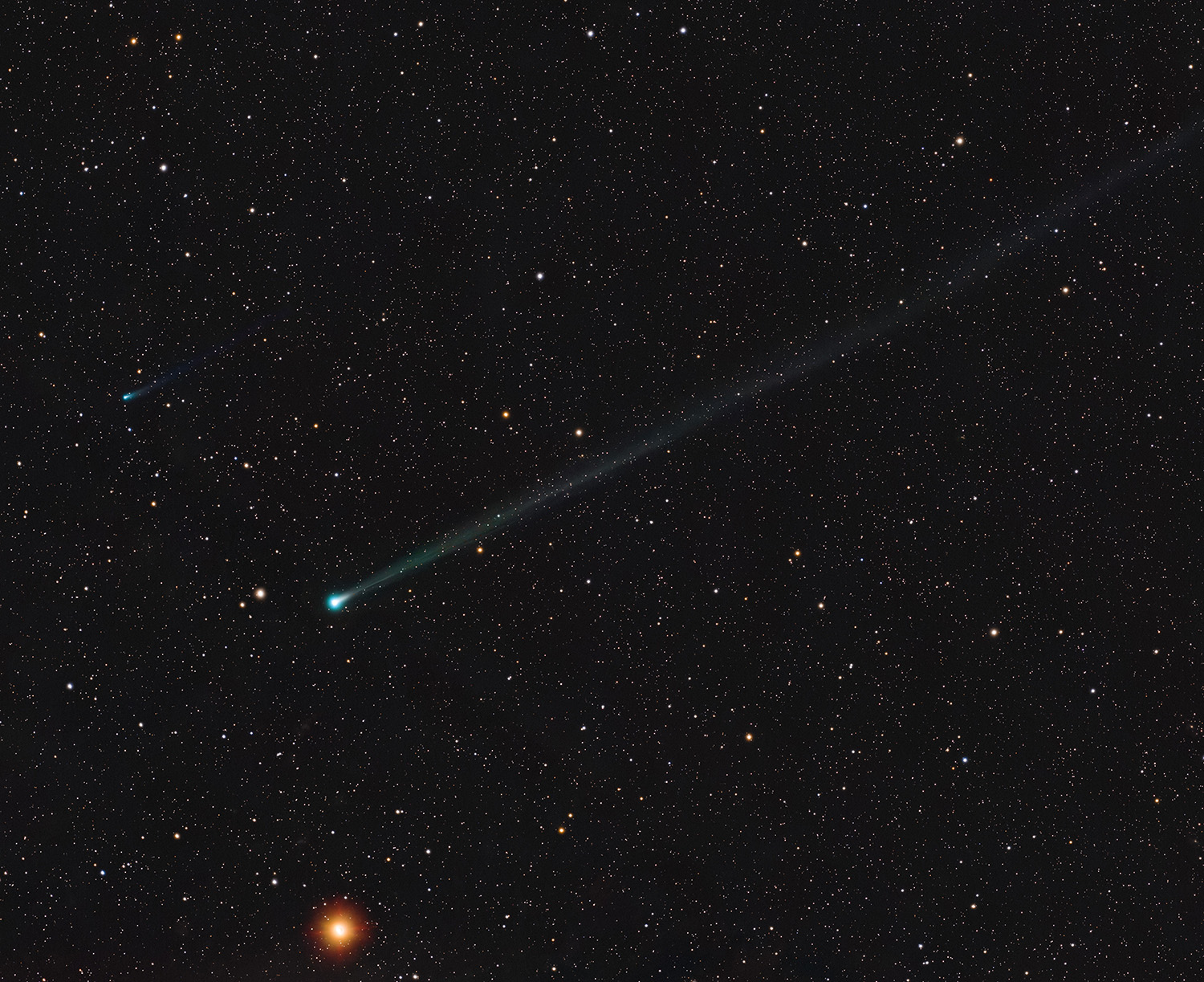
太陽系内側に新たに現れた彗星C/2025 R2 (SWAN)は、9月21日に撮影されたこの望遠鏡の視野約7度を斜めに横切る長いイオンの尾を誇っています。同じく太陽系内側に初登場した、より暗い彗星C/2025 K1 (ATLAS)は、SWANの緑がかったコマの上方左側に見え、おとめ座の星々の海を背景にかろうじて確認できます。この2つの新彗星は2025年に発見されたばかりで、この天体フレームには、地球の夜空ではより馴染み深い、赤みがかった火星(下)も一緒に写っています。彗星は、太陽系内側を通り太陽の周りを巡る旅で、ほぼ互角の競争をしているように見えるかもしれません。しかし、このSWAN彗星はすでに9月12日に近日点、つまり太陽に最も接近した地点に到達しており、現在は軌道に沿って外側に向かっています。このアトラス彗星はまだ地球に向かっており、10月8日に近日点を通過する予定です。
原文(English)
A new visitor to the inner Solar System, comet C/2025 R2 (SWAN) sports a long ion tail extending diagonally across this almost 7 degree wide telescopic field of view recorded on September 21. A fainter fellow comet also making its inner Solar System debut, C/2025 K1 (ATLAS), can be spotted above and left of SWAN's greenish coma, just visible against the background sea of stars in the constellation Virgo. Both new comets were only discovered in 2025 and are joined in this celestial frame by ruddy planet Mars (bottom), a more familiar wanderer in planet Earth's night skies. The comets may appear to be in a race, nearly neck and neck in their voyage through the inner Solar System and around the Sun. But this comet SWAN has already reached its perihelion or closest approach to the Sun on September 12 and is now outbound along its orbit. This comet ATLAS is still inbound though, and will make its perihelion passage on October 8.
\ この感動を宇宙仲間にシェア /
宇宙をXでシェア
© Adam Block / APOD