虹の湾
The Bay of Rainbows
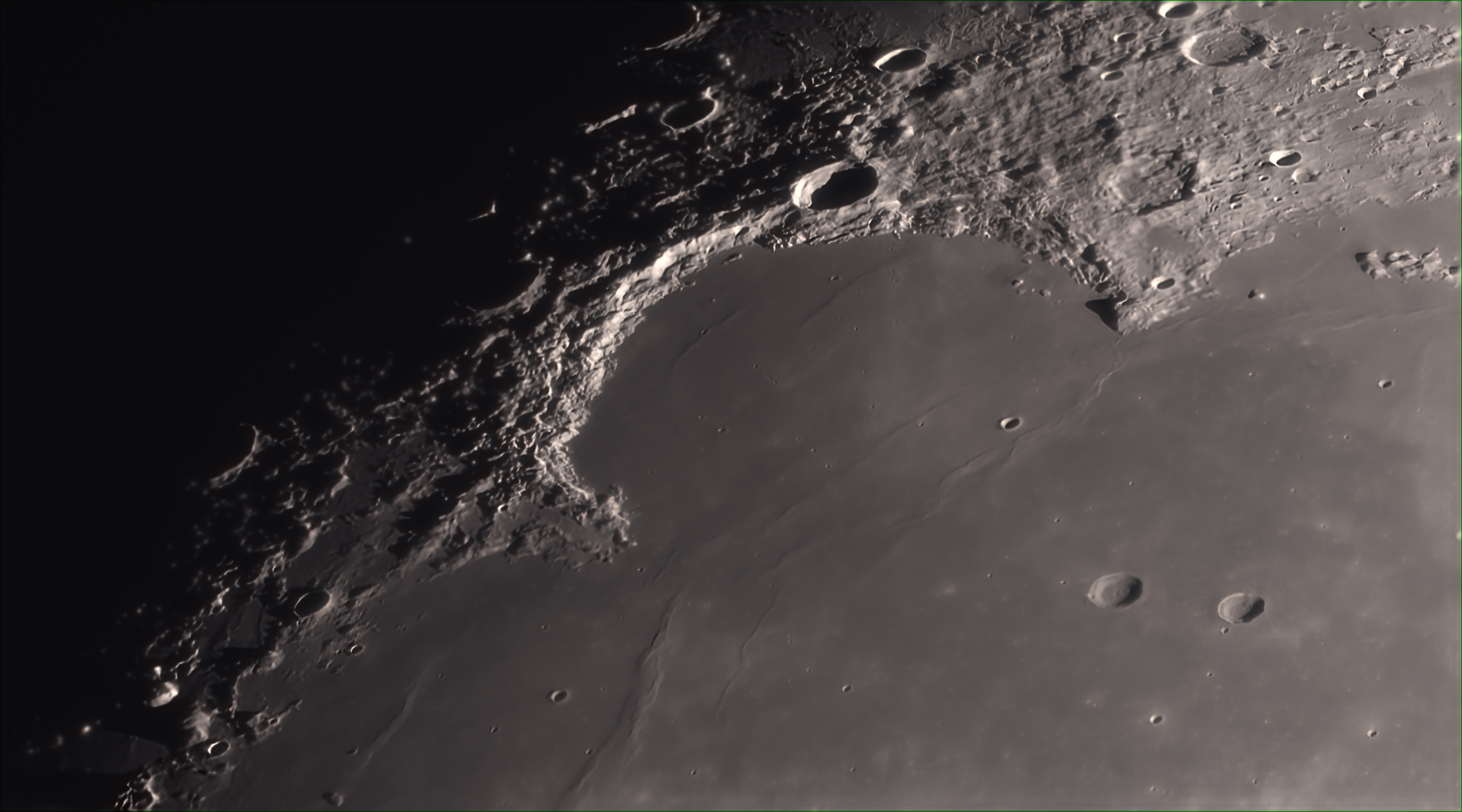
月の馴染み深い表面を覆う暗く滑らかな領域は、海洋や海を表すラテン語名で呼ばれています。この命名規則は歴史的なものですが、月を大部分が乾燥した空気のない世界と認識し、滑らかで暗い領域を溶岩で満たされた衝突盆地と認識している宇宙時代の住人には、少々皮肉に思えるかもしれません。たとえば、この望遠鏡で見た月の眺めは、北西部の雨の海(Mare Imbrium)の広がりから虹の湾(Sinus Iridum)まで見渡せます。ジュラ山脈(montes)に囲まれたこの湾は、幅約250キロメートルです。現地時間の日の出後に見ると、山々は虹の湾衝突クレーターの壁の一部を形成しています。その起伏の多い太陽に照らされた弧の頂上は、湾の表面からほぼ3,000メートルの高さに達するラプラス岬(promontorium)で区切られています。弧の底にはヘラクレイデス岬があり、ジョヴァンニ・カッシーニが 1679 年に望遠鏡を使って描いた月を、長く流れるような髪をした横顔の月の乙女として描いています。
原文(English)
Dark, smooth regions that cover the Moon's familiar face are called by Latin names for oceans and seas. That naming convention is historical, though it may seem a little ironic to denizens of the space age who recognize the Moon as a mostly dry and airless world, and the smooth, dark areas as lava-flooded impact basins. For example, this telescopic lunar vista, looks over the expanse of the northwestern Mare Imbrium, or Sea of Rains and into the Sinus Iridum, the Bay of Rainbows. Ringed by the Jura Mountains (montes), the bay is about 250 kilometers across. Seen after local sunrise, the mountains form part of the Sinus Iridum impact crater wall. Their rugged sunlit arc is bounded at the top by Cape (promontorium) Laplace reaching nearly 3,000 meters above the bay's surface. At the bottom of the arc is Cape Heraclides, depicted by Giovanni Cassini in his 1679 telescope-based drawings mapping the moon as a moon maiden seen in profile with long, flowing hair.
\ この感動を宇宙仲間にシェア /
宇宙をXでシェア
© Olaf Filzinger / APOD