R3彗星パンスターズ タイムトラベル
Comet R3 PanSTARRS Through Time
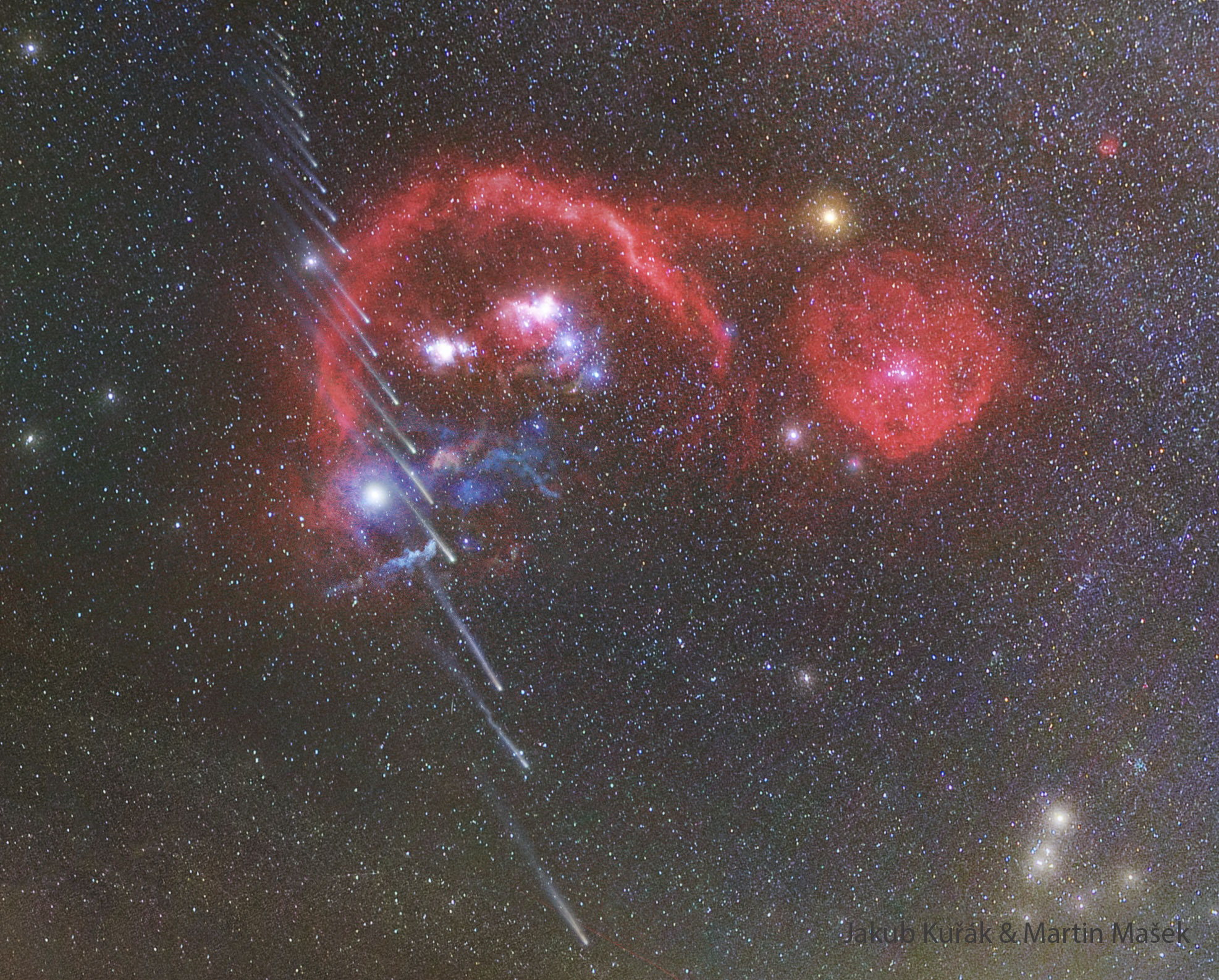
彗星が太陽系内を離れるとき、何が起こるのでしょうか? 彗星が太陽系内に到着すると、通常は盛大な祝賀と、彗星が明るく写真映えするようになるという大きな期待とともに迎えられます。しかし、太陽系を離れるにつれて、彗星の核は太陽によって温められることが少なくなり、放出されるガスや塵も少なくなり、核の周りの明るいコマは縮小して薄れ、尾の長さも短くなります。多くの彗星はその後、太陽系外に戻り、数百年または数千年ぶりに再び姿を現します。対照的に、彗星C/2025 R3 (PanSTARRS) のように、惑星の重力キックを受けて二度と戻ってこない彗星もあります。写真のR3 PanSTARRs彗星は、5月上旬から中旬にかけて、チリのセロ・パラナル付近で多くの夜にわたって深く撮影されました。後期の画像は上部に近く、縮小していくイオンの尾がはっきりと写っています。コメットR3ギャラリー:2026年のコメットR3 PanSTARRS
原文(English)
What happens to a comet as it leaves our inner Solar System? Now, the arrival of a comet into the inner Solar System is typically heralded with great fanfare and high hopes that the comet will become bright and photogenic. But on the way out, the comet's nucleus is less warmed by the Sun, less gas and dust are expelled, the bright coma around the nucleus shrinks and fades, and the tail length drops off. Many comets will then return to the outer Solar System and only return in hundreds or thousands of years. In contrast, some comets -- like Comet C/2025 R3 (PanSTARRS) -- receive a gravitational kick from the planets and so will never return. Pictured, Comet R3 PanSTARRs was imaged deeply many nights in early to mid-May near Cerro Paranal in Chile. Later images appear closer to the top and clearly show the shrinking ion tail. Comet R3 Gallery: Comet R3 PanSTARRS in 2026
\ この感動を宇宙仲間にシェア /
宇宙をXでシェア
© Jakub Kuřák &
Martin Mašek
(FZU of the Czech Academy of Sciences) / APOD