人魚星雲超新星残骸
The Mermaid Nebula Supernova Remnant
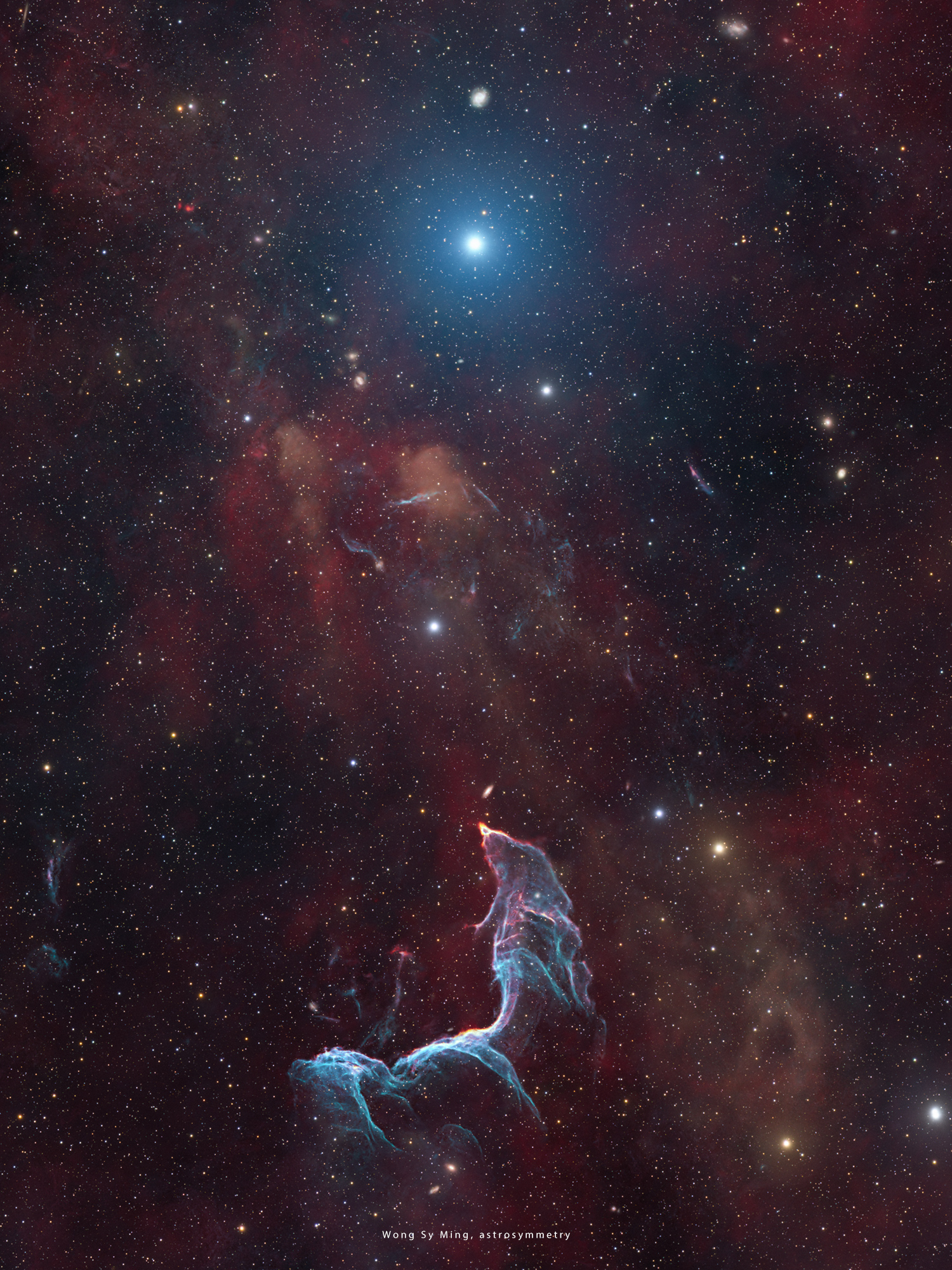
人魚姫は海の泡ではなく星屑に変わってしまうのでしょうか?この美しい星雲ではそう思えるかもしれません。掲載されている画像は、G296.5+10.0超新星残骸の一部であるマーメイド星雲(ベタ星雲とも呼ばれる)です。ここで見られる青色は二重電離酸素(OIII)に由来し、深紅色は水素ガスから放出されています。数千光年離れた場所に位置し、約1万年前のものと推定されるこの星雲は、巨大な星が超新星爆発を起こしたときに形成されました。その爆発は、1秒間に約2回転する若い電波静穏中性子星である特異なパルサーを残しました。画像に写っている明るい星は、この星雲とは関係ありません。パルサーはX線で検出できますが、可視光での検出は今のところ確認されていません。そのため、この画像ではパルサー自体は見えません。
原文(English)
Could the Little Mermaid turn into stardust instead of seafoam? It would seem so in this beautiful nebula. The featured image shows the Mermaid Nebula, also known as the Betta Fish Nebula, which is part of the G296.5+10.0 Supernova Remnant. The blue color visible here originates from doubly ionized oxygen (OIII), while the deep red is emitted by hydrogen gas. Estimated to be located a few thousand light-years away and about 10,000 years old, this nebula was formed when a massive star exploded as a supernova. It left behind a peculiar pulsar, a young radio-quiet neutron star that spins around about twice every second. The bright stars shown in the image are unassociated with the nebula. The pulsar can be detected in the X-rays but it does not have a confirmed detection in the optical (visible light) so far. As a result, the pulsar itself is not visible in this image.
\ この感動を宇宙仲間にシェア /
宇宙をXでシェア
© Data acquisition: Sy Ming Wong; Processing: Guangyan Gao
Text:
Cecilia Chirenti
(NASA
GSFC,
UMCP,
CRESST II) / APOD