土星のイアペトゥス:彩られた衛星
Saturn's Iapetus: Painted Moon
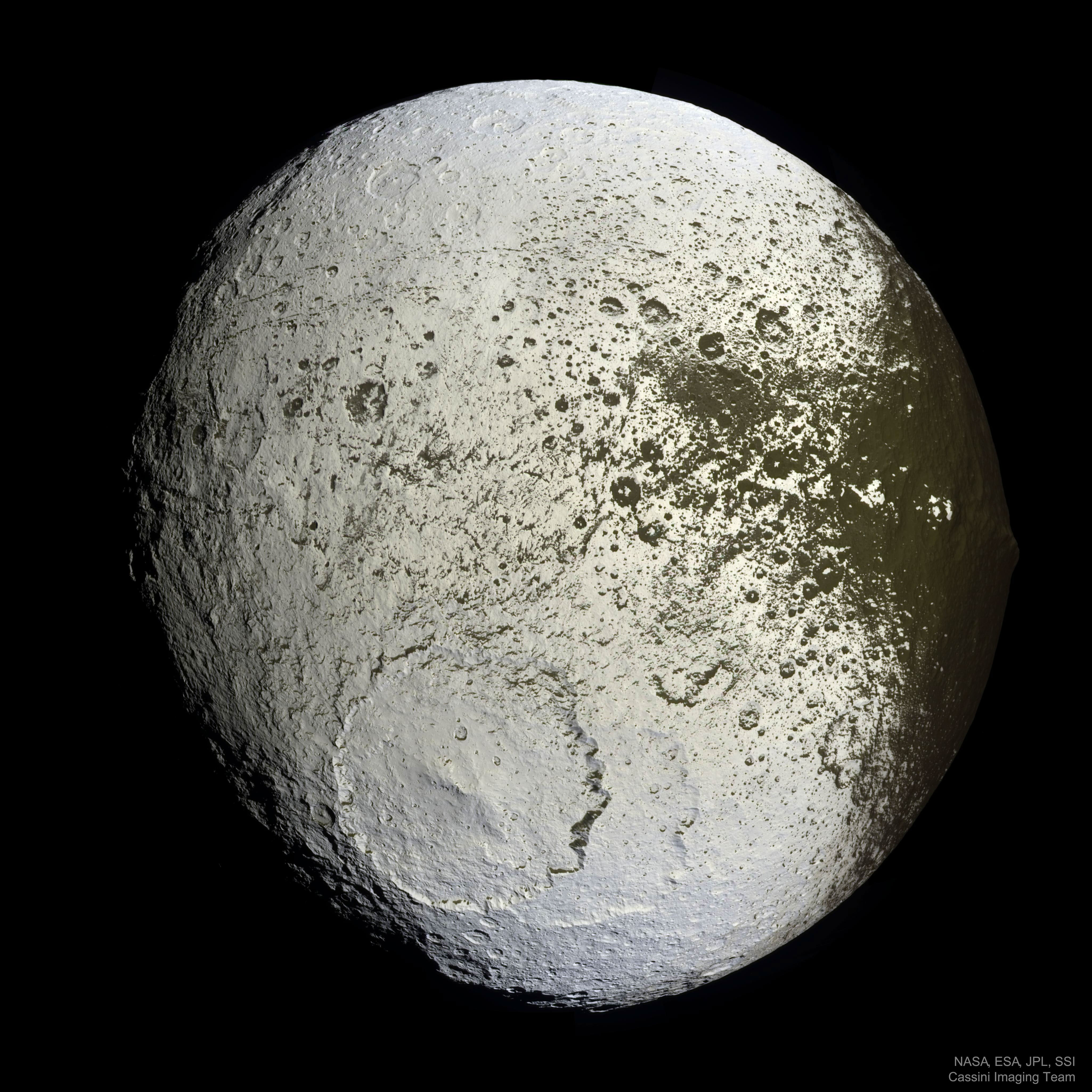
土星の衛星イアペトゥスに何が起こったのでしょうか?この奇妙な世界の広大な部分は石炭のように暗く、他の部分は雪のように明るいのです。この異常な色合いの衛星をよりよく理解するために、NASAは2007年に土星を周回していたロボット探査機カッシーニを2,000キロメートル以内に接近させました。ここに写っているのは、約75,000キロメートル離れたところから見た、常に後方に残るイアペトゥスの半球です。南に見られる大きな衝突クレーターは500キロメートルに渡り、同じくらいの大きさの古いクレーターの上に重なっているように見えます。暗い物質はイアペトゥスの最東端をますます覆い、クレーターや高地を同様に暗くしています。有力な仮説は、この暗い物質は、比較的温暖だが汚れた氷が昇華した際に残った炭素を豊富に含む土壌の一種であるというものです。この暗い物質の最初の被覆は、他の衛星から放出された隕石の破片の付着によって効果的に塗り付けられた可能性があります。ジグソーパズルの月:今日の天文学パズル
原文(English)
What has happened to Saturn's moon Iapetus? Vast sections of this strange world are dark as coal, while others are as bright as snow. To help better understand this unusually tinted moon, in 2007 NASA directed the robotic Cassini spacecraft then orbiting Saturn to swoop within 2,000 kilometers. Pictured here, from about 75,000 kilometers out, is the hemisphere of Iapetus that is always trailing. A large impact crater seen in the south spans 500 kilometers and appears superposed on an older crater of similar size. The dark material is seen increasingly coating the easternmost part of Iapetus, darkening craters and highlands alike. A leading hypothesis is that the dark material is mostly a form of carbon-rich soil leftover from when relatively warm but dirty ice sublimates. An initial coating of this dark material may have been effectively painted on by the accretion of meteor-liberated debris from other moons. Jigsaw Moon: Astronomy Puzzle of the Day
\ この感動を宇宙仲間にシェア /
宇宙をXでシェア
© NASA / APOD